



















































Modern devices have become essential companions for work, communication, entertainment, and travel. Smartphones help people manage schedules and navigate unfamiliar places, wireless earbuds make calls easier, and smartwatches keep useful information within reach. Yet these devices share one common limitation: they all depend on reliable power. When charging becomes disorganized, cables accumulate on desks, adapters disappear into bags, and a low battery can interrupt an otherwise productive day.
A practical charging routine does not need to involve complicated equipment. It starts with understanding which devices are used most often, where charging usually takes place, and how much flexibility is needed when leaving home. Some people prefer a permanent charging location beside their bed, while others need a setup that works in a home office, shared workspace, or hotel room. Selecting accessories around these habits can make everyday technology easier to manage.
A wireless charging pad can provide a convenient way to recharge compatible devices without repeatedly connecting a charging cable directly to the device. For situations where access to a wall outlet is limited, a portable battery offers a different kind of flexibility. Understanding how these two solutions complement each other can help users create a charging arrangement that works both at home and on the move.
Why Wireless Charging Fits Naturally Into Everyday Life
One of the main attractions of wireless charging is the simplicity of placing a compatible device on a designated surface. Instead of connecting and disconnecting a cable every time a phone needs power, users can establish a predictable charging location and return the device to it throughout the day.
This arrangement can be especially useful in spaces where smartphones are frequently picked up and put down. A desk, bedside table, or kitchen counter may serve as a convenient location, provided the charging equipment is kept away from liquids and other potential hazards. Over time, returning a phone to the same place can become an easy habit that reduces the need to search for cables.
Wireless charging also helps create a cleaner visual arrangement. A pad with a suitably positioned cable can reduce the number of loose wires around a desk, although it does not eliminate the need for a power connection. The pad itself must still receive electricity from a compatible adapter or another supported source.
Convenience depends on compatibility. Not every phone supports wireless charging, and different devices may support different charging standards and maximum speeds. Protective cases, the position of the device, and the design of the charging pad can also affect performance. Checking these details before buying helps ensure that the accessory fits the intended use.
Choosing the Right Wireless Charging Setup
The most suitable wireless charger depends on the devices being used and the environment in which charging takes place. A compact pad may be sufficient for someone who only wants to recharge a compatible smartphone. A stand-style design can be useful for people who frequently glance at notifications or participate in video calls because it keeps the phone raised at a convenient viewing angle.
Users with several compatible devices should consider whether a multi-device charging solution would be more practical. Some products are designed to charge multiple devices simultaneously, while others focus on a single phone. Their capabilities vary, so buyers should check which devices can be charged together and whether the product requires a particular adapter.
Charging speed deserves attention as well. The maximum wireless charging speed depends on the phone, charging accessory, supported standard, and power supply. A pad advertised with a particular output will not necessarily deliver that rate to every compatible phone. For people who regularly need a quick recharge, comparing supported speeds and real-world requirements is more useful than choosing a product based on a headline specification alone.
Heat is another consideration. Wireless charging naturally produces some heat, but excessive heat can affect charging performance and battery longevity. Users should place devices correctly on the pad, follow the manufacturer’s instructions, and avoid charging in locations that trap heat.
When Portable Power Becomes More Important Than Convenience
Wireless charging works well when a suitable power source is available, but it cannot solve every charging problem. Commuters, travellers, students, and outdoor enthusiasts may spend hours away from convenient outlets. In these situations, having stored energy available can be more useful than having a fixed charging surface.
A power bank provides portable energy that can be used when a wall outlet is unavailable. Depending on the model, it may support wired charging through USB ports or wireless charging for compatible devices. This makes it possible to replenish a phone during a long journey, between university classes, or while moving between meetings.
Capacity is one of the first specifications to examine. A smaller battery is often easier to carry, making it suitable for occasional top-ups during ordinary days. A higher-capacity model may provide more charging opportunities, but it generally requires more space and adds weight to a bag.
The advertised battery capacity does not translate directly into an identical amount of energy delivered to a phone. Conversion losses, operating conditions, and charging efficiency affect the usable energy. Consequently, the number of recharges varies according to the portable battery, phone model, and usage conditions.
Output is equally important. A battery with substantial capacity may still charge a device slowly if it does not support the device’s required charging standard or power level. Users should compare capacity, output, available ports, charging protocols, and portability before choosing a model.
Understanding How Wireless Charging and Portable Batteries Work Together
Wireless chargers and portable batteries serve related but different purposes. A wireless pad is generally designed for convenient charging at a regular location, while a portable battery is intended to make stored energy available when a wall outlet cannot be reached.
For example, a user might place a compatible phone on a wireless pad while working at a desk, then carry a compact battery during an afternoon commute. This arrangement keeps everyday charging simple without requiring the user to depend entirely on access to electrical outlets.
Some portable batteries also offer wireless charging, combining portability with the convenience of placing a compatible phone on a charging surface. However, wireless battery packs differ in capacity, alignment, supported standards, and charging performance. Their wireless functionality should be verified rather than assumed from the product’s appearance.
A wired connection may remain preferable when charging speed is the priority. Wireless charging can be convenient for short top-ups, but its efficiency and speed depend on the devices and accessories involved. Users who need to restore battery power quickly may find a suitable wired connection more effective.
The best arrangement often combines both methods. A fixed wireless charger can serve as the everyday charging point, while a portable battery provides backup power for unexpected delays and longer journeys.
Building a Charging Routine for Work and Study
A well-planned charging routine can reduce interruptions during a busy day. Students may need their phones for digital notes, learning platforms, transport information, and communication with classmates. Remote workers may depend on smartphones for authentication codes, client calls, and work notifications.
Instead of waiting until the battery becomes nearly empty, users can identify natural charging opportunities. A phone might be placed on a wireless pad during a period of desk work, while a portable battery can remain in a backpack for situations when charging is not otherwise possible.
It is useful to check battery levels before leaving home, especially when the day includes long meetings, commuting, or travel. Charging essential devices in advance reduces dependence on finding an available outlet in an unfamiliar place.
People who carry multiple devices should also decide which ones genuinely need to remain powered throughout the day. A smartphone may be essential, whereas an additional accessory may only require charging in the evening. Prioritising the most important devices helps users choose an appropriate portable battery without carrying unnecessary weight.
Making Charging More Convenient While Travelling
Travel often exposes the weaknesses of an unplanned charging setup. Hotel rooms may have inconveniently positioned outlets, airport charging areas can be crowded, and sightseeing schedules may leave little time to return to a charger.
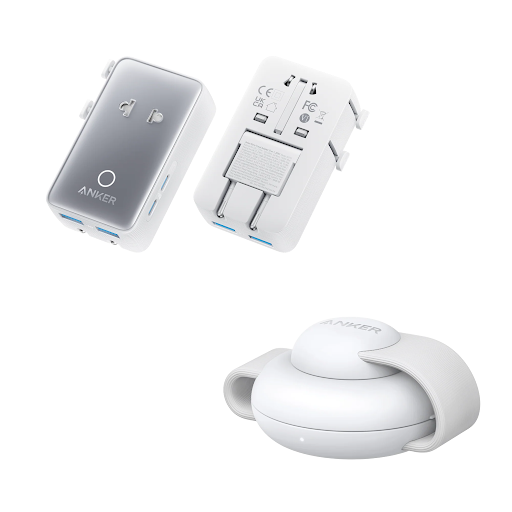
A portable charging kit can make these situations easier to manage. It might include a suitable wall adapter, a reliable charging cable, and a battery pack selected according to the length of the journey. A wireless pad can be useful at accommodation where there is a convenient surface for charging, while a portable battery provides flexibility during the day.
Before travelling internationally, users should confirm that their wall adapter supports the electrical input available at their destination and determine whether a plug adapter is required. A plug adapter changes the physical connection but does not necessarily convert voltage.
Airline rules should also be checked before packing a portable battery. Spare lithium batteries are commonly subject to restrictions concerning capacity and carry-on storage. Requirements can vary by airline and jurisdiction, so checking the current rules before departure is important.
Keeping charging accessories together in a dedicated pouch prevents cables from becoming tangled and makes it easier to confirm that essential items have been packed. A little preparation can help avoid searching for replacement accessories during an already busy trip.
Protecting Battery Health During Regular Charging
Convenience should be balanced with sensible battery care. Modern smartphones and charging accessories are designed to manage power within their supported limits, but environmental conditions and equipment quality still matter.
Heat is particularly important. Leaving a phone on a charging surface in direct sunlight or inside a hot vehicle can create unfavourable conditions for the battery. Users should choose a cool, dry location and follow the manufacturer’s recommendations for charging and ventilation.
Wireless charging performance can also be affected by thick cases, metallic objects, or incorrect alignment. If a phone charges inconsistently, checking its position and removing an incompatible case may help. Users should consult the charger instructions rather than assuming that every case or accessory works with every pad.
Portable batteries require similar attention. Damaged housings, swelling, unusual smells, or abnormal heating are warning signs that should not be ignored. A damaged battery should be taken out of service safely and handled according to the manufacturer’s guidance.
Cables and adapters should be inspected periodically for visible damage. Using accessories that meet the relevant safety and compatibility requirements helps create a more reliable charging environment and reduces avoidable problems.
Choosing Accessories Without Creating Unnecessary Clutter
Adding more charging equipment does not always produce a better setup. A useful purchase should solve a specific problem, whether that means reducing cable connections at a desk, providing backup power on a commute, or supporting several devices with one suitable accessory.
Start by evaluating the charging equipment already available. An existing adapter may work with a new wireless pad if it meets the manufacturer’s requirements. A compatible USB cable may already be sufficient for charging a portable battery. Checking these details can prevent duplicate purchases.
Next, consider how frequently each accessory will be used. A wireless pad can be valuable when a phone is charged regularly at the same location, whereas someone who spends most of the day away from home may benefit more from a portable battery. Users with varied schedules may find that a combination of both provides the greatest flexibility.
Finally, compare product specifications, compatibility, warranty information, and charging performance. The most appropriate accessory is not necessarily the one with the largest capacity or the most features. It is the one that fits the devices, environment, and routine without adding unnecessary complexity.
Final Thoughts
A reliable charging routine makes everyday technology easier to manage by reducing uncertainty about where and when devices can receive power. Wireless charging offers a convenient solution for compatible devices at home or at work, while portable batteries provide flexibility when access to a wall outlet is limited.
Combining these options can create a practical balance between convenience and mobility. By checking device compatibility, comparing charging specifications, managing heat, and selecting accessories according to actual needs, users can keep their devices ready for work, communication, and travel without turning charging into another daily frustration.
Frequently Asked Questions
Does every smartphone work with a wireless charging pad?
No. The smartphone must support a compatible wireless charging standard. Users should confirm the phone’s specifications and the charger’s supported standards before purchasing.
Can a power bank charge a phone without a wall outlet?
Yes. A charged portable battery stores energy that can be used to recharge compatible devices away from a wall outlet. The available charging options depend on the battery’s ports and supported wireless features.
Is wireless charging slower than wired charging?
It can be, depending on the phone, charger, and supported charging standards. Wired charging may be more suitable when speed is the priority, while wireless charging offers convenience for regular top-ups.
How much capacity should a portable battery have?
The appropriate capacity depends on the phone’s battery, how frequently it needs recharging, and how much weight the user is comfortable carrying. Compare usable performance, output, and portability rather than relying on capacity alone.
Can I use a wireless charging pad overnight?
A compatible charger can generally be used according to the manufacturer’s instructions, but users should keep the charging area ventilated and avoid excessive heat. Device-specific guidance should take priority.
How can I make my charging setup more organised?
Choose a dedicated charging location, keep essential cables together, and use a portable battery for situations away from outlets. Buying accessories based on actual device requirements can also prevent unnecessary clutter.
