



















































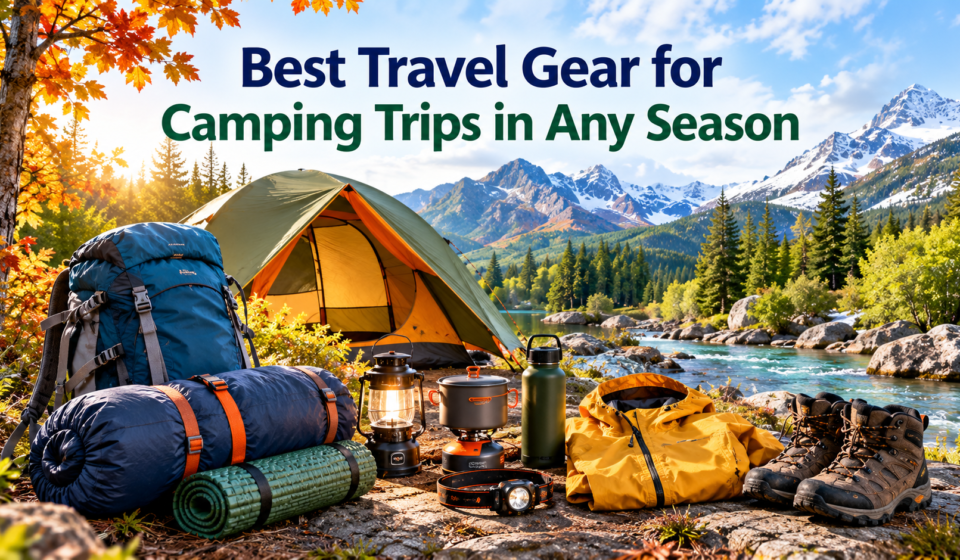

Camping is one of the best ways to escape busy routines and enjoy the outdoors. You can explore mountain trails, relax beside a lake, sleep under the stars, or spend a quiet weekend in the forest. However, a successful trip depends on more than choosing a beautiful campsite. Having the right equipment can make the difference between a comfortable adventure and a difficult experience.
The best travel gear for camping trips in any season should offer comfort, reliability, and flexibility. Your needs may change with the weather, location, and type of camping you prefer. A summer trip may require lightweight clothing and sun protection, while a winter adventure demands better insulation and equipment designed for cold conditions.
The good news is that you do not need to buy every camping product available. Start with essential equipment that performs well in the conditions you expect to face. Then add seasonal items based on your destination and activities. This guide explains how to choose practical camping gear, prepare for changing weather, and pack more efficiently for your next outdoor adventure.
Why Choosing the Right Camping Gear Matters
Comfort Makes Every Trip Better
Camping often involves sleeping outdoors, preparing meals, walking on uneven ground, and dealing with changing temperatures. Without suitable equipment, even a short weekend can become uncomfortable. A poor sleeping setup may leave you tired, while inadequate rain protection can make it difficult to keep your clothes and belongings dry.
Good equipment helps you manage these challenges. A dependable tent provides shelter, an insulated sleeping pad reduces heat loss to the ground, and suitable clothing helps regulate body temperature. These basics are more important than decorative accessories or expensive gadgets.
Different Seasons Require Different Equipment
Camping gear is not equally suitable for every climate. A tent designed for warm summer nights may not handle heavy snow or strong mountain winds. Similarly, a lightweight sleeping bag that works during mild weather may provide insufficient warmth when temperatures drop.
Think about your destination before buying equipment. Check expected nighttime temperatures, rainfall, wind, and the possibility of sudden weather changes. Your gear should match the actual conditions rather than the season name alone.
Choose a Reliable Tent for Every Season
Focus on Shelter, Space, and Weather Resistance
A tent is one of the most important items in your camping setup. It provides shelter from rain, wind, insects, and direct sunlight. When choosing a tent, consider its capacity, packed size, ventilation, fabric, and ease of assembly.
For ordinary spring, summer, and autumn camping, a well-designed three-season tent is often a practical choice. These tents generally balance ventilation, weather protection, and weight. They suit many established campsites and moderate outdoor conditions, although their performance depends on the specific model and setup.
If you plan to camp in exposed mountain areas or severe winter conditions, look for a tent specifically designed for those environments. Four-season models usually offer stronger structures and materials suited to demanding weather. However, they may be heavier and warmer than necessary for ordinary summer trips.
Check Waterproofing and Ventilation
Water resistance matters even when the forecast looks promising. Rain can arrive unexpectedly, especially in forests and mountain regions. Look for a suitable rainfly, protected seams, a durable floor, and a design that keeps water from collecting around the sleeping area.
Ventilation is equally important. Warm, humid air can create condensation inside a tent, leaving the interior damp even when rain does not enter. Vents and suitable airflow help manage this problem. Use a groundsheet when appropriate, but make sure it does not extend beyond the tent floor where rain could collect underneath.
Select the Right Sleeping Bag and Pad
Match Your Sleeping Bag to Nighttime Temperatures
A sleeping bag should keep you comfortable at the lowest temperatures you realistically expect. Do not choose one based only on daytime weather. Temperatures can fall sharply after sunset, particularly in mountains, deserts, and open areas.
Pay attention to the manufacturer’s temperature ratings. When a bag uses a recognized rating system, compare its comfort rating with the conditions you expect. If you tend to feel cold while sleeping, consider choosing additional warmth rather than relying on the lowest advertised limit.
Insulation type also matters. Down sleeping bags usually offer excellent warmth for their weight and compress well, but they can lose performance when wet unless properly protected. Synthetic insulation often handles damp conditions more easily and may be a practical choice for budget-conscious campers.
Never Overlook Your Sleeping Pad
A sleeping bag alone cannot provide all the insulation you need. The ground draws heat away from your body, and the insulation underneath you becomes compressed while you sleep. A sleeping pad adds cushioning and reduces this heat loss.
Check the pad’s insulation rating, commonly expressed as an R-value, when shopping for colder conditions. Higher R-values generally indicate greater resistance to heat transfer. For summer camping, a simple pad may be sufficient, while cold-weather trips usually require a more insulated option.
Comfort matters too. Inflatable pads pack down small, while foam pads are simple and less vulnerable to punctures. Some campers prefer combining the two for additional comfort and insulation. Choose a system that suits your sleeping style, carrying capacity, and expected temperatures.
Pack Clothing for Changing Weather
Use Layers Instead of One Heavy Outfit
Layering is one of the most practical ways to prepare for changing weather. A moisture-managing base layer helps keep sweat away from your skin, an insulating middle layer provides warmth, and an outer layer protects you from wind or rain.
You can adjust these layers as conditions change. Remove an insulating layer during an uphill walk, then put it back on when you stop. This flexibility is especially useful in mountain areas, where temperatures can vary significantly between sunny afternoons and cold evenings.
Avoid relying entirely on cotton for cold-weather activities. Cotton can retain moisture and take a long time to dry. Wool and suitable synthetic fabrics are often more practical for base layers and insulating clothing during active outdoor trips.
Prepare for Rain, Sun, and Cold Nights
A waterproof or water-resistant outer layer can be valuable in almost any season. Choose one that fits comfortably over your other clothing and allows enough movement for walking or setting up camp. Waterproof trousers may also be useful in wet environments.
For sunny destinations, bring breathable clothing, a hat, sunglasses, and sunscreen. For colder trips, pack warm socks, gloves, a hat, and additional insulating layers. Even summer camping may require warmer clothing if you expect to sleep at higher elevations.
Keep spare clothing dry in a waterproof bag or a sealed pack liner. Wet clothing can become a serious problem when temperatures fall. Preparing for unexpected weather is often more useful than packing extra outfits for appearance alone.
Essential Cooking Gear for Outdoor Meals
Choose a Portable Camping Stove
A portable stove makes meal preparation easier and more predictable. It allows you to boil water, cook simple dishes, and prepare hot drinks without relying on an open fire. Compact backpacking stoves suit lightweight trips, while larger camping stoves can work well for families and car campers.
Before buying, consider fuel availability, cooking capacity, packed size, and how easy the stove is to operate. Some systems are designed for quick boiling, while others provide better control for preparing full meals.
Always use a stove according to its manufacturer’s instructions. Never operate fuel-burning equipment inside a tent or other enclosed space because carbon monoxide can build up and become deadly. Follow campsite fire rules and keep cooking equipment away from flammable materials.
Carry Durable Cookware and Food Storage
A small cooking pot, suitable utensils, a mug, and a reusable plate can cover many basic needs. Lightweight cookware is helpful for backpacking, while car campers may prefer larger pots and pans. Choose items that are easy to clean and fit neatly into your storage system.
Food storage deserves equal attention. Use suitable containers to keep food dry and organized. In areas with bears or other wildlife, follow local food-storage rules and use approved bear-resistant containers or storage facilities where required.
Plan meals before leaving home. Simple dishes with a few ingredients can reduce packing weight and preparation time. Bring enough food for your trip, along with a reasonable backup supply in case weather or travel delays change your plans.
Water Bottles and Water Treatment Equipment
Plan Your Water Supply Carefully
Access to safe drinking water is essential during camping trips. Bring reusable water bottles or a hydration reservoir that suits your activity. For car camping, larger water containers can provide enough water for drinking, cooking, and basic cleaning.
Do not assume that water from a stream, lake, or mountain spring is safe to drink. Clear water can still contain harmful microorganisms. Research the water sources available at your campsite and plan how you will obtain safe drinking water throughout the trip.
For remote adventures, a suitable water filter, purifier, or approved treatment method can provide an important backup. Different methods remove different contaminants, so select equipment based on the risks in your destination. Some sources may require more than one treatment method.
Keep Hydration Practical
A bottle that is difficult to open or clean may become frustrating during a trip. Choose a durable design with a suitable capacity and a secure lid. If you are hiking, make sure the bottle or reservoir is easy to reach while carrying your backpack.
Drink regularly, especially during hot weather or demanding activities. Your water needs will depend on temperature, exercise, altitude, and individual circumstances. Plan additional water for cooking and emergencies rather than carrying only the amount you expect to drink.
Lighting and Portable Power
Carry a Reliable Headlamp
A headlamp is one of the most useful pieces of camping gear. It keeps your hands free while you prepare food, find items inside your tent, or walk around the campsite after dark.
Look for a model with a comfortable strap, suitable brightness settings, and a dependable power source. Rechargeable models can reduce battery waste, while replaceable batteries may be useful on longer trips without access to electricity. Check battery life and pack a backup power option.
A compact lantern can also illuminate a tent or cooking area. Choose one that provides enough light for your campsite without taking up too much space. Avoid leaving bright lights on unnecessarily, especially in places where protecting the nighttime environment is important.
Bring a Suitable Power Bank
A power bank can keep your phone, GPS device, camera, and other small electronics charged. This is useful for navigation, photography, weather updates, and emergency communication.
Choose a capacity that matches the number of devices you carry and the length of your trip. Store the power bank according to the manufacturer’s temperature and moisture guidance. Extreme cold can reduce battery performance, so keeping compatible electronics protected from the elements may help.
For longer trips, consider how you will recharge your equipment. A solar charger may help in sunny locations, but its performance depends on sunlight, panel size, and placement. Never treat a power bank or phone as your only emergency plan in a remote area.
Safety and Navigation Equipment
Prepare a Practical First-Aid Kit
A first-aid kit helps you respond to minor injuries and common problems. It should contain supplies appropriate for your group, activities, and destination. Basic items may include dressings, adhesive bandages, blister care, gloves, and any personal medication you need.
Learn how to use the supplies you carry. An unfamiliar piece of equipment offers limited help during an emergency. Check expiration dates before each trip and replace items after use.
For remote or challenging adventures, consider formal first-aid training and additional supplies based on the risks involved. Your preparations should reflect the distance from medical assistance, group size, and nature of your activities.
Carry Navigation Tools and Emergency Supplies
A phone with offline maps can be useful, but battery failure and poor reception are possible. For unfamiliar trails, consider a physical map and compass, and learn how to use them. A dedicated GPS device or satellite communicator may be appropriate for remote areas where mobile coverage is unreliable.
Tell someone your route and expected return time before leaving. Check local weather forecasts, trail conditions, and access restrictions. Carry an emergency whistle, a small repair kit, and a suitable means of signaling for help.
Do not depend on navigation technology alone. Good preparation includes knowing the route, recognizing when conditions are changing, and being willing to turn back if the trip becomes unsafe.
The Best Travel Gear for Camping in Each Season
Spring and Summer Camping
Spring and summer often call for lightweight equipment, good ventilation, sun protection, and reliable rain coverage. A breathable tent, moisture-managing clothing, comfortable footwear, and a suitable sleeping bag can cover many needs during mild-weather trips.
In hot conditions, choose a shaded campsite when possible and drink water regularly. Bring insect repellent where appropriate and check for local warnings about ticks, mosquitoes, or other hazards. Summer thunderstorms can also develop quickly, so monitor the forecast rather than assuming warm weather will remain stable.
For summer nights, a lighter sleeping bag may be suitable if its rating matches the expected low temperature. However, do not automatically choose the thinnest option. Higher elevations and exposed campsites can become surprisingly cold after sunset.
Autumn Camping
Autumn weather can change quickly, making flexible clothing and a reliable sleeping system especially valuable. Mornings may be cold, afternoons mild, and evenings much colder. Layered clothing lets you adjust without carrying several bulky outfits.
Consider a sleeping bag suited to the forecast, an insulated pad, warm socks, and a waterproof outer layer. Fallen leaves can also hide slippery ground, roots, and rocks, so suitable footwear is important when walking around the campsite.
Shorter daylight hours make lighting more important. Charge your headlamp before leaving and plan hikes so you can return safely before darkness. If you are visiting a popular area for autumn foliage, book campsites early and check seasonal closures.
Winter Camping
Winter camping requires more careful preparation than ordinary warm-weather trips. You need a shelter suitable for expected wind and snow, a properly rated sleeping bag, an insulated sleeping pad, and clothing that helps you remain dry and warm.
Check every part of your sleep system. A warm sleeping bag cannot compensate for inadequate insulation underneath you, and damp clothing can make it much harder to stay comfortable. Keep sleep clothing dry and protect critical equipment from moisture.
Cold-weather camping can become dangerous when temperatures, wind, or snowfall exceed your equipment and experience. Beginners should choose established campsites with access to assistance and avoid severe conditions. In areas prone to avalanches, consult official forecasts and obtain appropriate training before entering avalanche terrain.
How to Pack Camping Gear Without Overloading Your Bag
Prioritize Essential Equipment
It is easy to overpack when preparing for an outdoor trip. Extra gadgets, spare cookware, and unnecessary clothing can make your bag heavy without improving safety or comfort. Begin with the essentials: shelter, sleep system, suitable clothing, food, water, lighting, navigation, and first aid.
Your camping style will determine how much equipment you need. Car camping allows more space for chairs, larger coolers, and comfortable bedding. Backpacking requires greater attention to weight, pack size, and whether each item serves a useful purpose.
Before purchasing new gear, check what you already own and borrow specialized items when possible. This can help you learn what you actually need before investing in expensive equipment.
Organize Gear by Purpose
Keep sleeping equipment separate from cooking supplies and personal items. Use dry bags or pack liners for important clothing and bedding, especially when rain is possible. Store items you need frequently where you can reach them without unpacking everything.
At home, test your tent, stove, lantern, and water-treatment equipment before departure. Check that all parts are present and that you know how to use them. A quick test can reveal missing stakes, low batteries, damaged seams, or equipment that does not work as expected.
After the trip, dry your tent and sleeping gear fully before storing them. Clean cookware, inspect clothing, and repair small problems before they become larger ones. Proper maintenance helps your equipment last longer and makes the next trip easier to prepare.
Conclusion
The best travel gear for camping trips in any season starts with dependable shelter, a suitable sleeping bag and pad, weather-appropriate clothing, safe cooking equipment, clean water, lighting, and essential safety supplies. These items support the basic needs of camping and help you handle changing conditions with greater confidence. Once the essentials are covered, you can add comfort items based on your travel style and available space.
The smartest way to prepare is to match your gear to the destination, expected temperatures, and activities you plan to enjoy. Summer camping may require better ventilation and sun protection, while winter adventures demand stronger insulation and more careful planning. Test your equipment before departure, check local conditions, and avoid carrying items you do not need. With the right preparation, you can spend less time solving equipment problems and more time enjoying the outdoors.
