



















































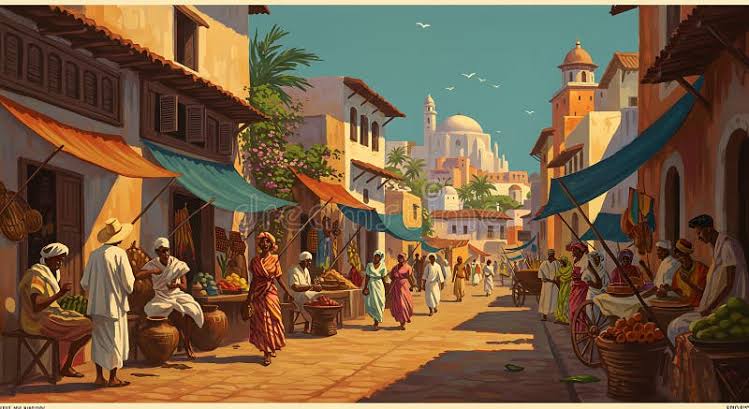

Travel is often remembered through photographs, videos, and souvenirs. Yet there is another way to experience a destination: draw it. Travel art turns streets, buildings, markets, people, and small daily moments into personal visual memories. A sketch can capture not only what a place looks like but also how it feels.
Travel sketching encourages people to slow down and observe. Instead of taking a quick photo and moving on, the artist studies a doorway, watches a market vendor, notices the shape of an old building, or follows the movement of people in a busy street. Urban Sketchers describes this approach as drawing on location through direct observation and using art to tell the story of places where people live and travel.
What Is Travel Art?
Travel art is artwork created to record or interpret places, journeys, cultures, and experiences. It can include pencil sketches, ink drawings, watercolor paintings, digital illustrations, mixed-media pages, illustrated maps, and travel comics.
Unlike a traditional landscape painting, travel art does not have to focus on a perfect view. A crowded café, colorful shopfront, train station, market stall, or quiet street can become the subject. The goal is often to capture a sense of place rather than reproduce every detail with photographic accuracy.
Why Travel Sketching Feels Different
Drawing changes the way people look at their surroundings. A photographer may capture a scene in seconds. An artist usually needs more time to study shapes, light, proportions, movement, and relationships between objects.
This slower process can create a stronger connection with a destination. National Geographic’s travel sketching account describes how sketching encouraged closer observation and a deeper sense of being present.
A travel sketchbook also becomes a personal record. It may contain imperfect drawings, handwritten notes, colors, maps, tickets, and quick observations. Together, these small pieces can tell a much richer story than a collection of perfectly framed photographs.
Illustrating Architecture While Traveling
Architecture is one of the most popular subjects in travel art. Every city has its own visual language. Rooflines, windows, doors, balconies, towers, walls, arches, and decorative details can reveal a great deal about local history.
Old buildings are especially interesting because they often contain details that disappear from modern streets. An artist might focus on an ornate doorway in one sketch and then capture the entire street in another. The result becomes both an artistic record and a personal architectural diary.
Drawing Famous Buildings
Famous landmarks naturally attract artists. They are recognizable and often have strong shapes that work well on a page. However, drawing a landmark does not mean copying a postcard view.
Try changing the viewpoint. Draw the building from a side street, include nearby trees, place people in the foreground, or show only a small architectural detail. These choices can make a familiar landmark feel personal rather than generic.
Finding Beauty in Ordinary Buildings
Some of the best travel art comes from places that never appear in guidebooks. A small apartment building, painted shop, old staircase, neighborhood mosque, café, or roadside house can tell a story about local life.
This approach is central to urban sketching. Artists often draw ordinary surroundings because those scenes reveal how people actually live. Urban Sketchers encourages artists to document their surroundings and create visual records of time and place.
Travel Art and Local Markets
Markets are perfect subjects for travel art because they combine color, movement, architecture, food, objects, and people. A single market can provide dozens of possible scenes.
An artist might sketch a fruit stall, a spice display, hanging fabrics, a crowded walkway, or a vendor arranging products. There is no need to draw the entire market. Choosing one small moment often creates a stronger composition.
Capturing the Energy of a Market
Markets are constantly changing. People walk through narrow spaces, sellers move products, customers negotiate, and vehicles pass nearby. This makes them challenging but exciting places to draw.
Quick sketches are useful here. Instead of trying to create a perfect drawing, capture the basic movement first. A few lines can suggest a person carrying bags. Another shape can show a vendor standing behind a table. The goal is to preserve the energy of the scene.
A travel sketching account from National Geographic describes drawing at a busy night market in Ho Chi Minh City and shows how changing the artist’s position could create a closer connection with the people and environment being drawn.
Drawing People and Local Life
Buildings show where people live, but people show how a place lives. For this reason, figures can add enormous value to travel art.
You do not need to draw detailed portraits. A simple figure can provide scale, movement, and emotion. Someone waiting for a bus, drinking coffee, carrying groceries, working at a stall, or walking through a square can make an architectural sketch feel alive.
Respecting People While Sketching
Drawing people in public requires awareness and respect. Some people may enjoy being included in an artist’s work, while others may feel uncomfortable.
When a person is the main subject, asking permission is often the best approach. When people are simply part of a public scene, artists can use quick gestures and simplified figures rather than focusing on recognizable facial details.
The goal should be observation rather than intrusion. Good travel art respects the people and communities it portrays.
Capturing Local Culture Through Art
Travel art can document more than buildings and streets. It can record traditions, clothing, food, transportation, signs, crafts, festivals, and everyday routines.
These details help create a sense of identity. A sketch of a doorway may show local design. A drawing of a market may reveal traditional products. A café scene can show how people gather and spend time together.
Travel sketching workshops often use exactly this approach. For example, travel-sketching programs in India have focused on architecture, markets, streets, traditions, and the people who form the heart of local communities.
Choosing the Right Travel Art Supplies
Travel art does not require a large collection of expensive materials. In fact, lightweight equipment is usually more practical.
A small sketchbook, waterproof pen, pencil, eraser, and compact watercolor set can be enough for an entire trip. Some artists prefer markers or colored pencils. Others use a tablet for digital drawing.
The best supplies are the ones you will actually carry. A huge art kit can become inconvenient when walking through a city all day. Simple tools often make it easier to sketch whenever inspiration appears.
Pen and Ink Travel Art
Pen and ink is a popular choice because it is portable and expressive. A single black pen can create strong architectural lines, shadows, textures, and figures.
Fine-line pens work well for detailed buildings. Broader pens can create heavier shadows and stronger visual contrast. Some artists add watercolor later to give the drawing more atmosphere.
Travel illustrator Jitesh Patel describes using pencil sketches, fine-line pens, and marker colors to create travel maps and drawings featuring architecture, streets, markets, and public spaces.
Watercolor for Travel Sketching
Watercolor is especially useful when a destination has strong colors and changing light. It can quickly suggest the warm wall of a building, the green of a tree, the blue of water, or the bright colors of a market.
Watercolor does not need to be perfectly controlled. Loose washes can make a sketch feel spontaneous. This is one reason watercolor and ink work so well together.
The ink can establish structure, while watercolor adds mood and atmosphere. The result can remain loose without losing the identity of the scene.
Digital Travel Illustration
Digital tools have expanded the possibilities of travel art. Artists can now sketch on tablets, add colors later, experiment with layers, and share work online almost immediately.
Digital illustration is useful for travelers who want to create finished artwork rather than traditional sketchbook pages. It can also be combined with photography, maps, typography, and handwritten notes.
However, digital tools are not automatically better. A simple pen and paper can encourage closer observation because there are fewer technical distractions. The best medium depends on the artist’s goals.
Creating an Illustrated Travel Journal
A travel sketchbook becomes more interesting when drawings are combined with small pieces of information. Add a location, date, weather, short note, color sample, or personal observation beside the artwork.
The page does not need to look perfect. In fact, imperfections can make it more personal. A quick drawing next to a handwritten sentence may bring back a memory years later.
Travel sketching guides often recommend treating the sketchbook as a visual story rather than a collection of isolated drawings. Small sketches, notes, maps, and unfinished studies can work together to communicate the experience of a place.
How to Start Travel Art as a Beginner
The hardest part for many beginners is deciding what to draw. A busy street can contain too many possible subjects. Trying to capture everything often creates frustration.
Start with one small object. Draw a doorway, chair, bicycle, cup, window, tree, sign, or person. Once you become comfortable, combine several elements into a larger scene. This approach reduces pressure and helps develop observation skills.
Another useful method is to focus on the largest shapes first. Establish the building, street, or market stall before adding small details. This helps keep the drawing balanced.
Drawing Without Chasing Perfection
Travel art does not need to look like professional architectural rendering. A sketch is often valuable because it contains the artist’s interpretation.
Lines may be uneven. Perspective may not be perfect. People may have strange proportions. Colors may not exactly match reality. These imperfections can actually give the work personality.
The important question is whether the drawing captures something meaningful about the moment. A technically imperfect sketch can be far more memorable than a perfect drawing that feels disconnected from the experience.
Finding Interesting Places to Draw
Tourist attractions are obvious choices, but they are not the only possibilities. Walk through residential neighborhoods, visit local markets, sit near transportation hubs, or spend time in public squares.
Small details often become the most memorable subjects. A painted sign, unusual balcony, street vendor, old bicycle, café table, or colorful doorway may tell you more about a destination than another picture of its most famous landmark.
Local sketching groups can also help. Urban Sketchers connects people around the world who draw on location, and local chapters can provide opportunities to sketch with people who already know their city.
Travel Art as Cultural Storytelling
Travel art can do something that ordinary souvenirs often cannot. It can tell a story from the artist’s own point of view.
A sketch can show what attracted the artist’s attention. It can preserve a particular moment, light condition, conversation, or street scene. This makes travel art personal even when the subject is a famous destination.
Illustrators around the world use this approach to explore culture and identity. Travel-based projects have documented architecture, festivals, landscapes, markets, and everyday life through personal visual interpretations.
Travel Art in the Age of Photography
Photography has not made travel drawing irrelevant. Instead, the two mediums can complement each other.
A photograph can preserve exact details. A sketch can simplify those details and emphasize what mattered emotionally. Artists can also use photographs as references after returning home, although drawing directly on location creates a different relationship with the subject.
Modern travel artists often combine photography, sketches, notes, maps, and digital tools. This creates a flexible form of visual storytelling that can work across books, social media, exhibitions, and personal journals.
Why Travel Art Creates Strong Memories
Drawing requires attention. When you spend twenty minutes studying a street corner, you notice things that you might otherwise miss.
You notice how sunlight reaches a wall. You hear the sounds around you. You see how people move through the space. You may even remember a smell or conversation connected to the scene. The drawing becomes connected to all of those experiences.
That is why a simple sketch can become a powerful souvenir. It represents not only what you saw but also the time you spent looking.
The Future of Travel Art
Travel art is adapting to new technology while keeping its traditional purpose. Artists now share sketches instantly, create digital travel journals, teach online workshops, and combine illustration with interactive maps.
At the same time, the desire to slow down has become an important part of modern travel. Sketching gives travelers a reason to pause instead of rushing from one attraction to another.
The future may therefore combine traditional observation with digital storytelling. An artist might draw a market by hand, photograph the page, add location information digitally, and publish the entire journey as an interactive visual story.
Conclusion
Travel art offers a thoughtful way to experience architecture, markets, and local life. It encourages travelers to look carefully instead of simply passing through. A sketch can preserve the shape of a building, the energy of a market, or a small moment between people.
You do not need to be an experienced artist to begin. Carry a small sketchbook, choose one subject, and give yourself permission to make imperfect drawings. Over time, those simple marks can become a visual record of places, people, and experiences that photographs alone may not fully capture.
