



















































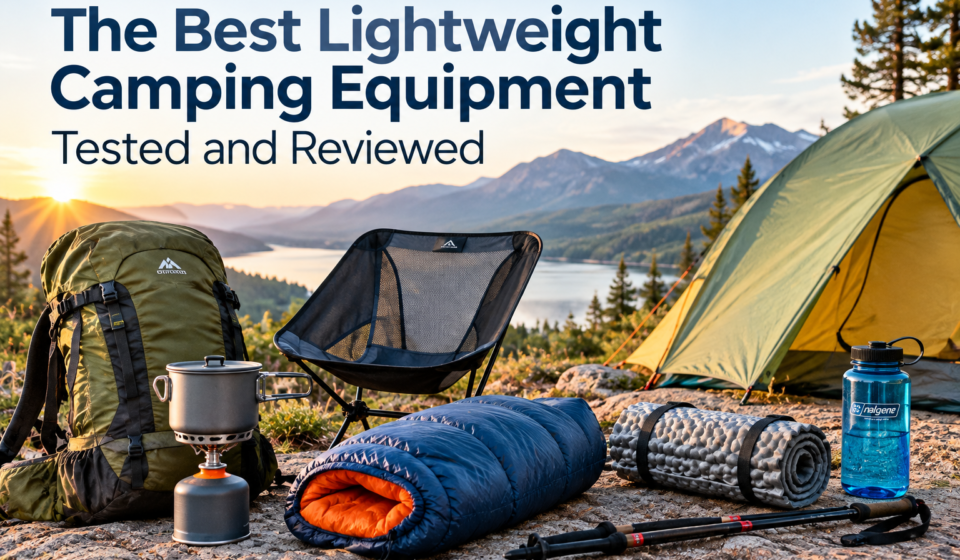

Camping is more enjoyable when you can carry everything you need without feeling weighed down. Heavy equipment can make long hikes tiring, take up valuable backpack space, and turn a relaxing outdoor trip into a difficult journey. The right lightweight camping equipment helps you travel comfortably while keeping essential supplies close at hand.
Modern outdoor gear offers many ways to reduce pack weight without giving up warmth, shelter, or safety. Lightweight tents, compact sleeping bags, inflatable sleeping pads, portable stoves, and well-designed backpacks can make a noticeable difference. However, the lightest product is not always the best choice. Durability, weather protection, comfort, and price matter just as much.
This guide explores the best lightweight camping equipment for different outdoor needs. It draws on published gear reviews and product specifications rather than claiming independent hands-on testing. The goal is to help beginners and experienced campers understand which equipment deserves consideration and how to build a practical camping kit.
Why Lightweight Camping Equipment Matters
Enjoy Longer Hiking Days With Less Effort
Carrying less weight can make a long hiking day feel more manageable. Every item in your backpack adds to the total load, including your tent, sleeping system, cooking supplies, water, and clothing. When these items become lighter, you may find it easier to climb hills, cover longer distances, and enjoy your surroundings.
Lightweight equipment is especially useful for backpackers who move between campsites. Instead of spending too much energy carrying supplies, you can focus on the trail and your destination. A comfortable pack also makes breaks more enjoyable because your shoulders and back have less weight to support.
Keep Comfort and Safety a Priority
Reducing pack weight should never mean removing essential safety equipment. A lightweight shelter must still protect you from rain and wind. Your sleeping system must provide enough insulation for expected nighttime temperatures. You also need suitable clothing, navigation tools, first-aid supplies, and reliable lighting.
The best approach is to remove unnecessary items before sacrificing important features. Choose equipment that serves several purposes when practical, and select products that suit your destination. This creates a balanced camping setup that remains light, comfortable, and dependable.
Best Lightweight Camping Equipment for 2026
Lightweight Backpack: Your Main Carrying System
Your backpack holds almost everything you need, so its weight and design deserve careful attention. A good backpack should fit your body, support your expected load, and provide easy access to frequently used items. Choosing a pack simply because it has the lowest advertised weight can lead to discomfort on longer journeys.
The Gossamer Gear Mariposa 60 is a strong option to investigate for hikers who want a lightweight pack with useful storage and carrying comfort. OutdoorGearLab named it its top ultralight backpack in its 2026 review. The Durston Kakwa 55 is another option worth considering, particularly for hikers who want an internal frame and a balance between weight and load support. These recommendations are based on published testing, not personal testing for this article. OutdoorGearLab’s 2026 backpack review.
Before buying, check the backpack’s capacity, torso measurements, hip-belt fit, and recommended load range. A 40-liter pack may suit an experienced minimalist on a short trip, while a 55- or 60-liter model can provide more room for longer journeys. Try the pack with weight inside whenever possible. A comfortable fit is more valuable than saving a few ounces with an unsuitable design.
Ultralight Camping Tent: Reliable Shelter Without Extra Weight
A tent is one of the most important items in any camping kit. It protects you from rain, insects, wind, and changing temperatures. Traditional tents can be bulky, but modern lightweight designs use carefully selected fabrics and efficient pole systems to reduce packed weight.
The Durston X-Mid Pro series is worth considering for experienced backpackers seeking a premium, weight-conscious shelter. Trekking-pole tents can also reduce equipment weight because they use hiking poles for support rather than relying entirely on separate tent poles. However, they require suitable pitching conditions and some practice.
Campers who prefer straightforward setup may find a lightweight freestanding tent more convenient. Models in the Big Agnes Fly Creek family are examples of shelters designed around portability. When comparing tents, examine packed weight, interior space, ventilation, weather resistance, and setup time. A tent that saves weight but leaves you cramped or poorly protected may not be worth the trade-off.
For more options, consult CleverHiker’s 2026 ultralight tent guide, which describes its evaluation of shelter weight, comfort, durability, and weather performance.
Lightweight Sleeping Bag: Stay Warm Without Carrying Too Much
A sleeping bag can take up considerable room in a backpack. A lightweight model made with suitable insulation can reduce both weight and packed size. However, warmth should remain the main consideration because temperatures often fall more sharply at night than campers expect.
Down sleeping bags generally provide an excellent warmth-to-weight ratio and compress well. They can be a good choice for backpackers who need compact equipment. Their main disadvantage is that moisture management matters. Wet down can lose much of its insulating performance, so proper storage and weather protection are important.
Synthetic sleeping bags are often more affordable and can retain useful insulation in damp conditions. They may weigh more or occupy more space than comparable down models, but they can make sense for wet environments and budget-conscious campers.
The Sea to Summit Spark range is worth researching if low weight and compact packing are priorities. Other options include selected models from Therm-a-Rest, Kelty, and Feathered Friends. Compare the manufacturer’s temperature ratings carefully, and remember that individual sleepers experience cold differently. Choose a bag suitable for the lowest temperatures you reasonably expect.
Lightweight Sleeping Pad: Improve Comfort on the Trail
A sleeping bag alone does not provide enough comfort on hard or cold ground. A sleeping pad adds cushioning and helps reduce heat loss to the surface beneath you. It is therefore an important part of a complete sleeping system.
The Therm-a-Rest NeoAir XLite NXT is a notable option for three-season backpacking. Its design combines a compact-packed size with insulation and cushioning. The NEMO Tensor Elite is another lightweight model featured in published ultralight gear reviews. Each may suit a different camper depending on desired thickness, insulation, and budget.
Check a pad’s R-value before purchasing. This measurement indicates its resistance to heat transfer, with higher values generally providing more insulation. A pad suitable for warm summer nights may not offer enough protection for cold-weather camping.
Also consider the sleeping position. Side sleepers may prefer a thicker pad, while campers who want maximum simplicity might choose a closed-cell foam model. Inflatable pads usually offer better cushioning for their packed size, but they can puncture. Carrying an appropriate repair kit is a sensible precaution.
Portable Camping Stove: Cook Meals With Less Bulk
A compact camping stove lets you prepare hot meals and drinks without carrying a large cooking system. For backpackers, the ideal stove offers reliable ignition, reasonable fuel efficiency, and a small packed size.
The Soto WindMaster is a strong option to research for backpacking trips. Backpacker magazine highlighted its low weight and ability to perform in windy conditions in its 2026 ultralight gear coverage. The BRS-3000T is another option for experienced campers who want an exceptionally compact canister stove, although its suitability depends on the cooking conditions and cookware used.
A stove’s real value depends on more than its weight. Check how quickly it boils water, how stable the pot feels, and whether it performs well in the temperatures you expect. Wind protection, fuel availability, and cooking style can all affect efficiency.
For short trips, a small stove and lightweight pot may be enough. Longer adventures might require a larger fuel supply or more versatile cooking equipment. Always follow the manufacturer’s instructions and use camping stoves outdoors in a properly ventilated area. Never operate a fuel-burning stove inside an enclosed tent because of fire and carbon monoxide risks.
Compact Water Filter: Carry Less Water Safely
Water is essential, but carrying large quantities can quickly increase pack weight. A suitable water treatment system allows you to collect water from appropriate sources when conditions permit. This can reduce the amount you need to carry between reliable water points.
The Sawyer Squeeze is a well-known option among backpackers because of its compact design. Other lightweight filters and purification systems may suit different trips. Some remove many common waterborne parasites and bacteria, while other methods address a wider range of contaminants.
Before choosing a filter, check exactly what it removes. Standard backpacking filters do not necessarily remove viruses, dissolved chemicals, or heavy metals. Your treatment method should match the risks in your destination. Water that looks clear is not automatically safe to drink.
Carry enough water for the distance between reliable sources, and learn how to maintain your chosen filter. In freezing conditions, some filters can become damaged if water inside them freezes. A little preparation can prevent an important piece of equipment from failing during a trip.
Lightweight Headlamp: Essential Lighting After Dark
A headlamp is more practical than a handheld flashlight when setting up camp, preparing food, or walking after sunset. It keeps your hands free and directs light where you need it. Modern rechargeable models can provide useful brightness without adding much weight.
The Petzl Swift LT is one lightweight option featured in Backpacker’s 2026 ultralight gear coverage. When comparing headlamps, look at brightness, battery life, charging method, weather resistance, and the availability of replacement batteries.
Maximum brightness is not always the most useful feature. A lower setting may provide enough light for cooking or moving around a campsite while preserving battery power. A red-light mode can also help reduce glare in some nighttime situations.
Test your headlamp before leaving home and carry a backup lighting option for remote trips. If your route requires navigation after dark, choose a model that provides enough light for safe movement rather than focusing only on its advertised weight.
How to Choose the Best Lightweight Camping Equipment
Compare Weight, Durability, and Performance
Every camping product involves trade-offs. Lighter materials can reduce pack weight, but some may require more careful handling. A minimalist tent may be easy to carry yet less spacious than a traditional shelter. A compact stove may be ideal for boiling water but less suitable for preparing complex meals.
Start by deciding which features matter most for your trips. If you hike long distances, weight may be a major priority. If you camp in rough weather, shelter strength and insulation deserve greater attention. For family camping, convenience and living space may matter more than achieving the lowest possible base weight.
Read independent reviews and compare manufacturer specifications before buying. Look for details about actual packed weight, durability, weather performance, and common limitations. These details provide a better basis for comparison than marketing claims alone.
Set a Realistic Camping Gear Budget
Lightweight camping equipment can be expensive, especially when manufacturers use advanced fabrics, premium insulation, or specialized construction. However, you do not need to purchase the most expensive products to enjoy comfortable outdoor adventures.
Begin with the equipment that affects safety and comfort most. A dependable shelter, suitable sleeping system, comfortable backpack, and appropriate water treatment method should take priority. You can upgrade smaller accessories later as you discover which features matter to you.
Consider the cost per trip rather than the purchase price alone. A durable product used regularly may offer better long-term value than a cheaper item that needs frequent replacement. At the same time, expensive gear is not automatically better for every camper.
Compare warranties, repair options, replacement parts, and seasonal discounts. Buying used equipment can also save money, provided you inspect it carefully for damage, wear, and missing components.
Check the Weather and Type of Trip
The best lightweight camping equipment depends on where you plan to go. A warm-weather overnight trip requires a different setup from a multi-day hike through cold mountains. Humidity, rainfall, wind, insects, and water availability can all change your equipment needs.
For summer trips, a breathable shelter and a sleeping bag suited to mild conditions may be enough. For colder adventures, you may need a warmer sleeping bag, a more insulated pad, additional clothing, and a shelter designed for stronger weather.
Consider how far you will travel between campsites. A compact setup works well when you move frequently, while a more spacious arrangement may suit a campsite where you stay for several days. Match every major purchase to the conditions you expect to encounter.
Practical Tips for Packing Lightweight Camping Gear
Remove Unnecessary Items Before Buying Upgrades
One of the simplest ways to reduce pack weight is to review what you already carry. Many campers pack duplicate clothing, oversized toiletries, unnecessary kitchen tools, and accessories they rarely use. Removing these items can make a noticeable difference without requiring expensive purchases.
Lay out your equipment before a trip and identify the purpose of each item. If two products perform the same task, decide whether both are genuinely necessary. Multi-purpose equipment can sometimes replace several separate items, provided it performs each job safely.
However, do not remove essential emergency supplies simply to reach a particular weight target. Navigation tools, first-aid supplies, weather protection, and communication equipment remain important. The aim is to eliminate waste, not compromise safety.
Organize Your Backpack Efficiently
Good packing makes your equipment easier to carry and access. Place heavier items close to your back when appropriate, while keeping frequently needed supplies within easy reach. Use dry bags or suitable waterproof storage to protect sleeping equipment and spare clothing from moisture.
Keep your cooking kit organized so that small accessories do not become scattered. Store your first-aid supplies and emergency items where you can find them quickly. After each trip, check what you used and what remained untouched.
These small habits help you improve your setup over time. You can identify unnecessary items, replace inconvenient equipment, and learn how much capacity you really need.
Test Your Equipment Before Leaving Home
Never assume that new camping equipment will work perfectly straight out of the package. Pitch your tent in the garden or another suitable area, inflate your sleeping pad, and check your stove according to the manufacturer’s instructions.
Make sure you understand how to adjust your backpack and operate your headlamp. Inspect zippers, seams, straps, valves, and connectors for obvious problems. If something does not fit or function properly, it is much easier to address the issue at home.
A short practice session can also reveal missing accessories. You may discover that you need extra tent stakes, a repair patch, a compatible fuel canister, or a suitable charging cable. Preparing in advance helps prevent avoidable problems outdoors.
Common Mistakes When Buying Lightweight Camping Equipment
Choosing the Lowest Weight at Any Cost
Some campers focus so heavily on weight that they overlook comfort and reliability. A very small sleeping pad may save space but leave you uncomfortable. An ultralight backpack may feel unsuitable when carrying a heavy food supply. A minimalist shelter may require more skill to pitch securely.
Think about the complete camping system rather than evaluating individual products in isolation. A small weight saving is not worthwhile if it makes the rest of your equipment less comfortable or practical.
Ignoring Product Compatibility
Camping products must work together. Your backpack should accommodate your shelter and sleeping system. Your stove needs compatible fuel, and your sleeping pad should provide enough insulation for your sleeping bag and the expected conditions.
Check dimensions, connection types, manufacturer guidance, and packed sizes before purchasing. Compatibility problems can reduce convenience and may even create safety risks.
Forgetting Essential Safety Equipment
A lightweight setup still needs emergency preparation. Carry appropriate navigation tools, a first-aid kit, sufficient water, weather protection, and reliable lighting. Depending on the location, you may also need a personal locator beacon or another emergency communication device.
Research local conditions and regulations before departure. Tell someone your planned route when appropriate, and understand what to do if the weather changes or you cannot reach your intended campsite.
Final Thoughts
The best lightweight camping equipment helps you enjoy the outdoors with less unnecessary weight and fewer complications. A comfortable backpack, dependable tent, suitable sleeping bag, insulated sleeping pad, compact stove, water treatment system, and reliable headlamp form a useful foundation for many backpacking trips.
There is no single setup that works perfectly for everyone. Experienced hikers may prefer highly specialized equipment, while beginners often benefit from products that are easier to use and more forgiving. Your destination, weather conditions, experience level, and budget should guide every purchase.
Start by improving the equipment you use most often, then make changes as you learn from each trip. Compare independent reviews, check real product specifications, and practice using your gear before heading outdoors. With thoughtful choices and careful preparation, you can build a lightweight camping kit that supports comfortable, enjoyable, and safer adventures.
