



















































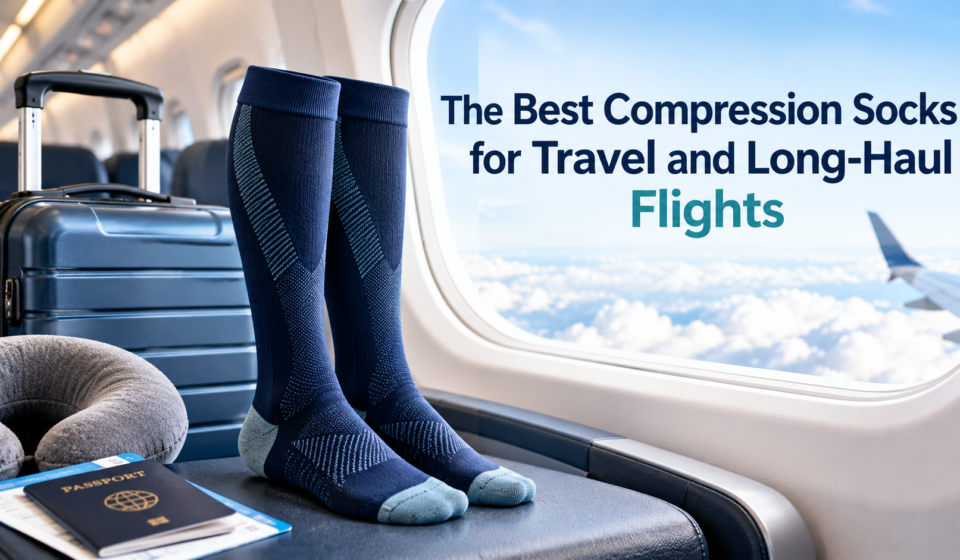

Long flights can leave your feet swollen, your ankles uncomfortable, and your legs feeling tired. Sitting in one position for several hours can slow blood flow in the legs, especially when you have little space to stretch or move around. The best compression socks for travel and long-haul flights can help manage swelling and improve comfort during extended journeys.
Compression socks are designed to apply gentle pressure to the legs. Many travel-friendly styles provide graduated compression, which means the pressure is strongest around the ankle and gradually decreases toward the calf. This design helps blood flow back toward the heart. However, not every pair offers the same level of support, comfort, or breathability.
Choosing the right socks depends on your travel habits, leg measurements, preferred fabric, and personal health needs. Some travelers want lightweight socks for an occasional flight. Others need firmer support for frequent international journeys. This guide explains what to look for and how to choose a pair that suits your next trip.
Why Compression Socks Matter for Travel
How Compression Socks Support Leg Comfort
When you sit for hours without moving your legs, blood can collect in the lower limbs. Fluid may also build up around the ankles and feet. This can cause swelling, heaviness, and discomfort after a long journey.
Graduated compression socks apply controlled pressure to the legs. This pressure supports the movement of blood through the veins and may reduce travel-related swelling. A well-fitted pair can also help your legs feel more comfortable when you arrive at your destination.
These benefits make compression socks useful for long-haul flights, lengthy train journeys, and extended road trips. They are particularly worth considering if your feet tend to swell during travel.
Are Compression Socks Useful on Long-Haul Flights?
Long-haul flights often involve eight hours or more of sitting. Limited leg movement can increase the risk of deep vein thrombosis, or DVT, in some travelers. DVT occurs when a blood clot forms in a deep vein, usually in the leg.
Medical guidance and research support the use of properly fitted compression stockings in certain travel situations, particularly for people at increased risk. However, ordinary travel socks are not a guarantee against blood clots. Regular movement and individual risk assessment remain important.
If you have a history of blood clots, recent surgery, significant circulation problems, or another medical risk factor, speak with a healthcare professional before choosing compression socks. They can help you decide whether you need them and which compression level is appropriate.
The Best Compression Socks for Travel and Long-Haul Flights
Comrad Knee-High Compression Socks for Everyday Travel
Comrad knee-high compression socks are worth considering if you want a travel-friendly pair that balances support with everyday comfort. The brand offers graduated compression options, including styles designed for regular use and extended periods on your feet.
For many healthy travelers, a moderate compression level is a practical starting point. A comfortable fabric, secure fit, and smooth construction can make a difference when you wear socks for several hours. Knee-high designs also cover the lower leg without adding the extra fabric of a thigh-high style.
Before purchasing, check the exact compression rating and sizing chart for the model you choose. Product ranges can change, and different styles may offer different levels of pressure.
Bombas Compression Socks for Softness and Comfort
Bombas compression socks may suit travelers who value soft materials and a more everyday appearance. Their designs can work well with casual travel outfits, trousers, and comfortable walking shoes.
Comfort matters during a long flight because you may wear the same pair from the airport to your hotel. Look for a design that feels supportive without creating painful pressure around your toes, ankle, or calf. A breathable fabric can also help keep your feet comfortable during a warm journey.
Check the specifications carefully before buying. Not every sock from the same brand has the same compression rating, and the best option is the one that matches your needs and fits correctly.
CHARMKING Compression Socks for Budget-Conscious Travelers
CHARMKING compression socks are often sold in multipacks, making them an option for travelers who want several pairs without spending too much. Having extra pairs can be helpful during a long holiday, especially when your itinerary includes multiple flights or several days of walking.
When comparing budget socks, pay attention to the stated compression level, size range, fabric, and durability. A low price is useful only if the socks fit properly and remain comfortable throughout the journey.
Check whether the product provides graduated compression and whether its measurements suit your legs. Avoid choosing a pair based only on customer ratings or attractive colors. Fit and the correct pressure level are more important than appearance.
Sockwell Compression Socks for Temperature Control
Sockwell offers compression socks made with wool blends and other materials intended to provide comfort during extended wear. Merino wool can help manage temperature and moisture, which may appeal to travelers who find synthetic fabrics uncomfortable.
A wool-blend sock can be useful on a cold overnight flight or during a trip that involves changing temperatures. However, fabric preferences vary. Some travelers prefer a thin nylon blend, while others appreciate the feel of wool against the skin.
Check the product’s compression rating before buying. Sockwell offers different styles, so make sure the specific pair you select provides the level of support you want.
Physix Gear Compression Socks for Firmer Support
Physix Gear compression socks are another option to investigate if you prefer a snugger fit. Some models are marketed with firmer compression, making it important to check the exact pressure rating rather than relying on the brand name alone.
A firmer pair may be appropriate for some people, but stronger compression is not automatically better for every traveler. A sock that feels excessively tight can be uncomfortable and may be unsuitable for certain medical conditions.
If you need more than mild support, ask a healthcare professional which level is appropriate. Compare the manufacturer’s size chart with your measurements before placing an order.
Understanding Compression Levels for Air Travel
What Does 15–20 mmHg Mean?
Compression strength is commonly measured in millimeters of mercury, written as mmHg. This measurement indicates the pressure the sock applies to the leg.
Socks rated at 15–20 mmHg are often considered a moderate option for people seeking everyday support. Some travelers find this range comfortable for long journeys, particularly when they experience mild swelling after sitting for extended periods.
However, the correct level depends on your health, the product’s construction, and the fit. A label alone cannot tell you whether a particular pair is suitable for your needs.
When Should You Consider 20–30 mmHg?
A 20–30 mmHg pair provides firmer compression than a 15–20 mmHg pair. Some people use this level under medical guidance to manage particular circulation problems or swelling.
You should not automatically choose firmer socks simply because your flight is longer. Higher compression can be harder to put on and may be unsuitable for people with certain arterial circulation problems, skin conditions, or other medical concerns.
If you have a history of DVT, significant swelling, or a diagnosed vascular condition, ask a healthcare professional about the appropriate compression level. Their advice is more useful than choosing the strongest option available.
How to Choose the Right Compression Socks for Travel
Measure Your Calf Instead of Guessing Your Size
Correct sizing is one of the most important parts of buying compression socks. A pair that is too loose may not provide the intended support. A pair that is too tight may cause pain, skin irritation, or pressure around the top band.
Follow the manufacturer’s measuring instructions. Many brands ask for ankle circumference and calf circumference, and some also use lower-leg length or shoe size. Measure carefully and compare your results with the chart for the exact product.
Do not assume that your usual shoe size determines the correct compression sock size. If your measurements fall between sizes, contact the manufacturer or ask a qualified professional for guidance.
Choose Knee-High Socks for Most Travel Needs
Knee-high compression socks are a common choice for flights because they cover the lower leg, where travelers often notice swelling. They are also relatively easy to wear with trousers, jeans, and everyday travel clothing.
Thigh-high stockings may be appropriate for specific medical reasons, but most travelers should not assume that a longer sock provides better results. Choose the design recommended for your needs and make sure it fits smoothly.
Avoid folding, rolling, or bunching the top of a compression sock. This can create uneven pressure and reduce comfort.
Look for Breathable and Flexible Materials
Long journeys can make your feet warm, especially when you wear closed shoes for hours. Materials that manage moisture and allow comfortable movement can make compression socks easier to wear.
Nylon and elastane blends are common because they provide stretch and a close fit. Cotton blends may feel familiar and soft, while merino wool blends can help regulate temperature. The best material depends on your skin sensitivity, cabin temperature, and personal preference.
Pay attention to toe seams, heel construction, and the top band. Smooth seams and a secure but comfortable cuff can help prevent irritation during extended wear.
Consider Wide-Calf and Easy-On Designs
Standard sizes do not suit every leg shape. If you have wider calves, look for a product that offers dedicated wide-calf sizing rather than simply buying a larger size without checking the ankle measurements.
Easy-on designs may also help people who find compression socks difficult to put on. Some pairs have stretchier fabric or a construction intended to make dressing easier.
If you struggle to put on compression stockings, ask a healthcare professional whether a donning aid would help. Do not pull aggressively on the fabric, as this can damage the sock or cause discomfort.
How to Wear Compression Socks on a Long-Haul Flight
Put Them on Before Your Legs Swell
For many travelers, putting compression socks on before leaving for the airport is more practical than waiting until they notice swelling. Make sure your legs are dry and the socks are positioned correctly.
Smooth out wrinkles and check that the heel sits in the right place. The material should lie flat against your skin without twisting or creating tight folds.
Follow the product instructions about wearing time and removal. If you develop pain, numbness, unusual tingling, skin discoloration, or increased discomfort, remove the socks if safe to do so and seek medical advice.
Move Your Legs During the Flight
Compression socks are only one part of comfortable travel. Try to change position regularly and walk along the aisle when it is safe and permitted. If you cannot get up, move your ankles and feet while seated.
Simple ankle circles, heel raises, and toe movements can help you avoid remaining completely still for long periods. Keep your knees and legs in a comfortable position rather than crossing them for the entire flight.
Drink fluids regularly according to your needs, and avoid treating compression socks as a replacement for movement. Travelers with elevated clot risk should ask a healthcare professional about additional precautions before departure.
Common Mistakes to Avoid When Buying Travel Compression Socks
Choosing Compression That Is Too Strong
A higher mmHg rating does not necessarily mean a better travel sock. The right pressure depends on your needs and medical history. Choosing firmer compression without guidance can make the socks harder to wear and may create problems for some people.
Start by identifying whether you want general travel comfort or need support for a diagnosed condition. If you have a medical concern, get professional advice before choosing a compression level.
Ignoring the Fit and Size Chart
A sock can have excellent reviews and still be wrong for your legs. Poor fit may cause the cuff to dig into your calf, the fabric to wrinkle, or the foot section to feel cramped.
Always check the size chart for the exact model. If your calf is wider than average, look for an appropriate wide-calf option. Do not solve tightness by rolling down the sock.
Wearing Old or Damaged Socks
Compression fabrics can lose elasticity over time, especially with frequent wear and improper washing. A stretched-out pair may no longer provide the intended level of support.
Follow the care instructions on the label. Avoid harsh washing methods, high heat, and other practices that can damage elastic fibers. Replace socks when they lose their shape, develop holes, or no longer fit as intended.
The Best Compression Socks for Travel: Final Thoughts
The best compression socks for travel and long-haul flights combine a suitable compression level, accurate sizing, breathable material, and lasting comfort. Comrad and Bombas are worth considering for everyday comfort, CHARMKING may appeal to budget-conscious travelers, Sockwell offers wool-blend options, and Physix Gear has styles with firmer compression. Always check the specifications of the exact pair before purchasing.
For many healthy travelers, a well-fitted knee-high sock with moderate graduated compression is a sensible place to start. However, the right choice is not the same for everyone. If you have a history of blood clots, significant swelling, or a circulation condition, seek professional advice before buying compression stockings. Combine suitable socks with regular movement and other travel precautions to make long journeys more comfortable.

[…] Remote Camping Challenges Our Understanding of Connectivity, Safety, and Digital Independence October 11, 2026 The Best Compression Socks for Travel and Long-Haul Flights October 11, […]