


















































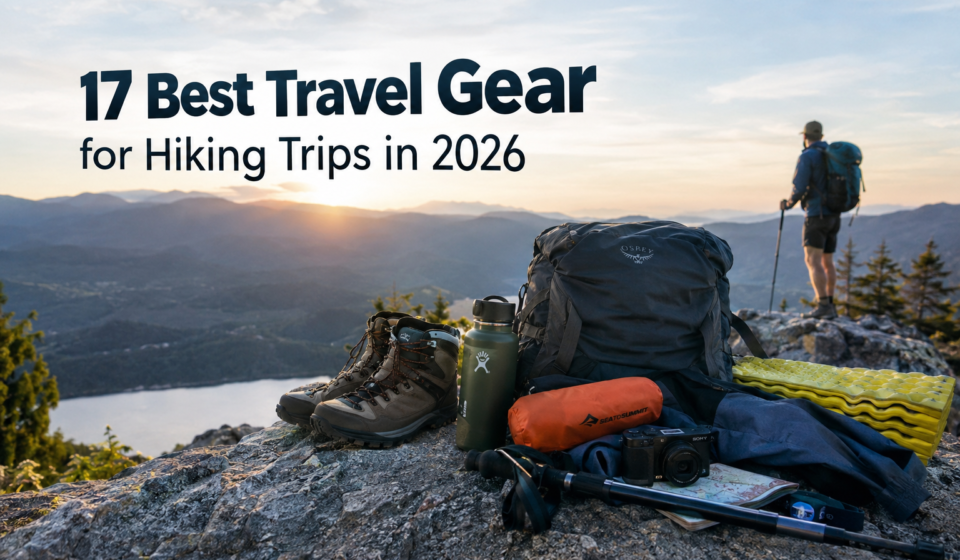

Hiking is a wonderful way to explore mountains, forests, national parks, and scenic trails. However, the right equipment can make a major difference in how comfortable and safe your trip feels. Good hiking gear helps you carry supplies, protect yourself from changing weather, stay hydrated, and enjoy longer walks with less stress.
The best travel gear for hiking trips in 2026 combines comfort, durability, lightweight design, and practical features. You do not need to purchase every item available in outdoor stores. Instead, focus on equipment that matches your destination, trip length, weather conditions, and hiking experience.
Whether you are planning a short day hike or a multi-day mountain adventure, choosing the right essentials will help you prepare with confidence. This guide covers 17 useful pieces of hiking equipment, explains why each one matters, and shares practical tips to help you choose the right gear for your next outdoor trip.
1. A Lightweight Hiking Backpack

Choose a Backpack That Fits Your Adventure
A lightweight hiking backpack is one of the most important items to pack for an outdoor trip. It keeps your water, food, clothing, first-aid supplies, and other essentials organized. A comfortable backpack also helps distribute weight across your body, reducing pressure on your shoulders during long walks.
For day hikes, a backpack with a capacity of around 15 to 30 liters is often enough. It can hold water, snacks, a rain jacket, sunscreen, and basic emergency equipment. Longer trips may require a 40 to 65-liter backpack, especially when you need to carry a sleeping bag, tent, cooking equipment, and extra clothing.
Look for Comfort and Useful Features
Choose a backpack with padded shoulder straps, an adjustable hip belt, breathable back support, and several practical compartments. Side pockets make water bottles easy to reach, while a separate section can protect clothing from small items. A rain cover is also helpful when hiking in wet conditions.
Before buying, adjust the straps and test the backpack with some weight inside. The right fit matters more than the number of pockets. A well-fitted backpack can make a long trail feel much more manageable.
2. Durable Hiking Shoes or Boots

Protect Your Feet on Different Trails
Hiking footwear deserves careful attention because your feet carry you through every part of the journey. The wrong shoes can cause blisters, discomfort, and poor traction. Suitable hiking footwear provides grip, support, and protection on uneven ground.
Low-cut hiking shoes are often suitable for maintained trails and lightweight trips. Mid-height boots may offer more ankle coverage and protection on rocky routes. Waterproof footwear can be useful in wet environments, although breathable non-waterproof options may feel more comfortable in hot, dry conditions.
Focus on Fit Before Style
Your shoes should feel secure without squeezing your toes. Leave enough room for your toes to move, particularly when walking downhill. Try footwear with the socks you plan to wear on the trail, and test it on a short walk before your trip.
Do not rely on brand names or appearance alone. Look for a suitable outsole, comfortable cushioning, and a fit that works with your feet. Breaking in new footwear before a challenging hike can help you avoid painful surprises.
3. Moisture-Wicking Hiking Socks
Keep Your Feet Dry and Comfortable
Hiking socks may seem like a small purchase, but they can improve comfort throughout the day. Cotton socks often hold moisture, which may increase friction and discomfort during long walks. Merino wool and synthetic hiking socks are generally better choices because they manage moisture more effectively.
The ideal thickness depends on your footwear, the weather, and your personal comfort. Lightweight socks work well in warmer conditions, while medium-weight options can provide additional cushioning in cooler weather. Seamless or low-friction designs may also help reduce irritation.
Pack an Extra Pair for Longer Trips
Carry at least one spare pair on longer hikes, especially when rain, streams, or sweaty feet are likely. Change socks if they become wet or uncomfortable. For multi-day adventures, clean and dry socks can make a significant difference to your daily experience.
Always test new socks with your hiking shoes before departure. A comfortable combination matters more than choosing socks based on thickness alone.
4. A Lightweight Waterproof Jacket

Stay Protected When the Weather Changes
A waterproof jacket is essential for hiking in areas where rain, wind, or sudden temperature changes are possible. Even a sunny morning can turn into a cold afternoon in the mountains. A lightweight rain shell protects you from wet conditions without taking up much space in your backpack.
Look for sealed seams, an adjustable hood, breathable fabric, and a design that allows easy movement. A compact jacket is especially useful for travelers who want to save luggage space. Waterproof and breathable materials can help balance weather protection with comfort during physical activity.
Choose Layers for Better Comfort
Your jacket should fit comfortably over a base layer and a warm midlayer. In cold weather, this combination provides more flexibility than relying on one thick coat. Pack the jacket even when the forecast looks promising, particularly on unfamiliar mountain trails.
5. Trekking Poles

Improve Balance on Uneven Ground
Trekking poles can make hiking more comfortable on steep climbs, rocky paths, and slippery descents. They provide additional points of contact with the ground and may help reduce the load on your legs during downhill walking. They are particularly useful when carrying a heavy backpack or crossing uneven terrain.
Adjustable poles are convenient for travel because you can shorten them for storage and change their length to suit the slope. Aluminum poles are generally durable, while carbon fiber options can be lighter. Comfortable grips, reliable locking mechanisms, and suitable tips are more important than appearance.
Find the Right Length and Technique
Set your poles so your elbows remain comfortably bent when the tips touch the ground on level terrain. Learn how to use them before attempting a demanding trail. When packing for air travel, check your airline’s rules because trekking poles may not be permitted in cabin baggage.
6. A Reusable Water Bottle or Hydration Bladder

Make Hydration Easy Throughout the Hike
Water is one of the most important hiking essentials. Walking uphill, carrying a backpack, and hiking in warm weather can increase your fluid needs. A reusable bottle is simple to fill and clean, while a hydration bladder allows you to drink through a hose without stopping to reach inside your pack.
Choose a capacity that matches the trail length, weather, availability of refill points, and your personal needs. For many day hikes, carrying around one to two liters is a useful starting point, but demanding routes or hot conditions may require more. Check the route in advance instead of assuming water will be available.
Keep Water Accessible and Safe
Place your bottle in an easy-to-reach pocket or secure the hydration bladder inside your backpack. If your route passes through streams or other untreated water sources, carry a suitable purification method. Clear-looking water is not automatically safe to drink.
7. A Portable Water Filter
Get More Flexibility on Longer Adventures
A portable water filter can be valuable on multi-day hikes where safe drinking water is difficult to carry for the entire journey. Small squeeze filters and compact pump systems can reduce the weight of water supplies when reliable sources are available along the route. However, not every filter removes every type of contaminant.
Before buying, check which microorganisms the device can remove and whether it addresses the risks found in your destination. Some situations require additional treatment, such as disinfection or boiling. Chemical contamination and salt are not removed by many standard hiking filters.
Understand the Limits of Water Treatment
Follow the manufacturer’s instructions carefully and maintain the filter as directed. Carry enough water for the journey to the next reliable source, along with a backup treatment option when appropriate. Never depend on finding a stream unless your route information supports that plan.
8. A Reliable Headlamp

Prepare for Darkness and Delays
A headlamp is useful even if you plan to finish your hike before sunset. Trails can take longer than expected, and unexpected delays may leave you walking in low light. A headlamp keeps your hands free for balancing, checking a map, or handling equipment.
Look for comfortable straps, simple controls, sufficient brightness for your route, and a design that resists rain. Rechargeable models are convenient for frequent travelers, while replaceable batteries can be useful on longer trips without access to electricity.
Carry Backup Power
Charge the headlamp before leaving and bring spare batteries or a suitable charging option. Use a lower brightness setting when possible to conserve power. A phone flashlight can provide temporary backup, but it should not replace a dedicated light on remote or challenging trails.
9. A Compact First-Aid Kit
Handle Minor Injuries on the Trail
A compact first-aid kit is essential for managing small problems during a hike. Blisters, scratches, minor cuts, and muscle discomfort can make an otherwise enjoyable trip difficult. Your kit should include supplies suited to the route, group size, trip duration, and your level of first-aid knowledge.
Useful items may include adhesive bandages, blister dressings, gauze, medical tape, antiseptic supplies, and personal medications. A small emergency blanket can also help provide warmth if conditions change. Keep everything organized in a waterproof pouch so you can find the right item quickly.
Prepare for More Than Small Cuts
Learn how to use your supplies before the trip. For remote routes, consider additional equipment and first-aid training appropriate to the risks. A basic kit is not a substitute for professional medical care, so know how to contact local emergency services and seek assistance when necessary.
10. A Portable Power Bank

Keep Your Essential Devices Charged
A portable power bank helps keep your phone, GPS accessories, and other small electronics working throughout your trip. This matters when you use your phone for navigation, photography, weather updates, or emergency communication. Cold temperatures and frequent GPS use can also reduce battery performance.
For a day hike, a compact power bank may be enough. Multi-day adventures may require a higher-capacity model, provided its weight is practical for your route. Check charging compatibility, cable requirements, and battery capacity before purchasing.
Protect Your Power Bank Outdoors
Store electronics in a waterproof pouch and keep charging cables neatly organized. Charge your devices before leaving, and use airplane mode when cellular service is unnecessary. Remember that a power bank cannot guarantee communication in areas without network coverage.
11. Offline Maps and a Compass
Navigate With Confidence
Navigation equipment helps you follow the intended route and make better decisions when trail signs are unclear. Download offline maps before leaving, particularly when hiking in remote areas where mobile service may be unreliable. A dedicated GPS device can also help on demanding routes.
A traditional map and compass provide a valuable backup because they do not depend on a phone battery or cellular signal. Learning basic navigation skills is just as important as owning the equipment. Before your hike, study the route, identify important junctions, and understand the expected distance and elevation gain.
Avoid Depending on One Device
Carry at least two suitable navigation options on unfamiliar or remote trails. Check your position regularly instead of waiting until you feel lost. If conditions become unsafe or you cannot confidently identify your location, stop and reassess rather than continuing in the wrong direction.
12. Quick-Drying Hiking Clothes
Dress for Movement and Changing Conditions
Quick-drying clothing helps regulate comfort when you sweat, encounter light rain, or hike through humid conditions. Synthetic fabrics and merino wool are popular choices for base layers because they manage moisture better than ordinary cotton. Lightweight hiking trousers also protect your legs from brush, insects, and rough surfaces.
Choose clothes based on the climate and intensity of your activity. In hot weather, breathable fabrics and sun-protective clothing can be useful. In colder environments, several adjustable layers offer more flexibility than one heavy garment.
Pack Clothes You Can Layer
Bring an extra insulating layer when temperatures may drop, especially at higher elevations. A lightweight fleece or insulated jacket can provide warmth during rest breaks. For longer trips, prioritize versatile clothing that works in different conditions without adding unnecessary weight.
13. A Wide-Brimmed Hat and Sunglasses
Protect Yourself From Sun Exposure
Sun protection matters on exposed trails, open hillsides, and high-altitude routes. A wide-brimmed hat or suitable cap helps shade your face, while sunglasses protect your eyes from bright sunlight. UV exposure can remain significant on cloudy days and may increase at higher elevations.
Choose comfortable sunglasses that offer verified UV protection. A lightweight hat with a secure fit is helpful when walking in windy conditions. Sunscreen and lip balm with sun protection can complement your clothing and eyewear.
Make Sun Protection Part of Your Routine
Apply sunscreen according to its instructions and reapply as needed, particularly after sweating. Keep your hat and sunglasses in an accessible pocket so you can use them whenever conditions change. These simple items are easy to pack and can improve comfort during long outdoor days.
14. Lightweight Camping Tent and Sleeping Bag

Choose Equipment for Overnight Hiking
A lightweight tent and sleeping bag are important for overnight hikes and multi-day backpacking trips. A tent provides shelter from wind and rain, while a suitable sleeping bag helps maintain warmth during the night. If your trip involves only a day hike, you generally will not need to carry these larger items.
Look for a tent that balances packed size, durability, ventilation, and weather protection. When choosing a sleeping bag, consider its temperature rating and the coldest conditions you reasonably expect. A sleeping pad is also important because it provides insulation from the ground and improves sleeping comfort.
Balance Weight With Weather Protection
Ultralight equipment can reduce the load on long trails, but saving weight should not come at the expense of essential protection. Check the forecast, local camping rules, and the expected overnight temperatures. Practice setting up your tent before departure, and keep your sleeping equipment dry in suitable waterproof storage.
15. Energy-Rich Trail Snacks

Maintain Your Energy on the Trail
Hiking can use considerable energy, especially when you climb steep slopes or carry a loaded backpack. Portable snacks help you refuel without preparing a full meal. Nuts, dried fruit, energy bars, and sandwiches are convenient choices because they are easy to pack and eat during short breaks.
Choose foods that you enjoy and can tolerate during physical activity. A combination of carbohydrates, fats, and protein can provide useful energy for longer outings. Pack enough food for your planned distance, and bring extra supplies in case your return takes longer than expected.
Store Food Properly
Use reusable containers or sealed bags to protect snacks from moisture and dirt. In areas with bears or other wildlife, follow local food-storage rules. Carry your rubbish back with you rather than leaving wrappers or food scraps on the trail.
16. A Compact Multi-Tool and Repair Kit
Fix Small Equipment Problems
A compact multi-tool can help with minor repairs and practical tasks during hiking trips. Depending on its design, it may include pliers, a small blade, screwdrivers, or other useful features. A lightweight repair kit can also contain duct tape, spare cord, and patches for damaged equipment.
You do not need a large collection of tools for an ordinary day hike. Choose a small, durable option that addresses the problems most likely to affect your equipment. For overnight trips, a few repair supplies can help you deal with loose straps, damaged tent fabric, or minor gear failures.
Pack Tools Responsibly
Keep sharp tools safely secured and check airline baggage restrictions before traveling. Store repair supplies in a dedicated pouch so they do not get lost inside your backpack. Remember that a multi-tool is useful for repairs, but it cannot replace proper emergency equipment or specialist tools when a situation requires them.
17. A Compact Emergency Shelter and Whistle

Prepare for Unexpected Delays
An emergency shelter can provide extra protection if you become stranded, injured, or delayed after the weather changes. A lightweight emergency bivy or suitable survival shelter takes up relatively little space and can be valuable on exposed or remote trails. It is especially worth considering when a small delay could leave you outdoors after dark.
A whistle is another simple safety item. Its sound can help attract attention when shouting is difficult or when you need to signal rescuers. These items are inexpensive compared with many hiking accessories, yet they can serve important purposes when a trip does not go according to plan.
Keep Safety Equipment Accessible
Store your emergency shelter and whistle somewhere you can reach quickly. Learn how to use the shelter before your trip, and check that it is appropriate for the conditions you may face. On remote routes, also consider whether you need a satellite messenger or personal locator beacon because a mobile phone may not work everywhere.
The right emergency equipment depends on the terrain, weather, and distance from assistance. The goal is to prepare for realistic problems without carrying unnecessary weight.
How to Choose the Best Travel Gear for Hiking Trips in 2026
Selecting hiking equipment becomes easier when you start with the type of adventure you plan to take. A short forest walk requires fewer supplies than a multi-day trek through remote mountains. Think about distance, elevation, weather, access to drinking water, and whether you will sleep outdoors before deciding what to purchase.
Your budget should also influence your choices. Spend carefully on footwear that fits, a comfortable backpack, and weather protection. These items directly affect your comfort during a hike. You can often save money on smaller accessories by choosing simple, reliable designs rather than buying every new gadget advertised for outdoor travel.
Weight is another important factor. Every extra item adds to the load you carry uphill. Choose versatile equipment that serves more than one purpose when practical, and avoid packing items you are unlikely to use. However, never remove essential safety supplies simply to make your backpack lighter.
For current hiking gear ideas and buying guidance, resources such as REI offer useful advice on footwear, daypacks, navigation, hydration, and emergency preparation. Its hiking essentials checklist is a helpful starting point when building your own kit.
Conclusion
The 17 best travel gear items for hiking trips in 2026 cover the essentials for comfort, organization, hydration, and safety. A well-fitted backpack, reliable hiking shoes, moisture-wicking socks, and a waterproof jacket form a strong foundation. Water supplies, navigation tools, lighting, first-aid equipment, and emergency protection help you prepare for unexpected situations.
You do not need to buy everything at once. Start with equipment that suits your usual trails, then add specialized items when your adventures require them. Test your gear before departure, check the weather, and plan your route carefully. With the right preparation, you can spend less time worrying about equipment and more time enjoying the scenery, discovering new trails, and making the most of your hiking trips.
