











































Best Portable Water Filters for Hiking: A Complete Guide to Safe Drinking Water on the Trail

Finding the best portable water filters for hiking is important for anyone who enjoys spending time on trails, exploring remote destinations, or planning multi-day backpacking adventures. Access to clean drinking water can become limited when hiking far from towns, campsites, and reliable water supplies. Streams, rivers, lakes, and other natural sources may look clear, but they can contain harmful microorganisms and particles that are not visible to the naked eye.
A portable water filter provides a convenient way to treat water collected from suitable outdoor sources. Modern hiking filters are designed to be lightweight, compact, and relatively easy to use. Depending on the filtration technology, they can help remove bacteria, protozoa, sediment, and other contaminants. Some advanced systems also combine filtration with additional treatment methods.
Choosing the right filter requires understanding how different technologies work and what level of protection they provide. Weight, flow rate, filter capacity, maintenance requirements, and compatibility with water bottles or hydration systems are also important considerations. With the right equipment and proper water treatment practices, hikers can prepare more confidently for outdoor adventures.
Why Portable Water Filters Are Essential for Hiking
Carrying enough drinking water is one of the most important parts of hiking preparation. However, water can be heavy, especially when planning long-distance journeys or multi-day backpacking trips. A liter of water weighs approximately one kilogram, so carrying several liters can quickly increase the weight of a backpack. A portable water filter can reduce the need to carry all the water required for an entire journey, provided suitable natural water sources are available along the route.
Natural water sources are not automatically safe to drink. Even clear mountain streams may contain microorganisms introduced by wildlife, livestock, human activity, or contaminated runoff. Drinking untreated water can expose hikers to illnesses caused by organisms such as Giardia and Cryptosporidium. A suitable water treatment system helps reduce these risks when used correctly.
Portable filters also provide flexibility during changing hiking conditions. Weather, trail difficulty, and physical activity can affect how much water a person needs. Having a reliable treatment option allows hikers to replenish their supply at appropriate water sources instead of depending entirely on the water carried from the starting point.
Types of Portable Water Filters for Hiking
Different portable water filters use different technologies to improve water quality. Understanding these options helps hikers select equipment that matches their destination and expected water conditions. Hollow-fiber membrane filters are among the most common choices for hiking because they are lightweight and designed to remove many bacteria and protozoa through very small filtration pathways.
Pump filters use a hand-operated mechanism to move water through a filtration cartridge. They can be useful when collecting water from shallow streams or when filling several bottles. However, they usually contain more components than simple squeeze filters and may require additional effort during use.
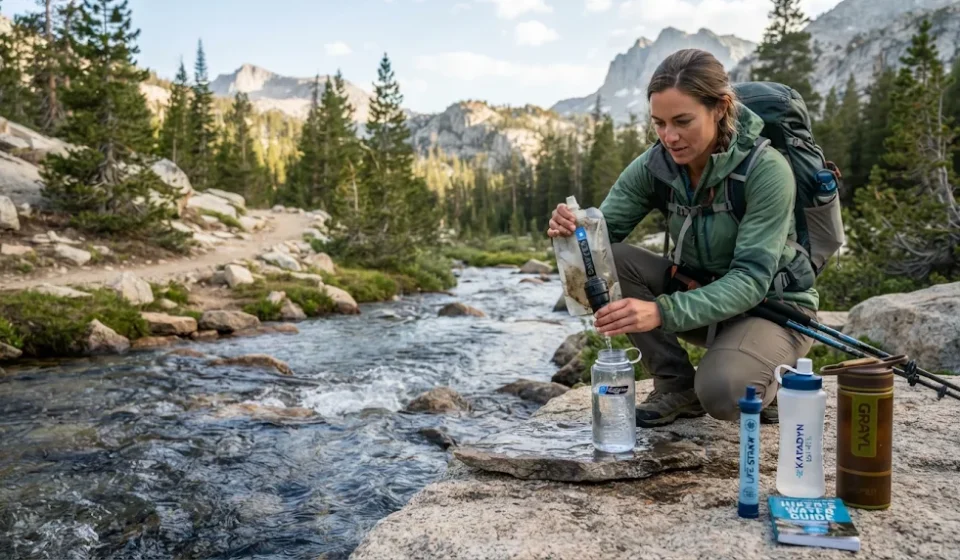
Gravity filters rely on gravity to move water through a filter element. They are particularly useful at campsites because hikers can hang a water reservoir and allow water to pass through the system without continuous pumping. Straw-style filters are another compact option. They allow users to drink directly from a suitable water source or compatible container, although their design may be less convenient for filling multiple bottles.
| Filter Type | Main Advantages | Potential Limitations | Best Use |
|---|---|---|---|
| Squeeze filter | Lightweight and simple to operate | Requires manual pressure | Day hikes and backpacking |
| Pump filter | Useful for collecting water from different sources | Requires physical effort | Group hiking and remote trips |
| Gravity filter | Convenient for treating larger quantities | Needs time and a suitable hanging location | Campsites and group trips |
| Straw filter | Compact and easy to carry | Limited convenience for storing treated water | Emergency use and short hikes |
| Bottle filter | Combines filtration and water storage | Capacity may be limited. | Everyday hiking and travel |
The most suitable design depends on how much water you need, how many people are traveling, and how frequently you expect to collect water. A lightweight squeeze filter may be ideal for solo hikers, while a gravity system can be more convenient for groups staying at a campsite.
Important Features to Look for in Hiking Water Filters
Weight is one of the first features to consider when choosing a portable water filter for hiking. Every additional item adds to backpack weight, so compact equipment can make long journeys more comfortable. Many hiking filters are designed to fit into small pockets or attach to water bottles, allowing travelers to carry them without taking up much space.
Filtration performance is even more important than size. Check the manufacturer’s specifications to understand which contaminants the filter is designed to reduce. Many standard hiking microfilters target bacteria and protozoa, but they may not remove viruses, dissolved chemicals, heavy metals, or salt. A filter’s advertised pore size alone should not be treated as proof of protection against every waterborne hazard.
Flow rate determines how quickly water passes through the system. A filter with a higher flow rate can make filling bottles more convenient, particularly when several people are hiking together. However, performance may decrease as the filter collects sediment or reaches the end of its service life. Regular cleaning and maintenance can help preserve its performance.
Filter capacity is another useful consideration. Manufacturers often specify an approximate amount of water that a cartridge can treat before replacement is recommended. Actual performance can vary depending on water quality and maintenance. Hikers should also consider replacement filter availability, cleaning instructions, durability, and whether the system is compatible with their existing bottles or hydration reservoir.
Best Portable Water Filters for Different Hiking Needs
The best portable water filter depends on the type of hiking adventure you are planning. Day hikers often benefit from compact squeeze filters or bottle-style systems. These designs are easy to carry and can provide convenient access to treated water when suitable natural sources are available. Their relatively simple construction also makes them practical for people who do not want complicated equipment.
Backpackers planning multi-day journeys may prefer a squeeze filter with a larger collection pouch or a gravity-compatible system. These options can make it easier to collect and treat water at different points along a trail. A system that works with standard bottles or hydration reservoirs can provide additional flexibility during longer trips.
For group hiking, pump and gravity filters may offer practical advantages. They can be useful when several people need drinking water at the same campsite. Although these systems may weigh more than individual filters, their larger collection capacity can make water preparation more convenient.
Emergency-focused hikers may consider carrying a compact straw filter or an additional water treatment method. However, relying on a single piece of equipment can be risky in remote environments. A backup option, such as an appropriate chemical treatment product or a method of boiling water, can provide additional protection if the primary filter becomes damaged or clogged.
How Portable Hiking Water Filters Remove Contaminants
Portable hiking filters work by separating unwanted materials from water as it passes through a treatment element. Many common backpacking filters use hollow-fiber membranes containing extremely small openings. Water moves through these membranes while larger particles and many microorganisms are retained. This technology can provide protection against numerous common biological contaminants when the filter is properly designed and maintained.
Microfiltration systems are generally effective against many bacteria and protozoa, including Giardia and Cryptosporidium, when they meet the relevant performance standards. However, most standard backpacking microfilters do not reliably remove viruses because viruses are smaller than the organisms these filters are designed to capture. This distinction is important when hiking in areas where human waste contamination or viral waterborne hazards may be a concern.
Activated carbon is sometimes included in portable filtration systems to improve taste and reduce certain chemicals. However, carbon performance depends on the specific filter design and the contaminants being targeted. It should not be assumed that every carbon-containing filter removes all chemical pollutants.
Some advanced systems combine filtration with ultraviolet treatment or chemical disinfection. These additional methods may provide broader protection, depending on the product and its verified specifications. Hikers should always read manufacturer instructions and local water safety guidance rather than assuming one treatment technology works against every possible contaminant.
How to Use a Portable Water Filter Safely on the Trail
Using a portable water filter correctly is essential for achieving the intended level of protection. Start by choosing an appropriate water source. Moving water from a relatively clear stream may be preferable to stagnant water, but appearance alone cannot confirm safety. Avoid collecting water near livestock areas, sewage discharge points, industrial activity, or obvious contamination whenever possible.
If the water contains visible sediment, allow larger particles to settle or prefilter it through a clean cloth before using the main filtration system if the manufacturer permits this approach. Excessive sediment can clog some filters and reduce their flow rate. Always follow the specific instructions supplied with your equipment.
Keep untreated and treated water separate. Dirty collection bottles, hands, hoses, and filter connections can contaminate water after it has passed through the filtration element. Use clean containers for treated water and avoid touching the outlet where filtered water comes out.
Pay attention to maintenance requirements during the trip. Some filters can be cleaned by backflushing, while others require different procedures. Never use a cleaning method that is not approved by the manufacturer. In freezing conditions, protect hollow-fiber filters from freezing because ice damage can compromise their internal structure without obvious external signs.
Portable Water Filters vs. Water Purification Methods
Water filtration and water purification are related but different processes. A filter physically removes certain particles and microorganisms from water, while purification methods may use heat, chemicals, ultraviolet light, or combined technologies to inactivate or remove a broader range of biological hazards.
Boiling is a widely recognized method for killing disease-causing microorganisms when performed correctly. At elevations below 6,500 feet, bringing water to a rolling boil for one minute is generally recommended. At higher elevations, boiling for three minutes is recommended. Boiling does not remove chemical contaminants, heavy metals, or sediment, so it is not a complete solution for every water quality problem.
Chemical disinfectants, such as chlorine dioxide tablets, can be useful as a lightweight backup treatment. Their effectiveness depends on the product, water temperature, water clarity, and contact time. Some organisms may require longer treatment periods than others, so following the product label is essential.
| Treatment Method | Main Purpose | Important Limitation |
|---|---|---|
| Portable microfilter | Removes many bacteria and protozoa | Usually does not remove viruses |
| Boiling | Inactivates disease-causing microorganisms | Does not remove chemicals or sediment |
| Chemical disinfection | Inactivates certain microorganisms | Requires correct dosage and contact time |
| UV treatment | Inactivates susceptible microorganisms | Requires suitable water clarity and working power |
| Combined treatment | Addresses multiple contamination risks | Performance depends on the specific system |
For hiking in remote or unfamiliar areas, the safest approach is to understand local water hazards and choose a treatment method designed for those risks. In some locations, a combination of filtration and disinfection may be more appropriate than relying on a standard microfilter alone.
Maintenance and Storage Tips for Portable Water Filters
Proper maintenance helps portable water filters remain reliable throughout their useful life. After each trip, clean the system according to the manufacturer’s instructions. Remove visible dirt from the exterior, rinse compatible components, and perform any recommended backflushing procedure. Avoid using excessive force because it may damage delicate filter elements.
Storage is particularly important for hollow-fiber filters. Some models require special drying or storage procedures to prevent microbial growth inside the cartridge. Others must be stored in a specific solution or kept from freezing. Never assume that every filter can be stored in the same way.
Before a long hiking trip, inspect the filter housing, hoses, seals, caps, and connection points. Look for cracks, leaks, or damaged components that could affect performance. If a filter has been frozen, dropped, or exposed to conditions that may have damaged its internal element, follow the manufacturer’s guidance and replace it when necessary.
Keeping a small maintenance kit can also make outdoor trips easier. Depending on the filter design, this may include a cleaning accessory, replacement seals, a storage pouch, or a backup treatment method. A little preparation can prevent equipment problems from becoming serious challenges on the trail.
Conclusion
The best portable water filters for hiking provide a practical way to treat water during day hikes, backpacking trips, and remote outdoor adventures. Squeeze filters are convenient for individual hikers, gravity systems are useful at campsites, and pump filters can help when collecting larger quantities of water. The right option depends on weight, filtration performance, flow rate, capacity, maintenance, and the type of contaminants you may encounter.
Before choosing a filter, understand the water hazards in your destination and check the manufacturer’s verified performance specifications. Remember that many standard hiking filters do not remove viruses, dissolved chemicals, or heavy metals. Carry a suitable backup treatment method, maintain your equipment properly, and keep treated water separate from untreated water. These precautions can help make outdoor adventures more convenient while reducing avoidable drinking-water risks.
Frequently Asked Questions
What are the best portable water filters for hiking?
The best options depend on your hiking style. Squeeze filters are popular for lightweight backpacking, gravity filters are convenient for campsites, and pump filters can be useful for treating water for several people.
Do portable hiking water filters remove bacteria?
Many hiking microfilters are designed to remove bacteria and protozoa when used correctly. Always check the manufacturer’s verified specifications because filtration performance differs between products.
Do hiking water filters remove viruses?
Most standard backpacking microfilters do not reliably remove viruses. Hikers traveling in areas with viral contamination risks should choose a verified purification system or combine filtration with an appropriate disinfection method.
Can I drink directly from a river using a portable water filter?
Some straw-style filters allow direct drinking from suitable natural water sources. However, the source should still be assessed carefully, and the filter must be rated for the contaminants that may be present.
Are portable water filters better than purification tablets?
Filters physically remove certain contaminants, while purification tablets use chemicals to inactivate susceptible microorganisms. The better option depends on local water hazards, convenience, and the level of protection required.
How often should I replace a hiking water filter?
Replacement schedules vary by model, filter capacity, water quality, and usage. Follow the manufacturer’s recommended service life and replace the cartridge when its capacity is reached or its condition is uncertain.
Can portable water filters remove bad taste?
Some filters include activated carbon that can improve taste and reduce certain odors. However, not all hiking filters contain carbon, and taste improvement does not automatically mean water is microbiologically safe.
Are lightweight water filters suitable for backpacking?
Yes, compact squeeze and straw-style filters are popular for backpacking because they add relatively little weight. Choose a model that provides suitable protection for the water conditions along your route.
Can a portable water filter freeze?
Some filters, particularly hollow-fiber models, can be damaged if water freezes inside their filtration elements. Follow the manufacturer’s cold-weather instructions and protect the filter from freezing temperatures.
Should I carry a backup water treatment method while hiking?
Yes, carrying a suitable backup method is a sensible precaution for remote hiking. Chemical disinfection products or the ability to boil water can provide an alternative if your primary filter becomes damaged or unusable.
