



































Best Camping Gear for Rainy Weather: Essential Equipment for a Dry and Comfortable Camping Trip

Camping in rainy weather can be an enjoyable outdoor experience when you have the right equipment. The sound of raindrops, fresh air, cloudy landscapes, and peaceful surroundings can make a camping trip memorable. However, unexpected rain can quickly create challenges for campers who are not properly prepared. Wet clothing, muddy campsites, leaking tents, and uncomfortable sleeping conditions can turn an exciting adventure into a difficult experience. Choosing the best camping gear for rainy weather helps protect your belongings, maintain comfort, and make outdoor activities more manageable.
Whether you are planning a weekend camping trip, exploring a national park, or spending several days in the wilderness, waterproof and weather-resistant equipment should be part of your packing plan. A reliable tent, waterproof backpack, rain jacket, suitable sleeping bag, and protective groundsheet can make a significant difference during wet conditions. Understanding which equipment matters most can help you prepare for changing weather and avoid unnecessary problems. With thoughtful preparation and the right camping essentials, you can enjoy your outdoor adventure even when rain becomes part of the forecast.
Why Choosing the Best Camping Gear for Rainy Weather Matters
Rain can affect almost every part of a camping experience, from setting up your tent to preparing meals and sleeping comfortably. Even light rainfall can create damp conditions when moisture enters your equipment or collects underneath your campsite. Stronger rain can introduce additional challenges, including muddy paths, reduced visibility, colder temperatures, and water accumulation around your sleeping area. Proper camping equipment helps reduce these problems and provides better protection against changing outdoor conditions.
The best camping gear for rainy weather is designed to manage moisture while maintaining comfort and practicality. Waterproof fabrics, sealed seams, protective covers, and reliable ventilation can help keep important equipment dry. Having separate storage for wet clothing and dry essentials also makes campsite organization easier. Instead of relying on ordinary outdoor equipment, campers should choose products designed to handle wet environments and changing temperatures.
Preparation is particularly important for beginners because rainy conditions can make simple camping tasks more complicated. A waterproof shelter helps create a protected sleeping space, while appropriate clothing reduces discomfort during outdoor activities. Dry food storage, suitable footwear, and weather-resistant accessories can also improve the overall experience. Selecting equipment according to the expected weather, camping location, and trip duration makes it easier to remain prepared.
Waterproof Camping Tents for Rainy Conditions
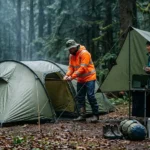
A waterproof tent is one of the most important investments for anyone planning to camp in wet weather. Your tent provides shelter from rainfall, wind, and outdoor moisture while creating a protected area for sleeping and storing essential belongings. When choosing a tent, pay attention to its waterproof rating, seam construction, rainfly coverage, and overall design. A full-coverage rainfly can provide additional protection by directing water away from the tent body.
Tent materials and construction also influence performance during rainy conditions. Look for waterproof coatings, taped seams, durable floors, and strong zippers. A bathtub-style floor, which extends upward along the tent walls, can help prevent water from entering at ground level. However, even a waterproof tent can experience moisture problems if it is poorly positioned or improperly assembled. Following the manufacturer’s setup instructions is essential for achieving the best protection.
Ventilation is another important consideration when selecting a rainy-weather tent. Moisture from breathing, wet clothing, and temperature differences can create condensation inside an enclosed shelter. Mesh panels, adjustable vents, and suitable airflow help reduce this problem. A tent that combines reliable rain protection with effective ventilation can provide a more comfortable sleeping environment during extended wet-weather camping trips.
Waterproof Rain Jackets and Camping Clothing
Rain jackets are essential for campers who need to move around the campsite during rainfall. A good waterproof jacket protects the upper body from moisture while allowing enough flexibility for walking, cooking, setting up equipment, and exploring outdoor areas. When selecting a jacket, consider waterproof construction, breathability, adjustable cuffs, a protective hood, and suitable pocket placement. A jacket that is both waterproof and breathable can help reduce the uncomfortable feeling of trapped moisture during physical activity.
Layering is another important part of dressing for rainy camping conditions. Instead of relying on one thick clothing item, campers can combine a moisture-wicking base layer, an insulating middle layer, and a waterproof outer shell. This arrangement helps manage sweat, maintain warmth, and provide protection from rain. Avoid wearing cotton as your main base layer in cold, wet environments because it can retain moisture and take a long time to dry.
Waterproof trousers and quick-drying clothing can provide additional protection when walking through wet grass, muddy trails, or rainy campsite areas. A spare set of dry clothing should always remain inside a waterproof storage bag. Having dry socks and an extra base layer available can make a significant difference when temperatures drop or unexpected rainfall continues throughout the day.
Waterproof Backpacks and Dry Bags
A waterproof backpack helps protect important belongings when traveling through wet outdoor environments. Regular backpacks may absorb rain through their fabric, seams, and zippers, allowing moisture to reach clothing, food, electronics, and other supplies. A backpack designed for wet conditions can provide stronger protection, particularly when it includes waterproof construction and secure closures. Campers should consider capacity, carrying comfort, durability, and weather protection before selecting a suitable model.
Dry bags provide another practical way to organize equipment during rainy camping trips. These lightweight storage bags are useful for keeping clothing, documents, electronics, and sleeping accessories separate from wet items. They are available in different sizes, allowing campers to organize their belongings according to their needs. Bright colors can also make individual bags easier to identify inside a larger backpack or tent.
A waterproof backpack cover can offer additional protection when carrying an ordinary hiking or camping backpack. However, a rain cover may not protect every part of the bag, particularly when water enters through exposed areas or the back panel. Combining a suitable backpack cover with internal dry bags provides an additional layer of protection for valuable equipment. This approach is particularly useful when traveling through areas where rainfall is frequent or difficult to predict.
Waterproof Sleeping Bags and Sleeping Pads
Sleeping comfortably in rainy weather requires more than simply having a good tent. Moisture can enter a sleeping area through wet clothing, condensation, damaged tent floors, or unsuitable campsite positioning. A sleeping bag with appropriate weather protection and temperature performance helps maintain comfort during cold and damp nights. Campers should choose a sleeping bag according to the expected overnight temperature rather than relying only on its appearance or thickness.
Sleeping bags with synthetic insulation can be practical in damp environments because synthetic materials generally retain more insulating ability when wet than traditional down insulation. Down sleeping bags can still perform well when properly protected with waterproof storage and suitable shelter. The most important consideration is keeping insulation dry and selecting a temperature rating appropriate for the conditions.
A sleeping pad is equally important because it creates a barrier between the sleeper and the cold ground. Wet soil can make nighttime conditions uncomfortable, particularly when temperatures decrease after sunset. An insulated sleeping pad with suitable ground protection can improve warmth and sleeping comfort. Campers should also use a waterproof groundsheet or tent floor protection when recommended by the tent manufacturer, ensuring that the protective layer does not collect rainwater underneath the shelter.
Camping Tarps and Rain Shelters
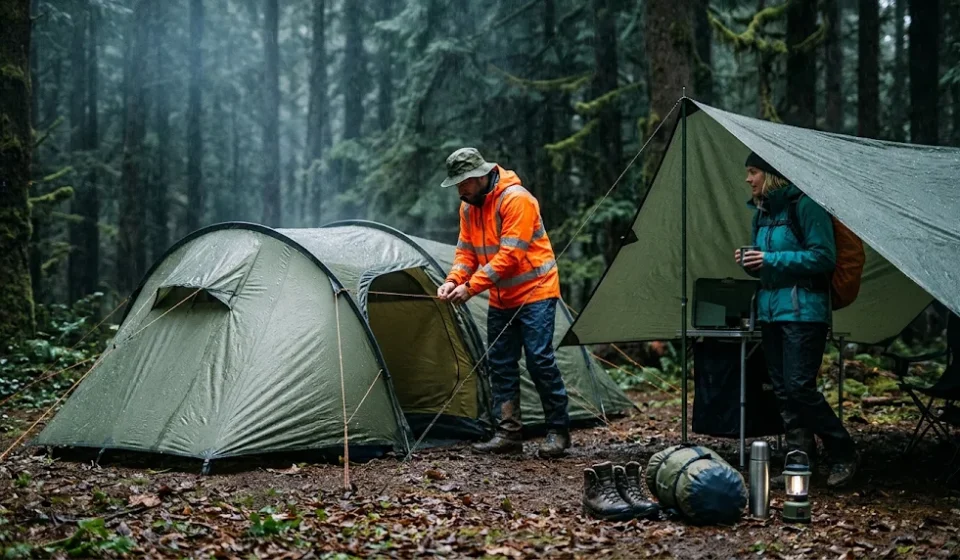
Camping tarps are versatile pieces of equipment that provide additional protection during rainy outdoor adventures. They can be positioned above cooking areas, seating spaces, or equipment storage locations to create a sheltered area outside the main tent. A properly installed tarp can also help protect the tent entrance and provide a relatively dry space for removing muddy footwear or organizing wet clothing.
When selecting a camping tarp, consider its material, size, waterproof construction, reinforced attachment points, and overall weight. Lightweight tarps are convenient for backpacking, while larger and heavier options may be suitable for family camping or vehicle-based trips. Strong attachment points and reliable guy lines help maintain stability when the weather becomes windy. Campers should avoid setting up tarps in locations where water can collect or where loose branches may fall.
Proper positioning is essential for getting the most from a rain shelter. A sloping arrangement allows rainwater to drain away instead of collecting in the center. The tarp should also be secured without blocking important ventilation areas around the tent. With appropriate setup, this simple piece of equipment can make rainy camping conditions more manageable by providing additional covered space for everyday activities.
Waterproof Camping Footwear and Accessories
Footwear plays an important role in maintaining comfort and safety during rainy camping trips. Wet trails, muddy ground, slippery rocks, and puddles can make ordinary shoes uncomfortable and difficult to use. Waterproof hiking boots or suitable waterproof trail footwear can help keep feet dry while providing support on uneven surfaces. The best choice depends on the terrain, temperature, walking distance, and personal comfort.
Campers should also pay attention to traction and ankle support when selecting rainy-weather footwear. Deep tread patterns can provide better grip on muddy trails, although no shoe can eliminate the risk of slipping on wet surfaces. Properly fitted boots can reduce discomfort during long walks, while moisture-wicking socks help manage sweat and reduce the likelihood of blisters. Carrying extra socks is particularly useful when rainfall continues for several hours.
Other useful accessories include waterproof gaiters, quick-drying towels, protective gloves, and footwear storage bags. Gaiters can help prevent mud and water from entering through the top of hiking boots. A compact towel is useful for drying equipment and cleaning small wet areas inside the tent. These accessories may seem less important than a waterproof tent or jacket, but they can contribute significantly to a more comfortable camping experience.
Waterproof Lighting and Camping Electronics
Rainy weather can make outdoor lighting especially important because cloudy skies and heavy rainfall often reduce visibility. A reliable waterproof headlamp allows campers to move around the campsite while keeping both hands available for other tasks. It can be useful when setting up a tent, preparing food, organizing supplies, or walking along a campsite path after sunset. Look for a comfortable headband, adjustable brightness, reliable battery performance, and a suitable water-resistance rating.
Waterproof lanterns can provide additional illumination inside sheltered camping areas. Some models offer rechargeable batteries, adjustable brightness, and different lighting modes. A lantern with suitable water resistance can be useful when outdoor conditions become damp, although it should still be protected from direct heavy rainfall unless its specifications allow such exposure. Campers should always check the manufacturer’s instructions before using electrical equipment in wet environments.
Portable power banks and charging accessories should also be protected from moisture. Electronics should remain inside waterproof storage bags when not in use, and charging connections should be kept dry. Solar chargers may be less effective during prolonged cloudy weather, so campers should plan their power requirements before leaving home. Carrying spare batteries or a fully charged power bank can provide additional convenience during longer trips.
Essential Cooking Gear for Rainy Camping
Preparing meals during rainfall can become challenging when cooking equipment is exposed to water and strong winds. A suitable camping stove with stable support and reliable weather protection can make outdoor cooking more convenient. Campers should choose a stove appropriate for their fuel type, cooking needs, and expected conditions. Following the manufacturer’s safety instructions is especially important when operating cooking equipment in wet environments.
A covered cooking area can help protect food preparation equipment from rainfall. A camping tarp or designated shelter may provide protection, but cooking appliances should only be used where ventilation and manufacturer safety requirements allow. Fuel-burning stoves, lanterns, and heaters must never be operated inside an enclosed tent because of carbon monoxide poisoning and fire risks.
Waterproof food containers are another useful addition to rainy-weather camping gear. They help protect dry ingredients, snacks, and packaged meals from moisture. Reusable containers and sealed storage bags can also make food organization easier. Keeping cooking utensils, matches, and other important supplies in waterproof storage reduces the chance of discovering that essential equipment has become unusable after a rainy night.
Best Camping Gear for Rainy Weather: Essential Equipment Comparison
Choosing the right equipment becomes easier when campers understand the purpose of each item. Different products protect different parts of the camping experience, so it is important to prioritize equipment according to the expected weather, campsite conditions, and trip duration.
| Camping Gear | Main Purpose | Important Features |
|---|---|---|
| Waterproof tent | Shelter from rainfall | Sealed seams, rainfly, waterproof floor |
| Rain jacket | Protects upper body | Breathability, adjustable hood, waterproof fabric |
| Waterproof backpack | Protects carried supplies | Weather-resistant construction, comfortable straps |
| Dry bags | Keeps essentials dry | Secure closures, durable material |
| Sleeping bag | Provides nighttime warmth | Suitable temperature rating, protected insulation |
| Sleeping pad | Insulates against cold ground | Appropriate insulation and comfort |
| Camping tarp | Creates additional shelter | Reinforced attachment points, waterproof fabric |
| Hiking boots | Protects feet | Waterproof construction, good traction |
| Headlamp | Provides hands-free lighting | Water resistance, reliable battery |
| Camping stove | Supports outdoor cooking | Stable design, suitable fuel system |
This equipment comparison can help beginners understand which items deserve priority when preparing for wet conditions. A waterproof shelter, appropriate clothing, and reliable sleeping equipment should generally come before optional accessories. Once the most important needs are covered, campers can add lighting, cooking accessories, dry bags, and other equipment according to their trip requirements.
Tips for Staying Dry and Comfortable While Camping in the Rain
Choosing suitable equipment is only part of preparing for rainy camping conditions. Proper campsite selection and equipment organization also influence how comfortable the trip becomes. Campers should avoid low-lying areas, dry riverbeds, depressions, and locations where water naturally collects. Slightly elevated, stable ground with appropriate drainage is generally a better choice, provided it is not exposed to hazards such as falling branches or flooding.
Keeping wet and dry belongings separate can make a significant difference during extended rainfall. Designate separate storage areas for muddy footwear, wet jackets, and dry sleeping clothes. Keep important items inside waterproof bags and avoid leaving equipment exposed outside the tent. A small organization system can prevent moisture from spreading throughout the sleeping area and make it easier to find essential supplies.
Ventilation should also remain a priority even when it is raining. Closing every opening in a tent may reduce airflow and increase condensation. Use the tent’s designed ventilation features while keeping the rainfly properly positioned. Campers should also monitor changing weather conditions and avoid continuing outdoor activities when thunderstorms, lightning, flash flooding, or dangerous winds are expected. If conditions become unsafe, moving to a suitable sheltered location is more important than continuing the trip.
Conclusion
Choosing the best camping gear for rainy weather can make outdoor adventures more comfortable, organized, and enjoyable. A waterproof tent, reliable rain jacket, suitable sleeping bag, insulated sleeping pad, dry bags, camping tarp, and waterproof footwear are among the most important essentials for dealing with wet conditions. Additional equipment such as waterproof lighting, cooking accessories, and protective storage can improve convenience during extended trips. Selecting equipment according to the weather forecast, campsite environment, and duration of the adventure helps campers prepare more effectively.
However, having the right equipment is only one part of successful rainy-weather camping. Proper campsite selection, good ventilation, careful storage, and awareness of changing weather conditions are equally important. Keeping essential belongings dry and understanding how to use camping equipment correctly can prevent many common problems associated with rainfall. With thoughtful planning and dependable outdoor gear, campers can enjoy the beauty of nature while staying better protected from wet and unpredictable weather.
FAQ’s
1. What Is the Most Important Camping Gear for Rainy Weather?
A waterproof tent is generally one of the most important pieces of equipment because it provides shelter from rainfall and helps protect sleeping supplies. A waterproof jacket, suitable sleeping bag, and dry storage bags are also essential for staying comfortable.
2. How Do I Choose a Waterproof Tent for Rainy Camping?
Look for a tent with a suitable waterproof rating, sealed seams, a full-coverage rainfly, and a durable waterproof floor. Good ventilation is also important because it helps reduce condensation inside the shelter.
3. Are Synthetic Sleeping Bags Better for Rainy Weather?
Synthetic sleeping bags can be practical in damp conditions because their insulation generally retains more warmth when wet than traditional down insulation. However, keeping any sleeping bag dry with proper shelter and waterproof storage remains important.
4. Do I Need a Camping Tarp for Rainy Conditions?
A camping tarp is a useful additional shelter that can protect cooking areas, equipment, and tent entrances from rainfall. It provides extra covered space and helps make everyday campsite activities more convenient.
5. What Clothes Should I Wear While Camping in the Rain?
Wear a waterproof and breathable rain jacket, suitable waterproof trousers, moisture-wicking base layers, and insulating clothing appropriate for the temperature. Waterproof footwear and extra dry socks can also improve comfort.
6. How Can I Keep My Backpack Dry While Camping?
Use a waterproof backpack or a suitable rain cover and place important belongings inside individual dry bags. Electronics, clothing, documents, and sleeping accessories should receive additional protection from moisture.
7. What Footwear Is Best for Rainy Camping?
Waterproof hiking boots or suitable waterproof trail shoes with reliable traction are good options. The right footwear should match the terrain, provide proper support, and fit comfortably for extended walking.
8. How Do I Prevent Condensation Inside a Tent?
Use the tent’s ventilation panels, maintain appropriate airflow, and avoid placing wet clothing near sleeping equipment. A properly positioned rainfly and suitable campsite location can also help manage moisture.
9. Is It Safe to Cook Inside a Tent During Rain?
No. Fuel-burning camping stoves should never be operated inside an enclosed tent because they can cause carbon monoxide poisoning and fires. Use cooking equipment outdoors in a properly ventilated area while following the manufacturer’s safety instructions.
10. How Can Beginners Prepare for Their First Rainy Camping Trip?
Beginners should start with a reliable waterproof tent, rain jacket, suitable footwear, sleeping equipment, and dry bags. Checking the weather forecast, choosing a well-drained campsite, and practicing tent setup before departure can also make the experience easier.
