












































Planning a family road trip can be an exciting experience, offering opportunities to explore new destinations, enjoy beautiful scenery, and create unforgettable memories together. However, packing for several family members can quickly become challenging, especially when everyone needs different clothing, shoes, personal belongings, and travel essentials. Choosing the right luggage makes a significant difference because it helps keep everything organized, accessible, and protected throughout the journey. The best luggage for family road trips should offer generous storage capacity, durable construction, convenient carrying options, and enough flexibility to accommodate different travel needs.
Unlike airport travel, road trips provide more opportunities to organize belongings according to individual preferences and available vehicle space. Families can choose between large suitcases, soft-sided travel bags, duffel bags, packing cubes, and compact organizers depending on the length of their journey. The right combination helps prevent clutter inside the vehicle while making overnight stops and hotel check-ins easier. Whether planning a weekend getaway, a week-long vacation, or an extended cross-country adventure, selecting practical luggage can make every part of the journey more comfortable.
1. Understanding What Makes Family Road Trip Luggage Practical
Storage Capacity and Space Management
Storage capacity is one of the most important considerations when selecting luggage for family travel. Parents often need to pack clothing, toiletries, footwear, children’s entertainment, snacks, and additional supplies while making room for everyone’s personal belongings. A suitable luggage collection should provide enough space without becoming unnecessarily bulky. Instead of depending on one oversized suitcase, families can benefit from using several medium-sized bags that distribute belongings more evenly and fit different areas of the vehicle.
Smart space management also helps families avoid packing unnecessary items. Expandable suitcases, compression packing cubes, and flexible duffel bags make it easier to organize clothing while maximizing available storage. Families traveling in smaller vehicles should prioritize luggage with compact shapes and flexible designs. Choosing bags that fit neatly into the trunk or cargo area helps maintain visibility and leaves enough room for passengers to travel comfortably.
Durability and Everyday Convenience
Road trips involve frequent loading, unloading, and handling, which means luggage must withstand regular movement and occasional rough conditions. Strong zippers, reinforced stitching, sturdy handles, and reliable wheels can help prevent common travel problems. Hard-shell luggage provides a protective exterior for delicate belongings, while soft-sided bags offer flexibility when fitting items into tight spaces. Both styles can work well when selected according to the family’s vehicle, travel duration, and packing habits.
Convenience is equally important because families often make several stops during a journey. Luggage with comfortable handles, smooth-rolling wheels, accessible compartments, and lightweight construction makes transportation easier. Parents may need to carry bags while managing children, food, and other supplies, so practical features should never be overlooked. Choosing luggage that combines durability with easy handling helps reduce unnecessary stress and makes family travel more enjoyable.
2. Best Types of Luggage for Family Road Trips
Hard-Shell Suitcases and Soft-Sided Travel Bags
Hard-shell suitcases are useful for families who want additional protection for clothing, electronics, and fragile belongings. Their structured construction helps maintain shape even when packed tightly, while many modern designs include separate compartments for organized storage. Four-wheel spinner suitcases are particularly convenient when moving through hotels, parking areas, and other travel locations. However, their rigid structure can make them less adaptable when families need to fit multiple bags into a crowded trunk.
Soft-sided travel bags offer another practical option because their flexible construction allows them to fit into irregular spaces. Many designs include exterior pockets that provide quick access to important items such as chargers, travel documents, and personal accessories. These bags can also be easier to store when empty. Families who frequently travel with children may appreciate their lightweight design and flexible storage options, especially when packing several bags together.
Duffel Bags, Backpacks, and Packing Organizers
Duffel bags are excellent choices for road trips because they provide generous storage without requiring much empty space. Their flexible shape makes them suitable for packing clothing, sports equipment, shoes, and other travel essentials. Some models include separate shoe compartments and waterproof sections, which help keep clean belongings separate from used items. Travel backpacks are also valuable because they allow family members to carry personal necessities without occupying additional trunk space.
Packing organizers add another level of convenience by dividing belongings into manageable sections. Families can assign different packing cubes to each person, making it easier to locate clothing without opening every suitcase. Small toiletry organizers, electronic accessory cases, and laundry bags also help maintain order during longer journeys. Combining different luggage types often provides better flexibility than relying on a single storage solution.
3. Important Features to Consider When Choosing Family Luggage
Wheels, Handles, and Easy Transportation
Wheels and handles can significantly influence how convenient luggage becomes during a family vacation. Spinner wheels allow suitcases to move in different directions, reducing the effort required to transport heavy belongings. Two-wheel designs may provide better performance on certain uneven surfaces, although they generally require more pulling effort. Families should consider where they expect to use their luggage, including hotels, roadside stops, parking areas, and outdoor accommodation facilities.
Handle quality also deserves attention because weak or uncomfortable handles can make heavy bags difficult to manage. Telescoping handles should extend and retract smoothly, while side and top handles should feel secure when lifting luggage into a vehicle. Lightweight construction is particularly helpful for parents who regularly move several bags at once. Selecting luggage with reliable transportation features can make packing, unloading, and organizing belongings much easier.
Compartments, Security, and Weather Protection
Well-designed compartments help families organize different categories of belongings and prevent unnecessary searching. Separate sections for clothing, footwear, electronics, and toiletries can make a noticeable difference during busy travel days. External pockets are useful for frequently needed items, while internal compression straps help prevent clothes from moving around. Water-resistant materials and protective covers can also provide additional reassurance when luggage is exposed to unexpected rain or accidental spills.
Security features are another important consideration, particularly when families stop at restaurants, hotels, and sightseeing locations. Lockable zippers and built-in combination locks can help protect personal belongings when luggage is left unattended. Families should also consider luggage made with easy-to-clean materials because road travel can expose bags to dust, mud, and everyday dirt. Practical construction and thoughtful organization features make luggage more suitable for repeated family adventures.
4. Comparing Popular Luggage Options for Different Family Needs
Choosing the Right Style for Your Travel Plans
Not every family needs the same luggage arrangement. A family of four traveling for a weekend may require only two medium-sized suitcases and a few personal backpacks, while a larger family planning a two-week vacation may need several spacious bags. The best arrangement depends on passenger numbers, vehicle storage capacity, accommodation arrangements, and the amount of clothing required. Families should consider these factors before purchasing luggage to avoid carrying unnecessary weight or running out of storage space.
The following comparison highlights common luggage types and explains how each option can support different road trip requirements. These categories are useful starting points when evaluating storage capacity, convenience, and overall practicality.
| Luggage Type | Main Advantage | Best For | Potential Limitation |
|---|---|---|---|
| Hard-shell suitcase | Strong exterior protection | Long family vacations | Requires fixed storage space |
| Soft-sided suitcase | Flexible storage | Vehicles with limited trunk space | Less rigid protection |
| Large duffel bag | Spacious and adaptable | Clothing and bulky belongings | Can become difficult to carry when full |
| Travel backpack | Hands-free transportation | Personal essentials and short trips | Limited capacity |
| Packing cubes | Improved organization | Families sharing luggage | Require additional planning |
| Underseat travel bag | Easy access to essentials | Short stops and overnight stays | Limited storage capacity |
Balancing Quality, Capacity, and Budget
Families should consider long-term usefulness rather than focusing entirely on the initial purchase price. Affordable luggage may work perfectly well for occasional weekend trips, but frequent travelers may benefit from investing in stronger materials, reinforced construction, and reliable wheels. A practical luggage collection does not necessarily need to include expensive designer products. The most important factors are suitable dimensions, dependable construction, useful compartments, and comfortable handling.
It is also worth considering whether every family member needs an individual suitcase. Sharing larger luggage can sometimes reduce the total number of bags and make vehicle organization easier. However, individual backpacks or smaller bags can provide convenient access to personal necessities. Finding the right balance between shared storage and individual organization helps families travel efficiently without overspending.
5. Smart Packing Strategies for Comfortable Family Road Trips
Organizing Clothing and Personal Belongings
Organized packing makes family road trips easier because every item has a designated place. Families can use separate packing cubes for each person, organizing clothing according to outfits, activities, or travel days. Rolling clothes instead of folding them traditionally can help save space and make certain items easier to locate. Keeping frequently used clothing near the top of a suitcase also reduces the need to unpack everything during overnight stops.
Another useful approach is to create individual personal bags for children and adults. These smaller bags can hold items such as water bottles, headphones, books, travel games, chargers, and snacks. Toiletries should be stored in secure, leak-resistant organizers to protect clothing from accidental spills. Keeping dirty laundry in a separate bag also prevents used clothing from mixing with clean belongings throughout the journey.
Making the Most of Available Vehicle Space
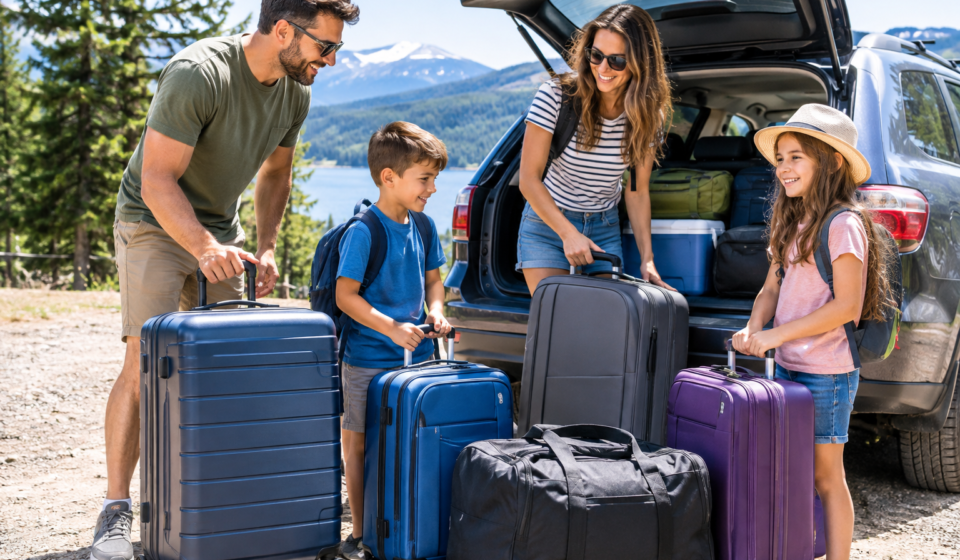
Efficient luggage placement helps improve comfort and makes better use of available vehicle storage. Larger suitcases should generally be positioned securely at the bottom of the trunk, while smaller and softer bags can fill remaining spaces. Heavy belongings should be arranged carefully to prevent unnecessary movement during driving. Families should also avoid stacking luggage in ways that block rear visibility or interfere with vehicle safety equipment.
An additional travel bag containing essential items can make frequent stops much more convenient. It may include medications, snacks, tissues, extra clothing, charging cables, and important documents. Keeping these necessities accessible prevents families from opening several suitcases whenever they need something. Before departure, checking that all luggage is secure and that passengers have sufficient legroom helps create a safer and more comfortable travel environment.
6. Common Mistakes to Avoid When Buying Family Road Trip Luggage
Choosing Oversized Bags Without Considering Vehicle Space
One common mistake is purchasing the largest possible suitcases without checking whether they fit comfortably inside the family vehicle. Oversized luggage may provide additional storage, but it can quickly occupy the entire trunk and reduce space for other necessities. Families using compact cars or smaller SUVs should measure their available cargo area before choosing luggage. Comparing suitcase dimensions with the vehicle’s storage measurements can prevent frustrating packing problems later.
Another mistake is buying too many different bags without considering how they will work together. A collection of bulky suitcases, large backpacks, and unnecessary travel accessories can create clutter instead of improving organization. Families should focus on a practical combination of luggage sizes and types that supports their actual travel habits. Choosing versatile bags that can be reused for different vacations often provides better long-term value.
Ignoring Material Quality and Practical Features
A visually attractive suitcase may not always be the most reliable option for frequent road travel. Weak zippers, uncomfortable handles, poorly constructed wheels, and thin materials can reduce luggage performance over time. Families should examine product specifications, warranty information, customer feedback, and construction details before making a purchase. Paying attention to these features helps prevent problems during important vacations.
Families should also avoid overlooking cleaning requirements and weather resistance. Road trips may involve dusty parking areas, wet conditions, outdoor activities, and frequent contact with different surfaces. Luggage with easy-to-clean materials and practical protective features can be more convenient in these situations. Prioritizing functionality, durability, and organization helps families choose luggage that supports many future adventures.
Conclusion
Choosing the right luggage is an important part of planning a comfortable and organized family vacation. The best luggage for family road trips should provide enough storage capacity, durable construction, convenient compartments, and practical transportation features without taking up unnecessary vehicle space. Hard-shell suitcases, soft-sided travel bags, duffel bags, backpacks, and packing organizers can all serve useful purposes depending on the family’s needs. By considering vehicle dimensions, trip duration, passenger numbers, and individual packing preferences, families can build a luggage collection that makes traveling easier and more enjoyable.
Successful family packing is not simply about bringing more belongings; it is about organizing the right essentials in a practical way. Selecting versatile luggage, distributing weight carefully, and keeping frequently used items accessible can make every journey more comfortable. Whether heading toward a nearby destination or exploring distant locations, a thoughtful luggage arrangement helps reduce travel stress and allows families to spend more time enjoying their adventures together. Investing in reliable travel bags can also provide long-term value by supporting countless weekend getaways, holidays, and memorable road trips.
FAQs
1. What Type of Luggage Is Best for Family Road Trips?
A combination of medium-sized suitcases, flexible duffel bags, and personal backpacks works well for many families. This arrangement provides organized storage while making it easier to fit belongings into different vehicle spaces. The ideal combination depends on family size, trip duration, and available cargo capacity.
2. How Many Suitcases Does a Family of Four Need?
A family of four may find that two medium-sized suitcases and four small personal bags provide sufficient storage for a typical vacation. Longer trips or special activities may require additional space. Choosing shared luggage can reduce clutter and make vehicle organization easier.
3. Are Hard-Shell Suitcases Good for Road Trips?
Yes, hard-shell suitcases can be excellent for road trips because they offer structured storage and additional protection for packed belongings. However, their rigid construction may make them less flexible when fitting luggage into a crowded trunk. Families should compare dimensions before purchasing.
4. Are Duffel Bags Better Than Traditional Suitcases for Family Travel?
Duffel bags offer flexible storage and can fit into irregular spaces, making them useful for road trips. Traditional suitcases provide better organization and easier rolling transportation in many situations. Combining both styles can give families greater flexibility.
5. How Can Families Save Space When Packing for a Road Trip?
Families can save space by using packing cubes, rolling clothing, selecting versatile outfits, and avoiding unnecessary accessories. Soft-sided luggage can also fit into smaller spaces more easily than rigid suitcases. Organizing belongings before loading the vehicle helps maximize available storage.
6. What Size Luggage Is Best for a Week-Long Family Vacation?
Medium-sized suitcases are practical for many week-long vacations because they offer a useful balance between storage capacity and portability. However, the appropriate size depends on the number of travelers, clothing requirements, and available vehicle space.
7. What Should Families Keep in an Easily Accessible Travel Bag?
An accessible travel bag should contain snacks, water bottles, tissues, medications, chargers, important documents, and spare clothing. Families traveling with young children may also include entertainment items and basic hygiene supplies. Keeping these essentials nearby makes roadside stops easier.
8. Is Lightweight Luggage Important for Family Road Trips?
Yes, lightweight luggage makes loading, unloading, and carrying bags more convenient. It also helps families manage the total weight of their belongings without unnecessary effort. Lightweight designs are particularly useful when several family members need assistance with luggage.
9. How Can Families Protect Luggage During Long Road Trips?
Families can protect their luggage by selecting durable materials, securing bags properly, and using protective covers when necessary. Keeping fragile items in padded compartments and separating toiletries from clothing can also reduce the risk of damage during travel.
10. Should Every Family Member Have Their Own Suitcase?
Not necessarily. Some families prefer shared suitcases because they reduce the number of bags and make vehicle storage easier. Individual backpacks or small personal bags can still provide convenient access to important belongings. The best arrangement depends on family preferences and travel requirements.
