

















































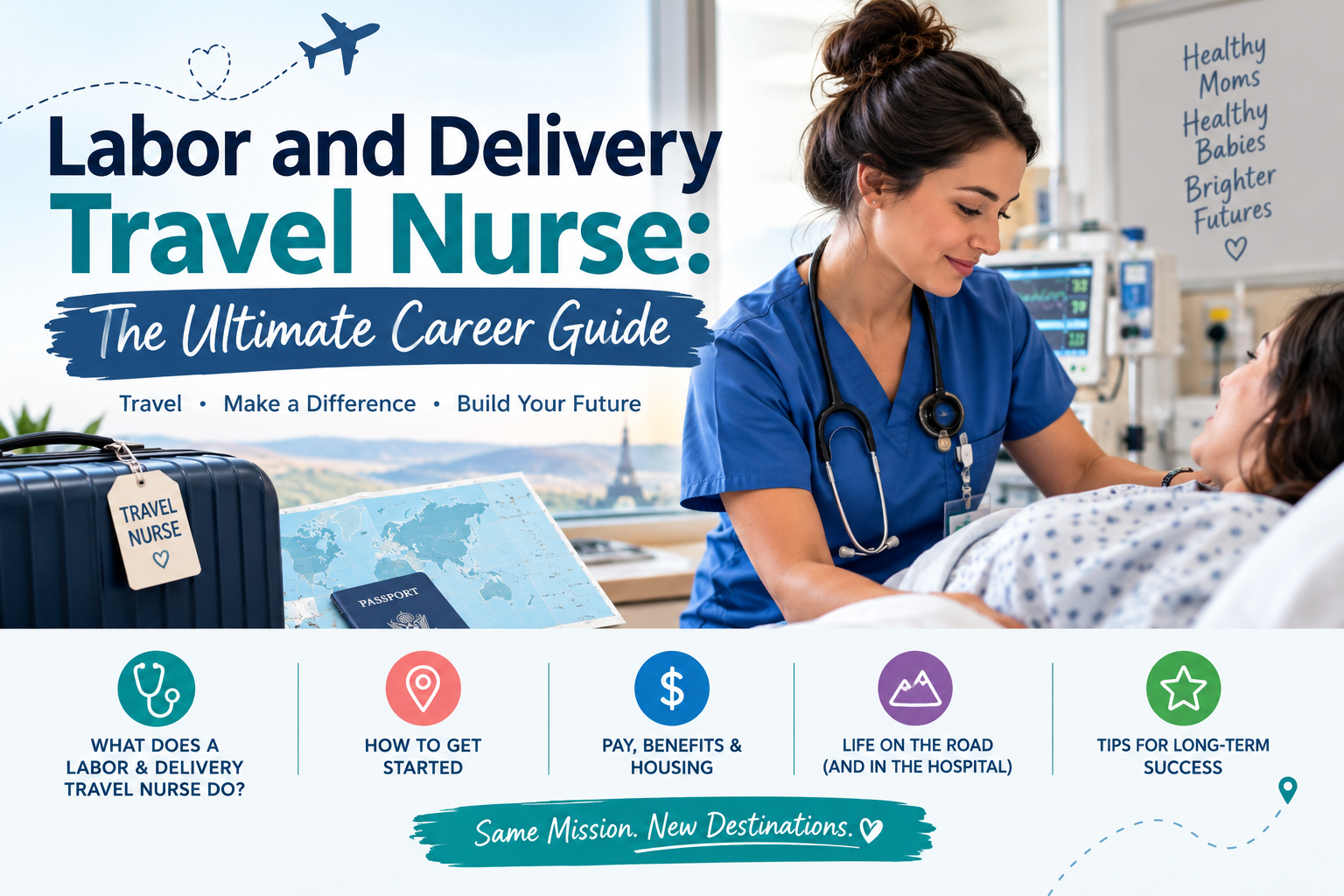

A Labor and Delivery Travel Nurse: The Ultimate Career Guide can help registered nurses understand an exciting career path that combines specialized maternity nursing with the flexibility of travel assignments. Labor and delivery nurses care for women during labor, childbirth, and the immediate postpartum period. Travel nurses perform many of the same clinical duties while temporarily working at hospitals and healthcare facilities in different locations.
This career can provide professional growth, exposure to different healthcare systems, and opportunities to experience new cities. However, travel nursing also requires adaptability, strong clinical judgment, and the ability to quickly become comfortable in unfamiliar hospital environments. Understanding the role, qualifications, contracts, pay factors, and daily responsibilities can help nurses decide whether this career is right for them.
What Is a Labor and Delivery Travel Nurse?
A labor and delivery travel nurse is a registered nurse who accepts temporary assignments in hospitals or other healthcare facilities that need maternity nursing staff. These assignments commonly involve caring for patients throughout labor and delivery while monitoring both the mother and baby. Nurses may also assist physicians and midwives during routine and complicated births.
Unlike permanent staff nurses, travel nurses generally move between assignments after completing a contract. The temporary nature of the position requires excellent communication and organizational skills. Nurses must quickly learn a facility’s procedures, documentation systems, equipment, and expectations while continuing to provide safe, compassionate patient care.
Labor and Delivery Travel Nurse Responsibilities
Labor and delivery nurses have a wide range of responsibilities before, during, and after childbirth. They may monitor maternal vital signs, assess fetal heart patterns, administer medications as ordered, assist during delivery, and recognize changes that require immediate clinical attention. They also provide emotional support and education to patients and their families throughout the birth process.
The role can become especially demanding when complications develop. Nurses may work with physicians and other specialists during emergency situations, including unexpected changes in fetal or maternal condition. Strong assessment skills, teamwork, communication, and the ability to remain calm under pressure are essential qualities for nurses working in this specialty.
Education and Experience Requirements
The typical starting point is becoming a licensed registered nurse through an approved nursing education program. Depending on the nursing school and career path, nurses may enter the profession through an associate or bachelor’s nursing degree. Licensure requirements vary by location, so nurses should understand the rules of the jurisdictions where they intend to work.
Travel employers generally look for nurses with relevant bedside experience rather than newly licensed professionals. Labor and delivery experience is particularly valuable because travel nurses are expected to function with considerable independence. Certifications and specialty training may also strengthen a nurse’s qualifications, depending on the employer and assignment.
Important Skills for This Career
Clinical competence is one of the most important qualities for a labor and delivery travel nurse. Nurses need to recognize changes in a patient’s condition, understand fetal and maternal monitoring, communicate effectively with providers, and respond appropriately when situations become urgent. Strong prioritization skills are especially valuable in busy maternity units.
Adaptability is equally important. Every hospital can have different policies, staffing structures, electronic health records, and workflows. A successful travel nurse learns quickly, asks appropriate questions, builds relationships with new coworkers, and remains flexible when circumstances change.
Finding Labor and Delivery Travel Assignments
Travel nurses usually work with staffing agencies that connect qualified healthcare professionals with hospitals seeking temporary workers. When evaluating an assignment, nurses should look beyond the advertised pay rate and consider the complete compensation package, contract length, scheduling expectations, housing arrangements, and facility requirements.
It is also important to understand the clinical expectations before accepting an assignment. Nurses should ask about patient ratios, typical unit volume, charting systems, floating policies, orientation, scheduling, and the types of deliveries commonly handled by the facility. Having clear expectations before signing a contract can prevent unpleasant surprises later.
Salary and Compensation Factors
Travel nurse compensation varies considerably based on location, specialty demand, experience, facility needs, contract length, and market conditions. Labor and delivery nurses may receive a combination of taxable wages and other forms of compensation depending on the assignment and contract structure. Because rates can change frequently, nurses should compare current offers rather than relying on an old salary estimate.
The highest advertised package is not necessarily the best opportunity. Housing costs, transportation, insurance, overtime policies, stipends, and other expenses can significantly affect the actual value of an assignment. Reviewing the complete compensation package is therefore more useful than focusing only on the headline weekly amount.
Benefits of Being a Travel Nurse
One major advantage is flexibility. Travel assignments allow nurses to experience different hospitals and communities while developing professional skills. Working in different environments can expose nurses to new technologies, clinical practices, patient populations, and organizational cultures.
Travel nursing can also provide opportunities for personal growth. Nurses may explore destinations they would not otherwise visit while building professional connections across different healthcare systems. For people who enjoy change and variety, the lifestyle can be particularly rewarding.
Challenges to Consider
Travel nursing is not always easy. Moving regularly can create challenges involving housing, transportation, relationships, finances, and adapting to unfamiliar environments. Some nurses may also find it difficult to repeatedly establish themselves within new teams and learn different hospital procedures.
The clinical demands can also be significant. Labor and delivery units may experience unpredictable workloads, emergencies, and emotionally intense situations. Nurses considering this career should honestly assess their experience, stress-management skills, and comfort working independently in changing environments.
How to Prepare for Your First Assignment
Preparation can make the transition into travel nursing much smoother. Before starting an assignment, organize your professional documents, licenses, certifications, immunization records, references, and other information that an employer may request. Confirm all contract details and understand where and when orientation will take place.
It is also useful to research the hospital and surrounding community before arrival. Learning about transportation, housing, local services, and the facility’s general expectations can reduce stress during the first few weeks. Arriving prepared allows you to focus more attention on patient care and becoming comfortable with your new team.
Building a Successful Long-Term Career
Long-term success depends on maintaining strong clinical skills while continuing professional development. Travel nurses should remain familiar with current practices, complete required education, and maintain necessary certifications. Building positive relationships with colleagues can also create professional references and future opportunities.
Keeping detailed records of assignments, skills, responsibilities, and accomplishments can help when applying for future contracts. Over time, nurses can develop a broad professional network and gain experience across different facilities. This combination of clinical expertise and adaptability can become a valuable advantage in the nursing workforce.
Conclusion
A Labor and Delivery Travel Nurse: The Ultimate Career Guide shows why this specialty can be an attractive option for experienced registered nurses who enjoy maternity care and want greater career flexibility. The role combines specialized clinical responsibilities with temporary assignments, allowing nurses to develop professionally while experiencing different healthcare environments.
Success requires more than accepting a travel contract. Strong clinical knowledge, adaptability, communication, careful contract evaluation, and commitment to patient safety are essential. With thoughtful preparation and realistic expectations, labor and delivery travel nursing can become a rewarding career path for nurses who enjoy both professional challenges and new experiences.
FAQs
What does a labor and delivery travel nurse do?
A labor and delivery travel nurse provides maternity care during labor, childbirth, and the postpartum period while working on a temporary assignment at a healthcare facility.
Do you need experience to become a labor and delivery travel nurse?
Most travel employers prefer nurses with previous specialty experience because travel nurses are expected to adapt quickly and work with limited supervision.
How long are travel nursing contracts?
Contract lengths vary, but temporary assignments are commonly structured around several weeks or months. The exact duration depends on the facility and contract.
Can labor and delivery nurses choose where they travel?
Nurses can generally express preferences for locations and assignments, but available opportunities depend on current staffing needs and their qualifications.
How much can a labor and delivery travel nurse earn?
Compensation varies by location, experience, demand, schedule, facility, and contract terms. Nurses should evaluate the entire package rather than focusing only on the advertised weekly rate.
What skills are important for labor and delivery travel nursing?
Strong assessment skills, fetal and maternal monitoring knowledge, communication, teamwork, adaptability, organization, and the ability to respond calmly during emergencies are particularly valuable.
Is travel nursing difficult?
It can be challenging because nurses must repeatedly adapt to new facilities, teams, policies, and living arrangements. However, many nurses find the variety and professional growth rewarding.
Is labor and delivery travel nursing a good career?
It can be an excellent option for experienced nurses who enjoy maternity care, flexibility, travel, and working in different healthcare environments. Personal preferences and career goals should guide the decision.