











































Finding the 5 best booster seat for traveling in 2026 can make family trips easier, more comfortable, and safer. A good booster should help position the vehicle’s seat belt correctly while remaining practical enough to move between cars, hotels, rental vehicles, and other travel situations. Current 2026 travel-seat guides highlight options such as the Graco TurboBooster 2.0 LX and BubbleBum for different travel needs.
Traveling with children requires more planning than simply packing clothes and snacks. Parents also need to consider the child’s age, size, maturity, the vehicle being used, and the laws or safety standards that apply at the destination. A portable design is useful, but proper belt fit should always remain the priority when choosing a booster.
What Makes the Best Booster Seat for Traveling in 2026?
The best booster seat for traveling in 2026 should balance safety, portability, comfort, and ease of use. A lightweight model can be particularly helpful when moving through airports or switching between rental cars, while a high-back design can provide additional support for children who are newer to booster use. Babylist’s 2026 travel guide identifies the Graco TurboBooster 2.0 LX as its best high-back booster for travel and the BubbleBum as a preferred backless option for older, more experienced booster riders.
Parents should also consider how easily the seat fits inside a vehicle. A compact booster can be valuable for rental cars and crowded back seats, but a very small design is not automatically better. The child’s body and the vehicle’s seat belt must work correctly with the booster. The goal is for the lap belt to sit low across the hips and upper thighs while the shoulder belt crosses the middle of the chest and shoulder.
Graco TurboBooster 2.0 LX
The Graco TurboBooster 2.0 LX is a strong choice for families looking for a high-back booster that can work well for everyday driving and travel. Babylist names it its best high-back booster for travel, highlighting its relatively lightweight design, ease of installation, broad vehicle compatibility, and ability to convert into a backless booster.
The high-back configuration can be especially useful for children who are still developing the maturity to sit correctly for an entire journey. Its convertible design can also extend its usefulness as the child grows. However, parents should check vehicle compatibility before traveling because some vehicle-seat configurations may limit how the high-back mode can be used.
Chicco KidFit ClearTex Plus
The Chicco KidFit ClearTex Plus is another versatile option for families who want a high-back booster that later converts to a backless design. Current 2026 comparisons highlight its adjustable headrest, two-position recline, LATCH attachment, and materials designed without added flame-retardant chemicals.
This model can be particularly appealing for longer road trips because adjustability and padding can make extended journeys more comfortable. Its two-position recline can also help it sit appropriately against certain vehicle seats. Families should still check the manufacturer’s current instructions and the vehicle manual before installation because proper positioning depends on the individual vehicle and child.
Britax Skyline 2-Stage
The Britax Skyline 2-Stage is worth considering for families with taller children or parents who want a booster designed to accommodate growth for an extended period. Current 2026 comparisons list a published maximum of 63 inches and 120 pounds, giving it a generous height range compared with several competing boosters.
Its high-back-to-backless design makes it adaptable as a child grows. The additional height range can be useful because height is often the limiting factor before weight when children eventually outgrow a booster. Parents should always follow the manufacturer’s requirements and continue booster use until the vehicle’s adult seat belt fits the child correctly without assistance from the booster.
BubbleBum Inflatable Booster
The BubbleBum is designed with portability in mind, making it particularly interesting for families who travel frequently. Babylist lists it as its best backless booster for travel and describes it as an inflatable option intended for older, experienced booster riders. Its compact design can make it easier to carry than traditional booster seats.
An inflatable booster can be convenient for taxis, carpooling, rental vehicles, and trips where luggage space is limited. However, portability should not encourage parents to move a child into a backless booster too early. Children need to be mature enough to remain properly positioned throughout the ride, and parents should verify that the specific product is appropriate for the child’s size and the applicable local requirements.
Cosco Kids Rise LX
The Cosco Kids Rise LX is an attractive choice for families searching for an affordable and relatively simple booster. Current 2026 booster guides include it among budget-friendly choices, making it useful for families who need an additional seat for travel, a second vehicle, or occasional use.
Its straightforward design can be useful when simplicity matters. A budget-friendly booster can also make sense when families need multiple seats or a backup for grandparents and caregivers. Before purchasing, however, parents should confirm the latest manufacturer specifications, child-size requirements, and compatibility with the vehicle where it will be used.
How to Choose a Travel Booster Seat
Choosing a travel booster begins with the child rather than the suitcase. Parents should first determine whether the child is actually ready for a booster. A child should generally have outgrown the forward-facing harness stage, meet the manufacturer’s requirements, and be mature enough to sit correctly for the entire journey. Babylist notes that many children are not ready for a booster until around five or six, although readiness varies.
Next, consider how the seat will be transported and used. Families taking frequent flights may value a compact or lightweight model, while those taking long road trips may prefer additional padding and a high-back configuration. Rental-car travelers should also check whether the seat can be installed and adjusted easily without relying on specialized equipment.
High-Back or Backless Booster for Travel?
High-back boosters generally provide more structure around the child’s upper body and include features designed to position the shoulder belt. They can be particularly useful for children who are new to booster riding or who have difficulty maintaining a proper seated position. They can also be larger and less convenient to carry through airports.
Backless boosters are typically smaller and easier to transport, which makes them attractive for older children who already have good sitting habits. However, they require an appropriate vehicle seat and head-support arrangement and should only be used when the child meets the product’s requirements. A compact design should never be chosen at the expense of correct belt positioning.
Travel Safety Tips for Booster Seats
Before every trip, check that the booster is positioned correctly and that the seat belt follows the manufacturer’s recommended path. The lap portion should sit low across the child’s hips and upper thighs rather than across the abdomen. The shoulder portion should cross the center of the chest and shoulder rather than resting against the neck or slipping under the arm.
Parents should also read the booster manufacturer’s instructions and the vehicle owner’s manual. These documents explain important requirements that can vary between products and vehicles. For international travel, families should additionally research the child-restraint laws and safety standards at their destination rather than assuming the rules are identical to those at home.
Making a Booster Seat Easier to Travel With
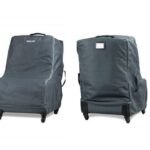
Organization can make a major difference when traveling with a child restraint. A lightweight carrying bag can make airport transfers easier, while keeping the manufacturer’s instructions accessible can help when installing the seat in an unfamiliar vehicle. If a booster separates into multiple components, packing those pieces carefully can also reduce the amount of space it occupies.
It is also useful to practise installation before leaving home. Trying a booster for the first time in a rental car after a long flight can create unnecessary stress. Familiarizing yourself with the belt routing, adjustment system, and seating position beforehand can make the travel experience smoother.
Final Buying Advice
The right travel booster depends on your child’s size, maturity, destination, vehicle, and travel style. The Graco TurboBooster 2.0 LX is a strong high-back travel option, while the BubbleBum is particularly appealing when portability is the main concern. The Chicco KidFit ClearTex Plus provides a versatile high-back-to-backless design, the Britax Skyline offers extended growth potential, and the Cosco Kids Rise LX provides a more budget-conscious alternative.
Rather than choosing a seat simply because it is small, inexpensive, or popular, focus on correct fit and practical use. A booster that fits your child and vehicle properly is far more valuable than one that looks convenient but does not provide the right belt positioning. Always check current manufacturer instructions and applicable safety requirements before traveling.
Conclusion
The 5 best booster seat for traveling in 2026 include options for different family needs, from lightweight travel designs to comfortable high-back models that can grow with a child. Graco, Chicco, Britax, BubbleBum, and Cosco each offer different combinations of portability, adjustability, comfort, and value.
The most important consideration is always correct use. A properly selected booster can help position the adult seat belt correctly while making family travel more convenient. Take time to check your child’s readiness, vehicle compatibility, product instructions, and destination requirements before starting your journey.
FAQs
What is the best booster seat for traveling?
The Graco TurboBooster 2.0 LX is a strong high-back choice for travel, while the BubbleBum is particularly convenient for older children who need a compact backless option.
Are booster seats allowed on airplanes?
Booster seats generally cannot be used as substitutes for approved aircraft child restraints simply because they are convenient for ground transportation. Check the airline’s current policy and use an appropriate approved restraint for the flight itself.
When is a child ready for a booster?
A child should have outgrown the forward-facing harness stage, meet the booster manufacturer’s size requirements, and be mature enough to remain correctly positioned throughout the entire trip.
Is a high-back booster better for travel?
A high-back booster can provide additional support and belt-positioning guidance, especially for newer booster riders. However, it is generally larger than a backless model, making transportation more difficult.
Are backless booster seats safe?
A backless booster can be appropriate when the child meets the manufacturer’s requirements and the vehicle provides suitable head support. Correct seat-belt positioning is essential.
What should I look for in a travel booster?
Look for proper child fit, correct belt positioning, suitable vehicle compatibility, manageable weight, durable construction, and a design that matches how frequently you travel.
Can I use a booster seat in a rental car?
A compatible booster can generally be used in a rental vehicle when installed and used according to the manufacturer’s instructions and local regulations. Always check the rental vehicle’s seating arrangement before installation.
How long should a child use a booster?
A child should continue using a booster until the vehicle’s adult seat belt fits properly without it. The exact timing varies according to the child’s height, proportions, maturity, and local requirements.



[…] corrosion, leaking batteries, unusual heat, or other signs of electrical damage. Avoid opening sealed batteries or attempting electrical repairs unless you have the appropriate technical knowledge and equipment. […]