
















































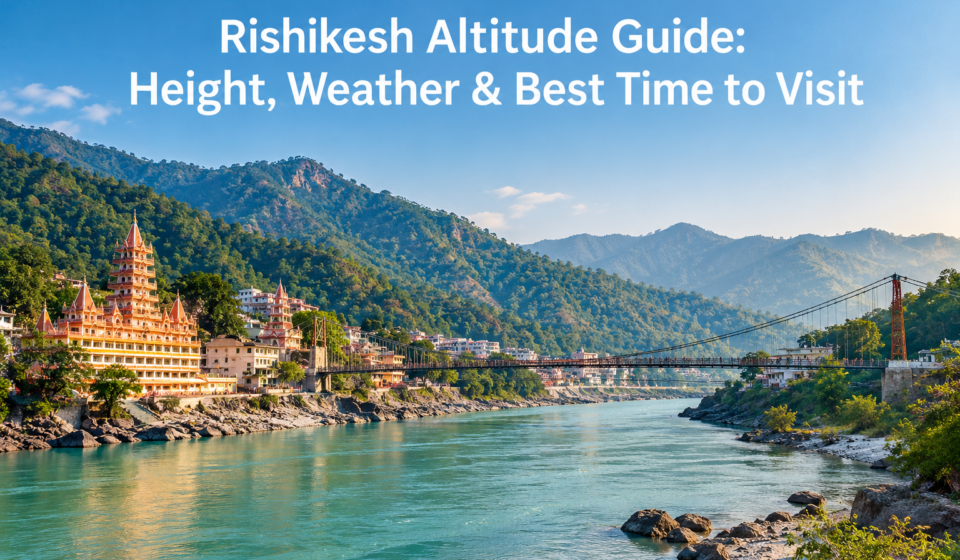

Rishikesh is a beautiful city in Uttarakhand, India, known for its spiritual atmosphere, the sacred Ganges River, and its scenic Himalayan surroundings. It attracts travelers who want to explore temples, enjoy outdoor activities, practice yoga, or spend time in nature. Before planning a trip, it helps to understand the Rishikesh altitude and how the city’s elevation affects its weather and travel conditions.
Rishikesh sits at the foothills of the Himalayas, where the plains begin to meet the mountains. Its elevation is relatively low compared with major Himalayan hill stations, but the surrounding landscape offers a refreshing mountain atmosphere. The weather changes throughout the year, so choosing the right travel season can make your visit more comfortable and enjoyable.
What Is the Altitude of Rishikesh?
Rishikesh is approximately 340 meters (1,120 feet) above sea level, although the exact elevation varies across the city and nearby areas. The main city is located near the Ganges River, surrounded by green hills, forested slopes, and rocky riverbanks. This location gives Rishikesh a mix of plains and mountain scenery.
The Rishikesh altitude is lower than that of destinations such as Mussoorie and many Himalayan trekking areas. As a result, most visitors do not experience altitude-related problems during a normal city visit. However, travelers heading toward higher mountain regions beyond Rishikesh should prepare for different temperatures, road conditions, and physical demands.
How Rishikesh Altitude Affects the Weather
The elevation of Rishikesh plays a role in its local climate, but altitude is not the only factor that affects temperatures. The city experiences hot summers, a rainy monsoon season, and cool winters. Its position near the Himalayan foothills also creates differences between the warmer central areas and the cooler surrounding hills.
During summer, daytime temperatures can rise above 35°C, making outdoor activities tiring during the afternoon. Winter brings cooler mornings and evenings, while daytime conditions are often pleasant for sightseeing. Rainfall increases during the monsoon, and the Ganges can become dangerous because of strong currents and rising water levels. Check local weather alerts before planning outdoor activities.
Rishikesh Weather Throughout the Year
Rishikesh has four main seasonal periods that travelers should consider when planning their trips. Spring is comfortable for sightseeing and outdoor adventures. Summer can be hot, but early mornings are suitable for yoga, riverside walks, and exploring temples. The monsoon brings heavy rainfall, while autumn offers clearer skies and fresh scenery.
Winter is a good option for visitors who prefer cooler weather and peaceful surroundings. However, temperatures can drop considerably at night, so warm clothing is useful. The best season depends on your travel plans, budget, and tolerance for heat or rain. If you want to enjoy several activities during one trip, spring and autumn are usually strong choices.
Best Time to Visit Rishikesh
October to November is an excellent period for visiting Rishikesh. The monsoon has usually passed, the landscape remains green, and the weather becomes more comfortable for walking and sightseeing. Travelers can explore temples, visit the river ghats, enjoy local cafes, and discover nearby nature spots without dealing with the peak summer heat.
February to April is another good travel window. Temperatures gradually rise, making the days suitable for outdoor adventures and spiritual activities. March is particularly popular among yoga enthusiasts because of the International Yog Festival, although event dates and visitor numbers can vary. For a quieter experience, consider traveling outside major holidays and festival periods.
Visiting Rishikesh During Summer
Summer generally runs from April through June. Temperatures can become very high, especially in May and early June, so visitors should plan outdoor activities carefully. Early mornings and late afternoons are better for sightseeing, while the hottest part of the day is ideal for resting indoors, enjoying a cafe, or attending a yoga session.
If you visit during summer, carry drinking water, sunscreen, sunglasses, and light clothing. Choose accommodation with good ventilation or air conditioning if you are sensitive to heat. River rafting and other adventure activities may be available during approved operating periods, but schedules depend on weather, river conditions, and local safety decisions. Always use authorized operators rather than assuming that every activity will be available.
Visiting Rishikesh During the Monsoon
The monsoon season usually brings the heaviest rainfall between July and September. The surrounding hills become lush and green, creating beautiful views for photography and nature lovers. However, this season also presents challenges for travelers. Roads can become slippery, local streams may rise quickly, and heavy rain can cause landslides in nearby mountain areas.
River activities require particular caution during the monsoon. Rafting may be suspended because of unsafe water conditions, and riverside paths can become hazardous. Travelers should check official advisories before departure and remain away from flooded riverbanks. If your main goal is rafting, trekking, or exploring the surrounding countryside, choose dates based on current operating conditions rather than scenery alone.
Visiting Rishikesh During Winter
Winter usually lasts from December through February. Mornings and evenings can feel cold, especially near the river, while sunny afternoons are often comfortable for sightseeing. This season suits visitors who want a slower trip focused on temples, yoga, meditation, local food, and peaceful walks through the city.
Pack a warm jacket, comfortable trousers, and extra layers for early mornings. If you plan to attend an outdoor Ganga Aarti ceremony, warm clothing can make the experience more comfortable. Winter is also a good time to enjoy cafes and wellness retreats without the intense heat of summer. However, check the forecast before traveling to higher elevations nearby, where conditions can be much colder than in Rishikesh itself.
Best Places to Visit in Rishikesh
Rishikesh offers a mix of spiritual landmarks, river views, peaceful walking areas, and adventure experiences. Triveni Ghat is a popular place to experience the evening Ganga Aarti and observe local religious traditions. Ram Jhula and the surrounding riverside areas provide scenic views and access to temples, ashrams, shops, and cafes.
The Beatles Ashram is another interesting stop for visitors interested in music, history, and meditation. Its setting among trees and old structures offers a different perspective on the city’s spiritual history. You can also explore local yoga centers or visit nearby viewpoints for mountain scenery. Allow enough time between attractions, as traffic, walking routes, and seasonal conditions may affect your schedule.
Adventure Activities and Rishikesh Altitude
Rishikesh is well known for white-water rafting, trekking, bungee jumping, and other outdoor activities. Its relatively low elevation makes the city a convenient starting point for visitors who want to explore the Himalayan foothills without immediately traveling to high mountain destinations. Many adventure activities take place in nearby areas rather than in the central city.
The Rishikesh altitude does not remove the risks associated with adventure sports. River currents, sudden weather changes, slippery trails, and physical exertion can all affect safety. Follow instructions from qualified guides, wear the required safety equipment, and check whether your chosen activity is operating on the day of your visit. If you have limited hiking experience, start with shorter, easier routes before attempting more demanding trails.
Does Rishikesh Altitude Cause Altitude Sickness?
Altitude sickness is generally not a concern for most visitors staying in Rishikesh because the city sits at a relatively low elevation compared with high Himalayan destinations. Most travelers can explore the main tourist areas without needing special altitude acclimatization. Ordinary precautions, such as staying hydrated and avoiding excessive exertion in hot weather, are usually sufficient for a typical city visit.
The situation changes if you continue into higher mountain regions. Places reached on trekking routes or journeys deeper into the Himalayas can sit at much greater elevations, where altitude-related symptoms become more likely. If your itinerary includes a high-altitude trek, plan for gradual ascent and follow appropriate medical guidance. Severe headache, confusion, difficulty breathing at rest, or trouble walking normally after ascending require urgent medical attention and descent when safe.
What to Pack for Rishikesh Weather
Your packing list should match the season of your visit. During spring and autumn, comfortable walking shoes, light clothing, a reusable water bottle, sunscreen, and a light jacket are useful. These items work well for sightseeing, visiting temples, exploring cafes, and walking along approved riverside paths.
Summer travelers should pack breathable clothes, sun protection, and extra water for outdoor excursions. During winter, bring warm layers for early mornings and evenings. A rain jacket and shoes with good grip are helpful during wetter periods, although heavy monsoon conditions may require changing your plans. If you are visiting religious sites, modest clothing can also help you respect local customs.
Travel Tips for Planning Your Rishikesh Trip
Plan your daily schedule around the weather. In warmer months, begin sightseeing early and leave the hottest hours for indoor activities. During cooler months, you can often spend more time outdoors, but allow extra time for mornings when temperatures are low. Check transport conditions before taking day trips into nearby hills, especially during the monsoon.
Book accommodation according to your priorities. Staying near the main tourist areas can make it easier to visit popular ghats, temples, and cafes, while properties farther from the center may offer quieter surroundings. If you want to attend yoga classes or join an adventure activity, confirm schedules and safety requirements directly with the provider. Keep your itinerary flexible so that rain, traffic, or local advisories do not spoil your entire visit.
Conclusion
Rishikesh stands at approximately 340–372 meters (around 1,115–1,220 feet) above sea level, depending on the location and reference used. Its low elevation makes it accessible to most travelers, while its position near the Himalayan foothills creates a scenic setting for spiritual retreats, river activities, and outdoor exploration. Seasonal weather matters more than altitude for most visitors planning a typical trip.
For comfortable sightseeing, yoga, and outdoor experiences, consider visiting between October and November or February and April. Summer can be hot, while the monsoon requires greater flexibility because of rainfall and river safety concerns. Pack for the season, check local conditions, and choose activities carefully. With sensible planning, Rishikesh can offer a rewarding visit at almost any time of year.
