



















































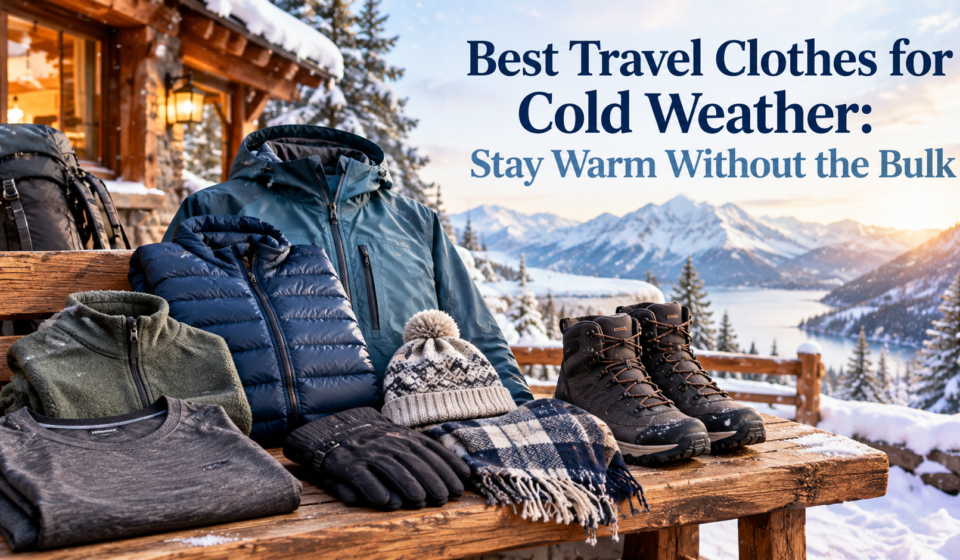

The best travel clothes for cold weather should provide warmth, comfort, and flexibility. You may face freezing mornings, heated museums, cold train platforms, and long walks outdoors during the same trip. A bulky outfit can quickly become uncomfortable when temperatures change. Lightweight layers make it easier to adjust your clothing throughout the day.
Whether you are planning a winter city break, a snowy mountain escape, or a cold-weather road trip, a practical travel wardrobe can make the experience much easier. This guide explains which clothes to choose, how to layer them, and how to stay warm without filling your luggage with unnecessary items.
1. Start With Lightweight Thermal Base Layers
Why Base Layers Matter
Base layers sit directly against your skin. Their main purpose is to help manage moisture while providing a comfortable foundation for the rest of your outfit. When sweat stays trapped against your skin in cold weather, it can leave you feeling chilled. A suitable base layer helps you stay drier and more comfortable.
Merino wool and synthetic fabrics are two popular options. Merino wool feels soft, helps regulate temperature, and can resist odors between washes. Synthetic materials, such as polyester blends, often dry quickly and work well for active trips. Both can be useful, depending on your budget and travel plans.
Choose Thin Thermals Instead of Bulky Underwear
A lightweight thermal top can fit comfortably beneath a sweater, fleece, or jacket. Thermal leggings can add warmth under trousers when you expect freezing temperatures. You do not always need the thickest available option. The right weight depends on the climate and how much time you plan to spend outdoors.
For mild winter weather, a thin thermal layer may be enough beneath everyday clothes. For colder destinations, consider a midweight version that offers more insulation. If you expect extreme cold, select layers designed for those conditions and combine them with suitable outerwear. Avoid buying heavy thermals without checking the forecast first.
2. Pack a Lightweight Down or Insulated Jacket
Get More Warmth With Less Weight
A lightweight insulated jacket is one of the most useful items in a cold-weather travel wardrobe. Down jackets provide excellent warmth for their weight and often compress into a small packing space. They work well for cold, dry conditions and can fit beneath a larger weatherproof coat.
Synthetic insulated jackets are another practical option. They may weigh slightly more than comparable down designs, but many retain useful insulating properties when damp. This makes them worth considering for trips where wet snow, drizzle, or changing weather is likely.
Choose a Packable Design
Look for a jacket that can fold into its own pocket or a compact stuff sack. A packable design takes up less room in your luggage and gives you an extra layer when temperatures drop unexpectedly. Neutral colors such as black, navy, gray, or olive also make it easier to match the jacket with different outfits.
Pay attention to the jacket’s fit. It should leave enough room for a thermal top and a sweater without restricting your arms. If you expect wind or rain, make sure your outer layer offers suitable protection. Insulation alone may not be enough in wet, exposed conditions.
3. Use Fleece and Merino Sweaters for Extra Warmth
Choose Warm Layers That Breathe
Fleece jackets are popular because they are lightweight, comfortable, and quick to dry. They provide useful insulation without the weight of many thick sweaters. A zip-up fleece is particularly convenient for travel because you can open it when you feel warm and close it when the temperature falls.
Merino wool sweaters offer another versatile choice. They can provide warmth while maintaining a relatively slim profile, making them suitable for sightseeing, restaurant visits, and casual evenings. A simple crewneck or cardigan can work with jeans, travel trousers, and thermal layers.
Avoid Packing Too Many Heavy Sweaters
Several thick sweaters can fill a suitcase quickly. Instead, choose one or two versatile midlayers that work with the rest of your wardrobe. A lightweight fleece may suit active days, while a merino sweater can offer a more polished look for city outings.
Consider how each item fits beneath your jacket. Layers that are too tight may restrict movement, while excessively loose clothing can feel awkward under outerwear. The goal is to create a comfortable combination that traps warmth without making your outfit feel heavy.
4. Choose Travel Trousers That Work in Cold Weather
Look for Comfort, Flexibility, and Insulation
The best travel trousers for cold weather should let you walk, sit, climb stairs, and travel comfortably. Stretch-woven trousers, lined travel pants, and thicker technical fabrics can work well for winter sightseeing. They also tend to look less bulky than some traditional insulated pants.
For ordinary city trips, regular trousers with thermal leggings underneath may provide enough warmth. This approach gives you more flexibility because you can remove the base layer when you move indoors or travel to a milder destination. It also reduces the need to pack separate heavy trousers for every day.
When to Choose Fleece-Lined or Waterproof Pants
Fleece-lined trousers can be useful in consistently cold conditions. They provide an extra layer of warmth without requiring separate thermal leggings. However, they may feel too warm when you spend a lot of time indoors or travel in a climate with frequent temperature changes.
Water-resistant or waterproof trousers are more useful for snowy walks, wet trails, and outdoor activities. For a typical city holiday, they may not be necessary. Match your trousers to the activities you plan to enjoy instead of buying specialist clothing you are unlikely to use.
5. Find a Warm Coat That Is Easy to Travel With
Down Coats for Cold and Dry Conditions
A down coat can be an excellent choice for very cold, dry weather. It traps warm air and offers strong insulation without requiring several heavy layers. Longer designs can also provide additional coverage around the hips and thighs, which may improve comfort in freezing conditions.
Choose a coat that suits your destination and planned activities. A lightweight puffer may work well for everyday sightseeing, while a longer insulated coat can be more comfortable in severe cold. Check the hood, cuffs, pockets, and closure system to make sure they meet your needs.
Waterproof Shells for Wind, Rain, and Snow
An insulated jacket is not always enough when the weather is wet or windy. A waterproof or water-resistant shell can protect your inner layers from precipitation and help block wind. In colder conditions, you can wear it over a fleece or insulated jacket.
This combination is often more flexible than relying on one very thick coat. You can wear the shell alone during mild rain, add insulation when the temperature drops, and remove layers when you enter a heated building. For serious winter weather, check the garment’s stated protection level rather than assuming every rain jacket is suitable for snow.
6. Wear Warm, Comfortable Socks and Winter Shoes
Choose Socks That Keep Your Feet Dry
Cold feet can make a sightseeing day uncomfortable, especially when you spend hours walking outdoors. Merino wool socks are a popular choice because they provide warmth and help manage moisture. Synthetic hiking socks can also work well, particularly for active trips where quick drying is important.
Choose socks that fit comfortably inside your shoes. Extremely thick socks can make footwear too tight, reducing comfort and leaving less room for warm air around your feet. Pack an extra pair if you expect wet conditions or plan to spend long days outdoors.
Select Shoes for Your Destination
Water-resistant walking shoes may be enough for a mild winter city break. For snowy sidewalks, icy paths, or mountain destinations, insulated waterproof boots with suitable traction can provide better protection. Look for a comfortable fit and a sole designed for the surfaces you expect to encounter.
You do not always need large, heavy snow boots. If your itinerary mostly involves museums, restaurants, public transport, and paved streets, a practical pair of weather-resistant walking shoes may be easier to pack. Check the forecast and local conditions before deciding.
7. Do Not Forget Hats, Gloves, and Scarves
Small Accessories Can Make a Big Difference
Winter accessories add warmth without taking up much luggage space. A beanie, a pair of insulated gloves, and a scarf can make cold walks more comfortable. These items are particularly helpful when wind makes the temperature feel lower than the forecast suggests.
Choose accessories that work with several outfits. Neutral colors are easy to combine, while touchscreen-compatible gloves can make it easier to use your phone without exposing your hands. A soft scarf can also add a layer around your neck when your coat does not provide enough coverage.
Pack for the Coldest Part of Your Day
Consider your plans when selecting accessories. If you expect to walk through snowy streets at night, warmer gloves and a wind-resistant hat may be important. If you will spend most of your time indoors, lighter accessories may be sufficient.
For very cold destinations, consider insulated gloves or mittens instead of thin fashion gloves. Mittens can provide extra warmth because the fingers share space, although gloves may offer better dexterity. Choose based on the conditions rather than appearance alone.
8. Create a Simple Three-Layer Travel Outfit
The Base, Mid, and Outer Layer System
The easiest way to dress for cold-weather travel is to build an outfit around three main layers. The base layer manages moisture. The middle layer provides insulation. The outer layer protects you from wind, rain, or snow.
For example, you might wear a thermal top, a fleece jacket, and a waterproof shell for an outdoor sightseeing day. In colder weather, add a lightweight insulated jacket between the fleece and the shell if the fit allows. This gives you several ways to adjust your warmth without changing your entire outfit.
Adjust Your Layers Throughout the Day
Layering is useful because temperatures change as you travel. You may feel cold while waiting for a bus but become warm after walking uphill. Removing a layer before you start sweating can help you stay comfortable.
Keep a compact layer in your day bag when the forecast is uncertain. A lightweight insulated jacket or packable shell can be useful when the weather changes. Choose pieces that are easy to put on and remove so that adapting your outfit does not interrupt your plans.
9. Build a Travel Wardrobe With Versatile Pieces
Choose Clothes That Mix and Match
A small travel wardrobe works best when the pieces complement one another. Choose a few base-layer tops, one or two midlayers, suitable trousers, and a coat that works with most of your outfits. A consistent color palette makes it easier to create different combinations without packing extra clothing.
For example, black trousers, a neutral thermal top, a gray fleece, and a navy insulated jacket can create several practical outfits. You can change the appearance with a scarf or sweater without adding much weight. This approach is useful for city breaks, business trips, and longer journeys with limited luggage space.
Prioritize Items You Can Wear More Than Once
Cold-weather clothes often take longer to dry than lightweight summer clothing. Choosing versatile pieces helps you avoid packing a completely new outfit for every day. Merino layers can be useful for repeated wear, while synthetic base layers are practical if you have access to regular laundry.
Pack extra underwear and socks as needed, but be selective with bulky outerwear. Wearing your heaviest coat and shoes during travel can save room in your suitcase. Keep in mind that you should remain comfortable on the plane or train, so avoid wearing so many layers that you overheat.
10. Pack Smart to Avoid Bulky Luggage
Use Packing Cubes and Roll Lightweight Clothing
Packing cubes can help separate thermal layers, everyday clothing, and accessories. Rolling flexible garments may reduce wasted space, while folding structured items can help prevent unwanted creases. Neither method removes the weight of your luggage, so focus on choosing fewer, more versatile items.
Keep gloves, hats, and other small accessories together so you can find them easily. Store damp clothing separately from dry layers, and avoid compressing delicate garments in a way that damages their shape. If you travel with a down jacket, follow its care instructions when packing and storing it.
Wear Your Bulkiest Items During Transit
If you are traveling with limited luggage, consider wearing your coat, heavier shoes, and thickest sweater on the journey. You can remove the outer layers once you are seated. This frees up space for other essentials without requiring you to leave important winter clothing behind.
Do not pack for every possible situation. Check the forecast, consider the activities on your itinerary, and choose clothing for the conditions you are most likely to encounter. For a city break, you may not need specialist ski clothing. For a mountain trip, however, proper weather protection should take priority over saving a little luggage space.
Common Mistakes to Avoid When Choosing Cold-Weather Travel Clothes
Relying on One Thick Coat
A very thick coat may seem like the simplest solution, but it can be uncomfortable when you move between freezing streets and heated buildings. It may also take up a large amount of suitcase space. A flexible layering system lets you adjust your clothing to different temperatures.
A warm coat still has an important role, especially in severe cold. The key is to choose one that works with your base and midlayers rather than expecting it to handle every condition alone.
Choosing Style Over Practicality
Fashion matters to many travelers, but clothing must also suit the weather. Shoes with poor traction may be unsuitable for icy streets, while a decorative coat may not offer enough protection from wind or rain. Before packing, consider how much time you will spend outdoors and whether your clothing will support those activities.
You can still create stylish winter outfits with neutral layers, well-fitting trousers, and simple accessories. The best travel wardrobe balances appearance with comfort, warmth, and useful features.
Ignoring the Weather Forecast
Cold weather can vary significantly between destinations. A mild coastal winter is different from a snowy mountain environment. Check expected temperatures, wind, precipitation, and local conditions before deciding which layers to pack.
If the forecast is uncertain, choose versatile items that can be combined in different ways. A thermal top, an insulating layer, and a weather-resistant jacket can cover a range of conditions without forcing you to pack several heavy coats.
Conclusion: Stay Warm Without Carrying Too Much
The best travel clothes for cold weather combine lightweight insulation, breathable fabrics, comfortable footwear, and practical outerwear. Thermal base layers, fleece or merino sweaters, packable insulated jackets, and suitable waterproof shells can help you stay comfortable while keeping your luggage manageable. Warm socks, gloves, hats, and scarves add useful protection without taking up much space.
Instead of packing the bulkiest clothing you own, build your wardrobe around layers that work together. Choose items based on your destination, expected weather, and planned activities. With a little preparation, you can stay warm, dress comfortably, and enjoy your winter trip without carrying unnecessary weight.
