



















































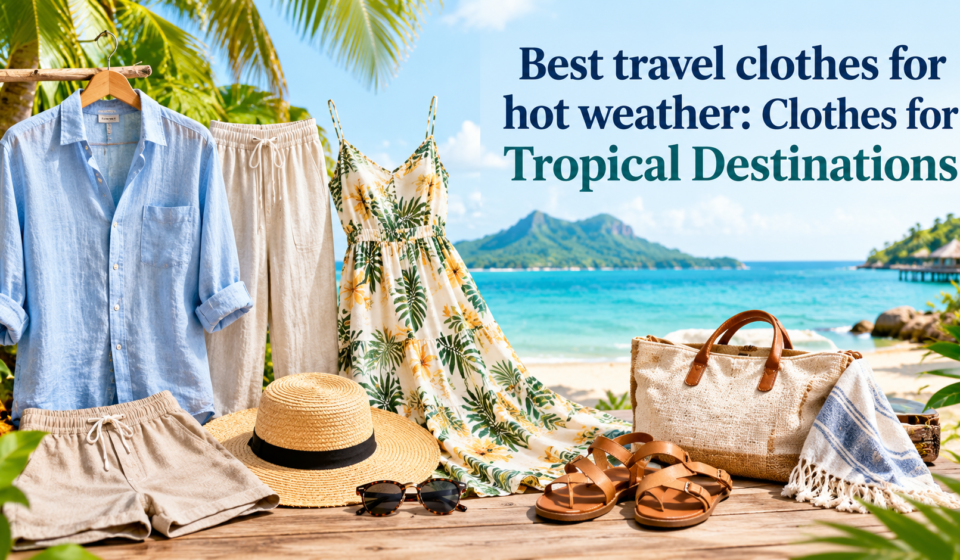

Planning a tropical vacation is exciting, but choosing what to wear can be challenging. Hot temperatures, high humidity, sudden rain, and long days outdoors can make the wrong outfit uncomfortable. The best travel clothes for hot weather help you stay cool, move freely, and enjoy your trip without carrying an oversized suitcase.
Whether you are visiting Thailand, Bali, the Maldives, the Caribbean, or another warm destination, your clothing choices matter. Lightweight shirts, breathable dresses, loose trousers, comfortable shorts, and suitable footwear can make sightseeing much easier. The right fabrics also help manage sweat and dry more comfortably between activities.
However, dressing for a tropical destination is about more than wearing shorts and a T-shirt. You may need sun protection during the day, modest clothing for cultural attractions, and a light layer for air-conditioned restaurants or evening travel. This guide explains what to pack, which fabrics work best, and how to create practical outfits for your next warm-weather adventure.
Why Choosing the Best Travel Clothes for Hot Weather Matters
Stay Comfortable in Heat and Humidity
Tropical weather often combines high temperatures with high humidity. In these conditions, sweat evaporates more slowly, which can leave clothing feeling damp and uncomfortable. Tight garments and heavy fabrics may make the problem worse by limiting airflow around your skin.
Loose-fitting clothes give air more room to circulate. Lightweight fabrics can also reduce the amount of material holding heat against your body. For everyday sightseeing, this means choosing relaxed shirts, breathable trousers, airy dresses, and shorts that allow comfortable movement.
The U.S. Centers for Disease Control and Prevention recommends wearing loose, lightweight, light-colored clothing when traveling in hot climates. It also advises travelers to drink fluids, wear a hat and sunglasses, and take breaks in shaded areas. These simple steps can help you enjoy outdoor activities more comfortably.
Balance Comfort, Style, and Practicality
Your vacation wardrobe should suit the activities you have planned. A beach holiday may require swimsuits, cover-ups, and sandals, while a city break may call for walking shoes, lightweight trousers, and shirts that work for sightseeing and dining.
You do not need a separate outfit for every activity. Choose clothes that mix and match easily. Neutral shorts can work with several tops, while a lightweight button-down shirt can be worn open over a tank top or buttoned for a more polished look.
This approach saves suitcase space and makes getting dressed easier. It also gives you more flexibility when plans change, whether you decide to visit a local market, spend an afternoon at the beach, or explore a historic neighborhood.
The Best Fabrics for Tropical Destinations
Linen: A Top Choice for Hot Weather
Linen is one of the most useful fabrics for tropical travel. Its characteristic weave allows airflow, and its relaxed texture works well for shirts, trousers, dresses, and lightweight sets. Linen also has a natural appearance that suits beach towns, resort destinations, and casual city outfits.
A loose linen shirt can be worn with shorts during the day or paired with lightweight trousers for dinner. Linen dresses are another versatile option because they offer a complete outfit without requiring several separate pieces.
The main drawback is wrinkling. Linen creases easily, especially after being folded in a suitcase. If you prefer a smoother finish, look for a linen-cotton blend. It may wrinkle less, although its breathability depends on the fabric construction and blend.
Cotton: Soft and Easy to Wear
Lightweight cotton is a reliable choice for everyday travel. Cotton T-shirts, loose shirts, cotton dresses, and breathable sleepwear are comfortable and widely available. It is also easy to wash, which makes it practical for longer trips.
The main limitation is moisture retention. Cotton can absorb sweat and remain damp longer than many quick-drying fabrics. A heavy cotton shirt may therefore feel uncomfortable during a humid afternoon, especially if you are walking for several hours.
Choose lightweight cotton garments with a relaxed fit. Cotton voile, lawn, and light poplin can work well for warm climates. Pack a few cotton basics for casual days, but consider quick-drying alternatives for intense outdoor activities.
Moisture-Wicking Fabrics for Active Days
If your trip includes hiking, cycling, long walking tours, or boat excursions, moisture-wicking clothing can be useful. These garments are designed to move moisture away from the skin, helping it spread across the fabric and dry.
Performance shirts made from suitable polyester or nylon blends can be practical when you expect to sweat heavily. They are often lightweight and easy to wash, and some dry faster than cotton.
However, not every synthetic fabric feels comfortable in humid weather. Fabric construction, ventilation, and fit all matter. Look for products specifically designed for moisture management rather than assuming that every polyester garment will keep you cool. REI’s guidance on dressing for humidity also emphasizes lightweight construction, airflow, and moisture management.
Essential Travel Clothes for Hot Weather
Lightweight Shirts and Breathable Tops
Pack a selection of short-sleeved shirts, breathable T-shirts, and lightweight button-downs. These pieces form the foundation of a practical tropical wardrobe. Choose colors and designs that work with several bottoms, so you can create different outfits without packing too much.
A loose button-down shirt is particularly useful because it serves several purposes. Wear it with shorts for sightseeing, layer it over swimwear at the beach, or pair it with lightweight trousers for a casual evening meal.
Consider bringing one or two long-sleeved shirts as well. A lightweight, tightly woven or UPF-rated shirt can help protect your skin during extended time outdoors. It can also be useful when visiting religious sites or other places where more coverage is appropriate.
Shorts and Lightweight Trousers
Shorts are practical for beaches, casual walks, and relaxed sightseeing. Choose breathable materials with a comfortable waistband and enough room to move. A neutral pair in beige, navy, or olive can work with several tops.
Lightweight trousers are equally important. They provide more coverage when visiting cultural attractions, walking through areas with insects, or spending time in strong sunlight. Loose linen or cotton trousers can also look polished without feeling as restrictive as heavy jeans.
Avoid packing several pairs of thick denim jeans unless you know you will need them. Heavy denim can take up valuable suitcase space and may feel uncomfortable in humid conditions. One lightweight pair of trousers often provides more flexibility for tropical travel.
Dresses, Skirts, and One-Piece Outfits
For travelers who enjoy dresses, lightweight styles can simplify vacation dressing. A loose sundress, shirt dress, or breathable maxi dress can be worn for sightseeing, shopping, or a casual dinner. Choose a design that allows comfortable movement and suits the activities on your itinerary.
Skirts can also work well in hot weather. Pair a lightweight skirt with a simple cotton top or linen shirt for an outfit that feels relaxed but looks put together.
One-piece outfits are especially useful when packing light. They reduce the need to coordinate several separate items, and many can be dressed up with simple accessories. If your itinerary includes both casual and slightly formal activities, choose a style that works in more than one setting.
The Best Travel Clothes for Different Tropical Activities
Beach Days and Island Escapes
Beach clothing should be easy to put on, comfortable when damp, and simple to pack. Swimsuits, quick-drying cover-ups, lightweight shorts, and loose shirts are useful essentials. A cover-up also makes it easier to move between the beach, nearby cafés, and hotel areas.
Choose swimwear that fits securely and allows you to move comfortably. If you plan to swim, snorkel, or participate in water sports, consider clothing designed for those activities. A rash guard with a suitable ultraviolet protection factor can provide additional coverage in the sun.
Bring a lightweight beach bag for sunscreen, water, sunglasses, and a towel. Keep a dry change of clothes available if you plan to travel away from the beach after swimming.
City Sightseeing and Walking Tours
Exploring a tropical city often means walking on hot sidewalks, using public transportation, visiting markets, and entering buildings with strong air conditioning. Your clothing should work in each of these settings.
A breathable T-shirt or linen shirt with lightweight trousers is a practical combination. Comfortable walking shoes are important because even a stylish outfit becomes frustrating if your feet hurt after a few hours.
Consider the local culture when planning your outfits. Some temples, mosques, churches, and historic attractions require covered shoulders or knees. A light scarf, overshirt, or pair of long trousers can help you adapt without packing a completely separate wardrobe.
Hiking and Outdoor Adventures
For hiking and other active excursions, choose clothing based on the activity rather than appearance alone. Moisture-wicking tops, lightweight hiking trousers, supportive shoes, and breathable socks can improve comfort on the trail.
If you expect rain, pack a compact rain jacket. Tropical showers can arrive quickly, and a lightweight waterproof layer is easier to carry than a heavy coat. Remember that waterproof garments may feel warm, so ventilation and fit are important.
Protect yourself from the sun with appropriate clothing, a wide-brimmed hat, sunglasses, and sunscreen. The CDC’s travel guidance recommends lightweight sun-protective clothing and avoiding direct sun when ultraviolet exposure is strongest, where practical.
What Shoes Should You Pack for Hot Weather?
Comfortable Walking Shoes
A pair of comfortable walking shoes should be a priority for most tropical trips. You may spend hours exploring city streets, markets, parks, and tourist attractions, so fit and support matter more than appearance alone.
Breathable mesh sneakers can work well for active sightseeing. Choose a pair you have already worn before your trip, rather than bringing brand-new shoes that may cause blisters.
If you expect rain, check whether your footwear dries quickly and offers suitable grip. Extremely thick shoes may feel warm, while very thin soles may become uncomfortable during long walks.
Sandals and Water-Friendly Footwear
Sandals are useful for beach days, relaxed dinners, and short walks in warm weather. Look for secure straps, comfortable soles, and a design that suits your planned activities.
Flip-flops are convenient around a pool or beach, but they are not always the best choice for long sightseeing days. They may offer limited support and can become uncomfortable on uneven surfaces.
If your itinerary includes waterfalls, rocky beaches, or water-based adventures, consider water-friendly shoes with secure fastening and grip. The right footwear depends on the terrain, so check activity requirements before leaving home.
How to Protect Yourself From Tropical Sun
Choose Light Colors and Useful Coverage
Light-colored clothing is often a practical option for sunny destinations because it absorbs less visible sunlight than many dark colors. More importantly, choose garments that feel comfortable and allow airflow.
Do not assume that every lightweight garment provides strong ultraviolet protection. Fabric density, material, color, and construction can affect how much UV radiation reaches your skin. If you expect long periods outdoors, consider garments with a clearly stated UPF rating.
A lightweight long-sleeved shirt may be more useful than another sleeveless top when you are exploring an exposed area. A wide-brimmed hat can also shade your face, ears, and neck.
Pack Sunscreen, Sunglasses, and a Hat
Clothing is only one part of sun protection. Pack broad-spectrum sunscreen, sunglasses that block UVA and UVB rays, and a hat that provides useful shade. Reapply sunscreen according to its label, especially after swimming or heavy sweating.
Try to plan demanding outdoor activities for cooler parts of the day. Take breaks in the shade and drink fluids regularly. These habits are particularly important when you arrive from a cooler climate and are not yet accustomed to tropical heat.
The CDC advises travelers to combine protective clothing with sunscreen, shade, and other sensible precautions.
How to Pack a Tropical Wardrobe Without Overpacking
Build a Small Mix-and-Match Wardrobe
Packing light becomes easier when most items work together. Choose a simple color palette, such as white, beige, navy, and olive, then add one or two brighter pieces for variety.
For a week-long trip, you might pack several lightweight tops, a few pairs of shorts or trousers, one or two dresses if you wear them, swimwear, sleepwear, underwear, and suitable shoes. Adjust the amounts according to laundry access, planned activities, and local dress expectations.
Avoid packing an outfit for every possible situation. Instead, choose versatile items that can be worn in different combinations. This approach reduces luggage weight and leaves more space for souvenirs or other essentials.
Choose Easy-Care and Quick-Drying Pieces
Clothes that wash and dry easily are valuable when you travel through several destinations. Quick-drying fabrics can be particularly helpful if you plan to wash garments in a hotel sink or need to reuse an item the next morning.
Linen and cotton offer comfort, but drying time depends on fabric weight, humidity, and airflow. Technical travel clothing may dry faster, though some materials can retain odors after repeated use.
Before packing, check care labels and avoid bringing delicate garments that require special washing unless you genuinely need them. A small laundry bag can also keep worn clothing separate from clean items.
Keep One Light Layer for Indoor Spaces
Tropical destinations are not always warm indoors. Airports, buses, shopping centers, hotels, and restaurants may use strong air conditioning. A thin cardigan, lightweight overshirt, or packable layer can make these spaces more comfortable.
This layer can also be useful on evening boat rides or during unexpected changes in weather. Choose something that folds easily and matches the rest of your wardrobe.
A versatile layer is usually more practical than a thick jacket. It provides enough flexibility without taking up much room in your suitcase.
Common Clothing Mistakes to Avoid in Tropical Destinations
Wearing Heavy or Tight Fabrics
Heavy denim, thick sweatshirts, and tight synthetic clothing can become uncomfortable in hot, humid conditions. They may limit airflow or hold moisture close to the body, particularly during active sightseeing.
This does not mean every synthetic garment is unsuitable. Technical fabrics designed for moisture management can work well. Focus on fabric weight, construction, fit, and the activity you have planned rather than relying on the fiber name alone.
Forgetting Local Customs and Practical Needs
A beach outfit may not be appropriate for every restaurant, religious site, or cultural attraction. Research your destination before packing and bring clothing that allows you to adjust when needed.
It is also easy to focus only on daytime temperatures and forget about rain, insects, and air-conditioned spaces. A small number of versatile items can help you handle these situations without overpacking.
Finally, do not sacrifice comfort just to follow a vacation fashion trend. The best wardrobe is one that helps you enjoy the destination confidently and comfortably.
Conclusion
The best travel clothes for hot weather combine breathable fabrics, relaxed fits, practical footwear, and useful sun protection. Linen shirts, lightweight cotton tops, loose trousers, comfortable shorts, airy dresses, and quick-drying activewear can all earn a place in your tropical wardrobe. The right combination depends on whether you plan to spend your days at the beach, explore busy cities, hike scenic trails, or enjoy a mixture of activities.
Before packing, check the weather, local dress expectations, and activities on your itinerary. Choose garments that mix and match, dry reasonably quickly, and feel comfortable after several hours of wear. Add a hat, sunglasses, sunscreen, and one light layer for air-conditioned spaces. With a thoughtful wardrobe, you can pack less, stay more comfortable, and focus on enjoying your tropical destination.

[…] International Travel October 11, 2026 Best Travel Gear for Camping Trips in Any Season October 11, 2026 Best Travel Clothes for Hot Weather: Clothes for Tropical Destinations […]