



















































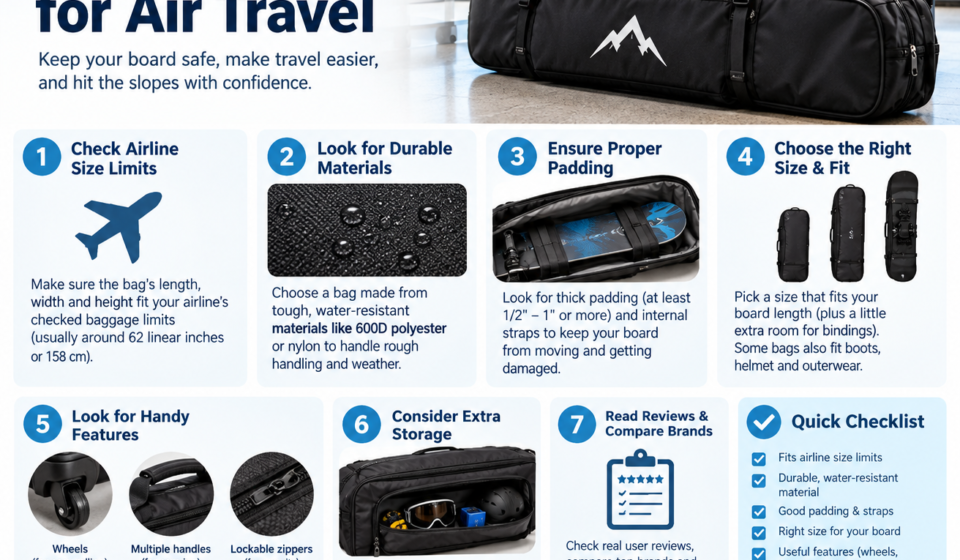

Choosing the right snowboard bag for air travel is essential for protecting your equipment and making your journey more convenient. Whether you are planning a winter vacation, travelling to a ski resort, or flying internationally for a snowboarding adventure, a suitable bag can help prevent damage to your snowboard, bindings, boots, and accessories. Air travel involves baggage handling, loading, unloading, and transportation, so having reliable protection for your expensive snowboarding equipment is important.
The best snowboard bag for air travel should offer sufficient padding, durable materials, convenient carrying options, and enough space for your essential gear. However, not every snowboard bag is designed for airline travel. Some are lightweight and suitable for short trips, while others feature reinforced protection, wheels, and additional storage for longer journeys. Understanding these differences will help you choose a bag that matches your travel needs, budget, and snowboarding equipment.
Why You Need the Best Snowboard Bag for Air Travel
Travelling with a snowboard requires more preparation than carrying ordinary luggage. Snowboards are long, bulky, and vulnerable to scratches, dents, and impact damage. During air travel, baggage may be moved several times before reaching your destination. A dedicated snowboard bag creates a protective barrier against rough handling, accidental drops, and contact with other luggage.
A suitable snowboard bag also makes transportation easier from your home to the airport and from the airport to your accommodation. Many designs include padded shoulder straps, carrying handles, or wheels that reduce the effort required to move heavy equipment. Additional compartments can also help you organize your boots, bindings, clothing, and accessories in one convenient place.
Choose the Right Snowboard Bag Size
Selecting the correct size is one of the most important steps when purchasing a snowboard travel bag. Your bag should be long enough to accommodate your snowboard without forcing it inside or placing unnecessary pressure on the edges. Measure your snowboard from tip to tail and compare its length with the bag’s internal dimensions before making a purchase.
If you plan to travel with additional equipment, consider a slightly larger bag with enough room for bindings, boots, and outerwear. However, avoid choosing an unnecessarily oversized bag, as excess space can allow your equipment to move around during transit. Adjustable snowboard bags can be particularly useful if you own multiple boards or expect to change your equipment in the future.
Look for Adequate Padding and Protection
Padding is a key feature to consider when choosing a snowboard bag for flying. A well-padded design helps protect your board from impacts, scratches, and pressure during baggage handling. Look for padding around the base, sides, and other vulnerable areas, particularly near the snowboard’s nose and tail, where impact damage can occur.
Some snowboard travel bags feature reinforced panels, protective foam, or additional internal dividers. These features can provide extra cushioning and help keep your equipment organized. If you are carrying an expensive snowboard or travelling frequently, investing in a heavily padded bag may be worthwhile. You can also use soft clothing around your board to add cushioning, provided it does not interfere with secure packing.
Select Durable and Water-Resistant Materials
The materials used in a snowboard bag have a significant impact on its durability and performance. Strong fabrics such as high-denier polyester and nylon are commonly used because they resist abrasion, tearing, and everyday wear. Reinforced stitching and quality zippers also help the bag withstand the demands of repeated travel.
Water-resistant materials are another useful feature, especially when travelling through snowy or rainy environments. Snow and moisture can accumulate on your equipment during transportation, so a water-resistant exterior helps keep your snowboard and accessories dry. Although water-resistant fabrics provide protection against light moisture, they are not necessarily waterproof. A separate protective cover may be useful when additional weather protection is needed.
Consider Wheels and Carrying Options
Wheels can make a snowboard bag much easier to transport through busy airports, especially when you are carrying additional luggage. Wheeled snowboard bags allow you to pull your equipment instead of carrying its full weight on your shoulder. This feature is particularly helpful for long airport corridors, connecting flights, and journeys between terminals. Look for sturdy wheels, reinforced wheel housings, and a comfortable handle designed for frequent use.
If you prefer a lightweight option, a snowboard bag with padded shoulder straps and multiple carrying handles may be more suitable. These designs are often easier to lift into vehicles, store in overhead-free luggage areas, and carry across snowy paths. Your choice should depend on your travel arrangements, the weight of your equipment, and how far you expect to carry your bag.
Check Airline Baggage Restrictions
Airline baggage policies are an important consideration when selecting a snowboard travel bag. Different airlines have different requirements for oversized sports equipment, including maximum dimensions, weight allowances, additional fees, and packing conditions. Before purchasing a bag, check the policies of the airline you plan to use, particularly if your journey includes multiple carriers or connecting flights.
Remember that a snowboard bag may count as oversized or special sports baggage, depending on the airline and your ticket. Some carriers allow snowboarding equipment under their standard checked-baggage allowance, while others charge additional fees. Weigh your packed bag at home and confirm its dimensions before leaving for the airport to avoid unexpected costs or check-in complications.
Choose a Bag With Practical Storage Space
A snowboard bag with practical storage compartments makes organizing your travel equipment much easier. Some models provide separate sections for snowboarding boots, helmets, goggles, gloves, and other accessories. Keeping these items organized helps prevent scratches and makes it easier to locate everything when you arrive at your destination. Internal straps and dividers can also stop your snowboard from shifting during transportation.
However, additional storage should not compromise the bag’s protection or make it excessively heavy. Consider whether you need a single-board bag or a larger model capable of carrying multiple snowboards. If you plan to pack clothing inside your snowboard bag, check the airline’s weight restrictions and ensure that your equipment remains properly secured.
Compare Single and Double Snowboard Bags
Single snowboard bags are designed to carry one snowboard and are generally lighter, more compact, and easier to manage. They are suitable for individual travellers who prefer to carry only their primary board and essential accessories. Their simpler construction can also make them a convenient option for short snowboarding trips or occasional air travel.
Double snowboard bags provide space for two snowboards and may offer additional room for bindings, boots, and protective accessories. They are useful for travellers who want to transport multiple boards for different snow conditions or carry equipment for another person. Although they offer more capacity, double bags can be heavier and bulkier, so it is important to check the packed weight and dimensions before travelling.
How to Pack Your Snowboard Bag for Air Travel
Packing your snowboard bag correctly helps reduce the risk of damage during transit. Start by cleaning your snowboard and removing loose dirt, snow, and moisture. Secure removable bindings separately if your bag’s design and packing instructions allow it, and place smaller accessories in dedicated compartments. Use soft clothing or suitable protective padding around vulnerable areas, particularly the nose and tail.
Before closing the bag, make sure your snowboard is held securely and cannot slide freely inside. Place heavier items in a way that distributes the weight evenly, and avoid overpacking compartments or forcing the zippers closed. Check the bag for loose straps, securely fasten all closures, and attach a luggage tag with your contact details. Photographing your equipment before checking it in can also be helpful if you need to document any damage.
How Much Should You Spend on a Snowboard Travel Bag?
The cost of a snowboard bag depends on its size, materials, padding, storage capacity, and additional features. Basic models may be suitable for occasional travellers who need simple protection, while premium options often include reinforced construction, substantial padding, durable wheels, and specialised compartments. Choosing a bag based solely on price may mean overlooking important features that affect its performance and lifespan.
Instead, consider how frequently you travel and how valuable your equipment is. If you fly regularly, a durable, well-padded bag may provide better long-term value than a cheaper option that needs frequent replacement. Occasional snowboarders may find a simpler design sufficient, provided it offers appropriate protection and meets their airline’s baggage requirements.
Conclusion
Choosing the best snowboard bag for air travel involves considering protection, size, durability, portability, and airline baggage restrictions. A well-designed bag helps protect your snowboard from scratches, impacts, and rough handling while making it easier to transport your equipment through airports and to your destination. Features such as reinforced padding, water-resistant materials, strong zippers, and practical storage compartments can make a noticeable difference during your journey.
Before purchasing, measure your snowboard, review your airline’s baggage policies, and decide whether you need a single or double-board design. Investing in a suitable travel bag can help extend the life of your snowboarding equipment and make your trips more convenient. With careful packing and proper preparation, you can travel with greater confidence and focus on enjoying your time on the slopes.
FAQs
What type of snowboard bag is best for air travel?
A padded snowboard travel bag with durable materials, secure closures, and suitable dimensions is a practical choice. Frequent travellers may also prefer a model with wheels.
Should I choose a padded or unpadded snowboard bag?
A padded bag offers additional cushioning against impacts and rough handling, making it a useful choice for checked air travel, particularly with expensive equipment.
Can I pack boots and clothing in my snowboard bag?
Many snowboard bags have enough room for boots, clothing, and accessories. Check the bag’s capacity and your airline’s weight restrictions before packing.
Do airlines charge extra for snowboard bags?
Some airlines include snowboards within their standard checked-baggage allowance, while others charge additional fees for oversized or sports equipment. Always check your carrier’s current policy.
Is a wheeled snowboard bag worth buying?
A wheeled bag can make transporting heavy equipment easier through large airports and long terminals, especially if you are travelling with several pieces of luggage.
How do I protect my snowboard during a flight?
Use a properly sized padded bag, secure your board to prevent movement, protect vulnerable edges, and pack accessories carefully to minimise impact damage.
Can I travel with two snowboards in one bag?
Yes, a double snowboard bag is designed to carry two boards. Check the packed weight, dimensions, and airline rules before travelling.
How long does a snowboard travel bag last?
A quality snowboard bag can last for several years with proper care. Regularly inspect its zippers, seams, handles, and padding, particularly if you travel frequently.

[…] Maximum Efficiency October 3, 2026 Common Hypakel Problems and How to Fix Them Easily October 2, 2026 How to Choose the Best Snowboard Bag for Air Travel October 2, 2026 […]