



















































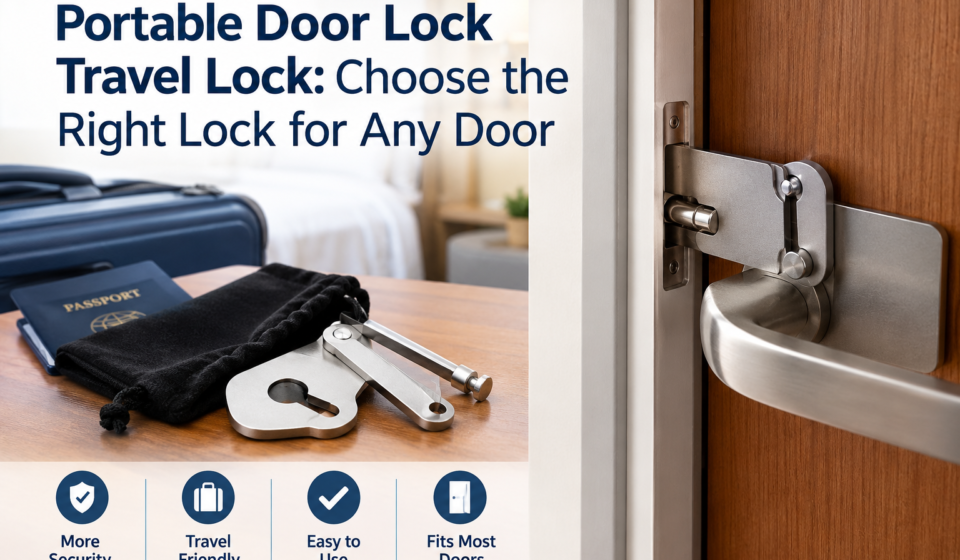

A portable door lock travel lock is a practical security accessory for people who want additional privacy and protection while travelling or staying in unfamiliar places. Whether you are staying in a hotel, renting an apartment, living in a dormitory, or visiting a short-term rental, having an extra layer of security can provide greater peace of mind. These compact devices are designed to provide additional resistance against unwanted entry without requiring permanent installation, drilling, or complicated tools.
Travelling often means relying on door locks and security systems that you have never used before. Although hotels and rental properties generally have their own security measures, some travelers prefer having an additional personal safety device. A portable lock is lightweight, easy to carry, and generally simple to install, making it a useful addition to your travel essentials. Understanding the available types, features, compatibility, and limitations can help you choose the right option for your needs.
What Is a Portable Door Lock Travel Lock?
A portable door lock is a small, removable security device designed to provide an additional locking mechanism on compatible doors. Unlike traditional locks, it does not usually require permanent installation or changes to the door. Most models use the existing door latch, strike plate, or frame to create an additional physical barrier that can help prevent a door from opening.
These devices are particularly useful for people who frequently travel, stay in shared accommodation, or rent temporary living spaces. They are typically made from durable metal or reinforced materials and are designed to fit inside a small travel bag or suitcase. However, not every model is compatible with every door, so checking the manufacturer’s specifications before purchasing is essential.
Benefits of Using a Portable Door Lock While Travelling
One of the main benefits of a portable lock is the additional sense of security it can provide in unfamiliar accommodation. When staying in hotels, hostels, or holiday rentals, travelers may not always feel comfortable relying entirely on the existing locking system. An additional physical barrier can provide extra reassurance, particularly when sleeping or resting inside a private room.
Convenience is another important advantage. Most portable locks are compact, lightweight, and reusable, allowing travelers to carry them between destinations. Since many models do not require screws or permanent modifications, they can be suitable for temporary accommodation where installing conventional security hardware is not permitted. Nevertheless, they should be treated as supplementary security devices rather than replacements for proper door locks.
Different Types of Portable Door Locks
Portable locks are available in several designs, each offering different installation methods and levels of compatibility. Some models attach to the existing door strike plate, while others use pressure against the floor or door frame. Understanding these differences makes it easier to select a device that suits the type of accommodation and door you are likely to encounter.
Common options include metal travel locks, adjustable security bars, door wedges, and portable alarms. Metal travel locks are generally compact and designed for compatible latch systems, whereas security bars provide a physical barrier against inward-opening doors. Door wedges can help resist movement on certain floor surfaces, while portable alarms alert occupants when a door is opened. Each option has different limitations, so the intended use should guide your decision.
How to Choose the Right Lock for Any Door
Choosing a suitable lock begins with understanding the door’s construction and opening direction. Some portable locks are designed exclusively for inward-opening doors with a particular type of latch and strike plate. Others are intended for sliding doors or specific door-frame configurations. Reviewing the product’s compatibility information helps prevent purchasing a device that cannot be installed properly.
Material quality, ease of installation, portability, and reliable construction are also important considerations. Stainless steel and other durable metals are commonly used in compact travel locks because they can withstand regular handling. Look for smooth edges, secure connections, and clear installation instructions. A suitable device should be easy to use without requiring excessive force or complicated adjustments.
Portable Locks for Hotels and Vacation Rentals
Hotel rooms and vacation rentals are among the most common places where travellers consider using portable security devices. Although many accommodation providers use electronic keycards, deadbolts, or other locking systems, guests may want an additional barrier for privacy while inside their rooms. A compatible portable lock can offer an extra layer of protection without permanently changing the property.
Before using a portable lock, check the accommodation’s safety instructions and ensure the device does not interfere with emergency exits. Some hotels and rental properties may restrict certain locking accessories. It is also important to remember that portable locks are not guaranteed to prevent forced entry, and guests should continue using the property’s installed security features.
Important Features to Consider Before Buying
The most useful portable locks combine practical design with dependable construction. A compact size makes a device easier to carry, while a simple installation process allows travellers to use it without assistance. A secure fit is essential because a poorly fitted lock may shift, fail to engage properly, or provide little additional resistance.
Other features worth considering include corrosion-resistant materials, adjustable components, protective storage pouches, and clear compatibility instructions. Some models also include an alarm that sounds when a door is opened. However, alarms do not physically prevent entry, and their effectiveness depends on volume, battery condition, and the surrounding environment. Choosing features that match your accommodation and travel habits can help you avoid unnecessary expenses.
How to Install and Use a Portable Door Lock
Installation methods vary depending on the type of portable lock. Many compact metal models are designed to engage with the existing strike plate and then secure against the door when it closes. Other designs use adjustable pressure bars or wedges that must be positioned according to the manufacturer’s instructions. Always check that the device is compatible with the door before attempting installation.
After installing the lock, check that it is firmly positioned and that the door cannot move freely against the device. Avoid forcing the mechanism or making modifications that are not recommended by the manufacturer. Before relying on the lock, practice removing it so you can operate it quickly in an emergency. Never use a security accessory in a way that prevents occupants from leaving the room safely.
Common Mistakes to Avoid When Using Travel Locks
One common mistake is assuming that every portable lock works with all types of doors. Differences in latch design, door thickness, frame construction, and opening direction can affect compatibility. Buying a device without checking these specifications may result in a poor fit or a lock that cannot be used at all.
Another mistake is relying entirely on a portable lock for personal safety. These devices are generally intended to provide supplementary resistance and are not substitutes for professionally installed locks, secure accommodation, or emergency planning. Travellers should also avoid leaving portable locks installed when they leave their rooms if doing so could prevent authorised access or conflict with accommodation safety requirements.
Maintaining and Storing Your Portable Door Lock
Regular inspection helps ensure that a portable lock remains in usable condition. Before travelling, check its components for bending, cracks, corrosion, loose connections, or other signs of damage. If the mechanism becomes difficult to operate or no longer fits securely, discontinue its use and consider replacing it.
Store the device in a clean, dry location, preferably inside its original pouch or a protective case. Keep it separate from sharp objects that could damage its components, and follow any cleaning instructions supplied by the manufacturer. For electronic models, inspect the battery regularly and carry replacements if the manufacturer recommends them. Proper maintenance can help extend the useful life of a travel security accessory.
Who Should Use a Portable Door Lock?
Portable door locks may be useful for solo travellers, business travellers, students, and people staying in shared accommodation. They can provide additional privacy for individuals who frequently move between hotels, temporary rentals, and guest rooms. People who travel regularly may also appreciate having a compact security accessory that can be reused at different destinations.
They may also be considered by renters who want supplementary security without making permanent changes to a property. However, suitability depends on the door design, local safety requirements, and the rules of the accommodation provider. Anyone with specific security concerns should consider a broader safety plan that includes suitable accommodation, functioning installed locks, and accessible emergency exits.
Conclusion
A portable door lock travel lock can be a useful addition to your travel essentials by providing supplementary security and greater privacy in compatible accommodation. Its compact design, simple installation, and reusable construction make it a practical option for people who regularly stay in hotels, vacation rentals, dormitories, and temporary living spaces. Selecting the right model requires attention to door compatibility, material quality, ease of use, and the intended level of additional protection.
Before purchasing, consider where you will use the device and whether it is suitable for the doors you are likely to encounter. Follow the manufacturer’s installation instructions, maintain the lock properly, and ensure that it never interferes with emergency exits. A portable security device works best as one part of a wider approach to personal safety, helping you feel more comfortable while travelling without creating a false sense of complete protection.



[…] Perks October 1, 2026 Prayer for Travelers: 10 Powerful Prayers for Safe Journeys October 1, 2026 Portable Door Lock Travel Lock: Choose the Right Lock for Any Door […]