



















































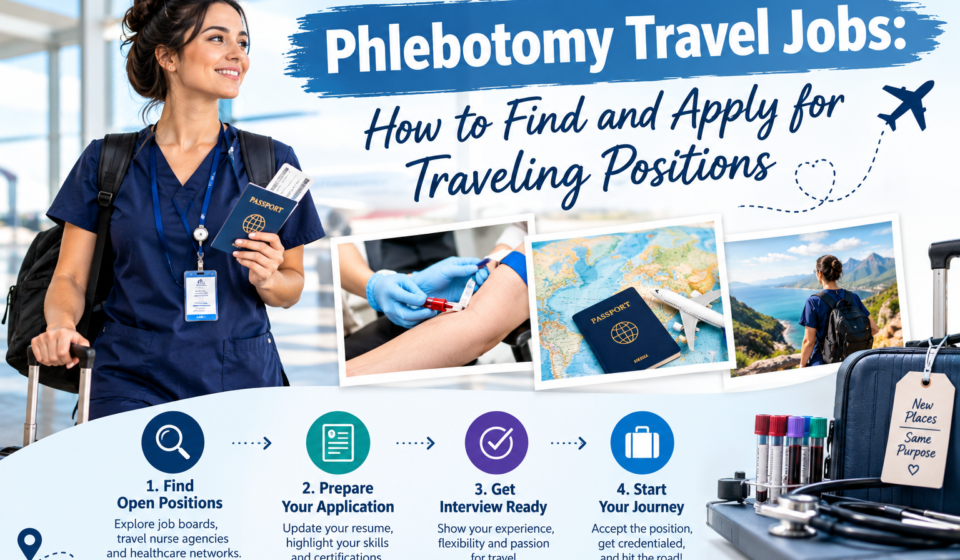

Phlebotomy travel jobs offer healthcare professionals an opportunity to explore new locations, gain valuable clinical experience, and build a rewarding career while helping patients. Traveling phlebotomists collect blood samples, perform specimen handling, and support laboratory operations in hospitals, clinics, diagnostic centers, and other healthcare facilities. Unlike traditional phlebotomy positions, these jobs involve working in different locations, often on temporary contracts to meet staffing demands.
For certified phlebotomists who enjoy travelling and adapting to new environments, these positions can provide professional growth, flexible working arrangements, and opportunities to earn competitive compensation. However, finding the right assignment requires proper qualifications, an understanding of employment requirements, and knowledge of the application process. This guide explains how to find traveling positions, prepare your application, understand compensation, and build a successful career as a traveling phlebotomist.
What Are Phlebotomy Travel Jobs?
Phlebotomy travel jobs are temporary healthcare positions in which trained professionals travel to different medical facilities to collect blood samples and perform related laboratory duties. Healthcare organizations frequently use traveling phlebotomists to address staffing shortages, manage increased patient demand, cover employee absences, or support temporary medical projects. Assignments may be available in hospitals, outpatient laboratories, blood donation centers, and specialized healthcare facilities.
Most traveling positions operate under fixed-term contracts, which may last several weeks or months, depending on the employer’s needs. Some assignments require professionals to work full-time schedules, while others offer alternative shifts or temporary coverage. Traveling phlebotomists must be comfortable adapting to different workplace procedures, electronic record systems, patient populations, and clinical environments while maintaining high standards of patient care.
Benefits of Working as a Traveling Phlebotomist
One of the main attractions of traveling phlebotomy is the opportunity to experience different healthcare environments. Professionals can work in various hospitals, laboratories, and clinics, developing practical skills and learning new approaches to specimen collection and patient management. Exposure to different clinical settings can also strengthen communication, adaptability, and problem-solving abilities, which are valuable throughout a healthcare career.
Another potential benefit is compensation flexibility. Certain travel assignments offer higher hourly rates than comparable permanent positions, depending on location, demand, experience, and contract conditions. Some employers or staffing agencies may also provide housing assistance, travel reimbursement, completion bonuses, or other benefits. However, these offerings vary considerably, so reviewing the full contract is essential before accepting an assignment.
Requirements for Phlebotomy Travel Jobs
Most traveling phlebotomist positions require a high school diploma or equivalent, completion of an approved phlebotomy training program, and practical experience collecting blood samples. Employers commonly prefer candidates who hold a recognized phlebotomy certification, such as those offered by established certification organizations in the United States. Specific certification requirements depend on the employer and the state where the assignment is located.
Previous clinical experience can make applicants more competitive, particularly for assignments involving high patient volumes, specialized specimen collection, or hospital environments. Employers may also require current cardiopulmonary resuscitation (CPR) certification, immunization records, background checks, drug screening, and proof of eligibility to work. Since licensing and certification rules differ by location, candidates should confirm the requirements for each assignment before applying.
How to Find Phlebotomy Travel Jobs
Finding suitable traveling positions begins with searching specialized healthcare staffing agencies and online employment platforms. Healthcare recruitment agencies often work directly with hospitals, diagnostic laboratories, and medical centers that need temporary phlebotomy staff. Registering with agencies that recruit allied healthcare professionals can help candidates discover assignments that match their experience, preferred locations, and availability.
Online job boards are another useful resource for finding opportunities. Platforms such as Indeed, LinkedIn, and other healthcare-focused employment websites regularly feature temporary and contract-based healthcare positions. Using search terms such as traveling phlebotomist, contract phlebotomist, mobile phlebotomist, and travel laboratory technician can help identify relevant vacancies. Applicants should review job descriptions carefully to distinguish genuine travel assignments from permanent positions that simply involve visiting different locations.
How to Apply for Traveling Phlebotomy Positions
The application process typically begins with preparing a professional résumé that highlights your phlebotomy qualifications, clinical experience, and specimen collection skills. Include details about your experience with venipuncture, patient identification, infection control, specimen labelling, and electronic medical records. If you have worked in multiple clinical environments, describe how your experience has prepared you to adapt to different healthcare facilities.
After preparing your résumé, submit applications through staffing agencies, employer career pages, or suitable job platforms. Recruiters may arrange an initial interview to discuss your qualifications, availability, preferred destinations, and salary expectations. You may also need to provide certification documents, professional references, employment history, and other compliance records. Responding promptly and keeping your documentation organized can help make the recruitment process smoother.
Salary and Compensation for Traveling Phlebotomists
Compensation for traveling phlebotomists varies according to geographic location, clinical experience, assignment duration, employer requirements, and local demand. Positions in areas experiencing staffing shortages may offer higher hourly wages or additional incentives to attract qualified professionals. Certain assignments may also provide overtime opportunities, although eligibility and payment conditions depend on the employment agreement.
Some travel contracts include benefits such as furnished accommodation, housing stipends, travel reimbursement, meal allowances, or completion bonuses. These benefits are not guaranteed, and taxable wages can differ from non-taxable reimbursements depending on applicable regulations and individual circumstances. Before accepting an offer, review the hourly rate, expected working hours, overtime policy, accommodation arrangements, insurance coverage, and any deductions to understand the assignment’s overall financial value.
Skills Needed to Succeed in Traveling Phlebotomy
Successful traveling phlebotomists need strong technical skills, attention to detail, and excellent communication abilities. Accurate venipuncture, proper specimen handling, patient identification, and infection prevention are essential responsibilities. Since assignments may involve different laboratory procedures and equipment, professionals must be willing to learn new systems and follow facility-specific protocols.
Adaptability and time management are equally important. Traveling professionals frequently work with unfamiliar colleagues, new patients, and changing schedules. Remaining calm under pressure, communicating effectively with healthcare teams, and providing compassionate patient care can make a significant difference in daily performance. Maintaining professional conduct and following workplace policies also helps build a positive reputation with recruiters and employers.
Challenges of Phlebotomy Travel Jobs
Although traveling phlebotomy offers professional opportunities, it also comes with challenges. Frequent relocation can make it difficult to maintain a consistent personal routine, especially for professionals who accept assignments far from home. Finding suitable accommodation, managing transportation, and adjusting to unfamiliar communities may require additional planning and expenses.
Another challenge is adapting to different workplace environments and contract schedules. Some assignments involve long shifts, high patient volumes, or limited orientation periods. Temporary contracts may also create gaps between jobs, which can affect income and employment stability. Reviewing assignment details, maintaining an emergency savings fund, and communicating regularly with recruiters can help professionals manage these challenges effectively.
Tips for Building a Successful Traveling Phlebotomy Career
Building a successful career begins with gaining sufficient clinical experience and maintaining up-to-date certifications. Developing strong relationships with reputable recruiters can help you learn about upcoming assignments and identify positions that match your professional goals. Keeping your résumé updated and organising your credentials can also make it easier to respond quickly when suitable opportunities become available.
It is equally important to research each location and employer before accepting a contract. Consider the cost of living, work schedule, housing availability, transportation, and workplace expectations. Maintaining a professional attitude, following safety procedures, and demonstrating reliability can help you earn positive references and access future assignments. Over time, this experience may open opportunities in specialized laboratories, mobile specimen collection, and other healthcare roles.
Conclusion
Phlebotomy travel jobs provide an opportunity to combine clinical experience with professional development and the flexibility of temporary employment. By working in different hospitals, laboratories, and healthcare facilities, traveling phlebotomists can strengthen their technical abilities, improve communication skills, and gain valuable exposure to diverse patient populations. With the appropriate qualifications, practical experience, and careful preparation, professionals can explore assignments that suit their career objectives.
Finding the right position requires research, a well-prepared résumé, and an understanding of contract conditions and compensation packages. Comparing staffing agencies, confirming certification requirements, and planning for relocation can make the process more manageable. With consistent effort, adaptability, and a commitment to quality patient care, traveling phlebotomists can build rewarding careers while experiencing new professional and personal opportunities.



[…] October 1, 2026 Physical Therapy Travel Jobs: Hourly Rates, Stipends & Benefits September 30, 2026 Phlebotomy Travel Jobs: How to Find and Apply for Traveling Positions […]