



















































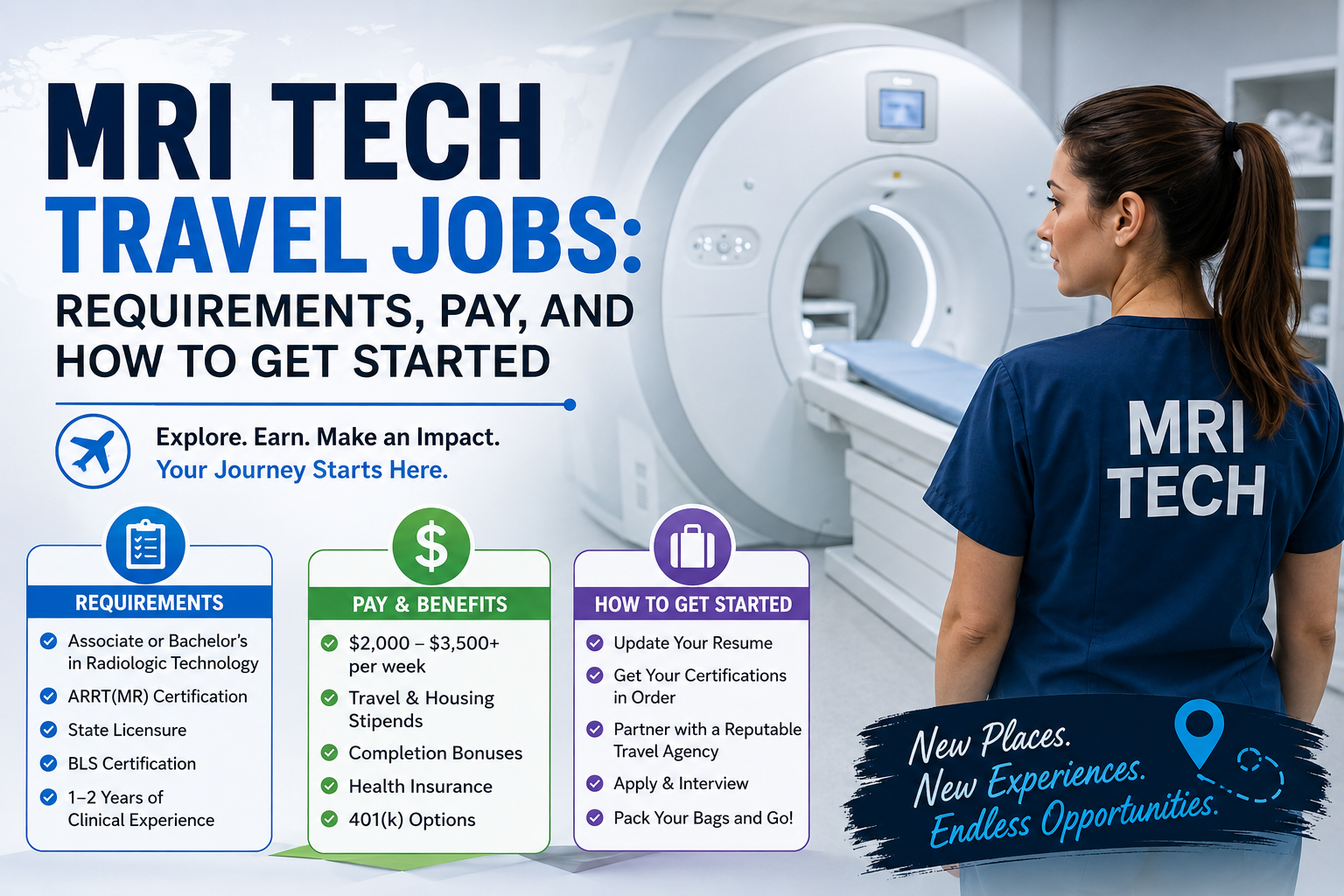

MRI Tech Travel Jobs: Requirements, Pay, and How to Get Started is an excellent topic for radiologic professionals who want to combine a rewarding healthcare career with the opportunity to explore new places. MRI technologists operate magnetic resonance imaging equipment to create detailed images that help physicians diagnose and monitor medical conditions. Travel MRI technologists perform the same essential clinical duties while accepting temporary assignments at hospitals, imaging centres, and other healthcare facilities.
Travel work can provide professional growth, competitive compensation, housing assistance, and greater flexibility than a permanent position. However, becoming a travel MRI technologist requires appropriate education, certification, clinical experience, and licensing. Understanding these requirements before applying can help you prepare for assignments and choose contracts that match your career goals.
What Is an MRI Travel Technologist?
An MRI travel technologist is a qualified imaging professional who accepts temporary assignments at healthcare facilities experiencing staffing shortages or increased demand. Assignments commonly last several weeks or months, allowing technologists to work in different cities and healthcare environments while gaining valuable professional experience.
The daily responsibilities are similar to those of permanent MRI technologists. Travel professionals prepare patients for scans, operate MRI systems, follow safety procedures, review image quality, document procedures, and communicate with radiologists and other healthcare professionals. Because every facility may use different equipment and protocols, adaptability is an important part of the job.
Education and Training Requirements
Most aspiring MRI technologists begin by completing an accredited radiologic technology or MRI-related educational program. Depending on the career pathway and employer, education may include an associate degree, certificate program, or other approved training that provides instruction in anatomy, patient care, imaging procedures, and radiation or MRI safety.
Clinical training is particularly important because MRI technology requires practical knowledge in addition to classroom education. Students learn how to position patients, operate imaging equipment, recognise safety risks, and produce high-quality diagnostic images. Completing the appropriate educational pathway provides the foundation for professional certification and employment.
Certification and Professional Credentials
Professional certification can be an important requirement for MRI technologists. In the United States, many employers look for certification through the American Registry of Radiologic Technologists, commonly known as ARRT, although requirements vary by employer and state. Some professionals enter MRI after first becoming certified in another imaging discipline.
Additional credentials may be required depending on the facility, assignment, or state. Before accepting a contract, carefully check the employer’s credential requirements and confirm that your certifications remain current. Maintaining continuing education and professional credentials can also make you a stronger candidate for competitive assignments.
State Licensing Requirements
Licensing is another important consideration for travel MRI technologists. Some states require imaging professionals to hold an active state license before they can work, while others have different regulatory requirements. Because travel assignments may involve moving between states, professionals should verify licensing rules before accepting a contract.
A travel staffing agency can often help explain the credentialing process, but the technologist remains responsible for ensuring that required documentation is accurate and current. Planning licensing requirements early can prevent delays when applying for an assignment.
How Much Do MRI Travel Technologists Make?
Pay for travel MRI technologists varies considerably depending on location, experience, specialty credentials, facility needs, contract length, and current demand. Travel compensation may include taxable wages along with housing stipends, travel reimbursements, bonuses, or other benefits, depending on the contract.
Rather than focusing only on the advertised weekly amount, evaluate the entire compensation package. Housing arrangements, insurance, transportation reimbursement, overtime rules, and other contract terms can significantly affect the overall financial value of an assignment. Comparing complete packages provides a more accurate picture of potential earnings.
Benefits of MRI Tech Travel Jobs
One major advantage of travel work is flexibility. Instead of committing to one facility indefinitely, technologists can choose temporary assignments and experience different healthcare environments. This can be particularly appealing to professionals who enjoy travelling and want variety in their careers.
Travel assignments can also expand professional skills. Working with different MRI systems, patient populations, protocols, and healthcare teams can increase adaptability and clinical confidence. Some contracts may also provide benefits such as housing assistance, health insurance, retirement options, or completion bonuses, although offerings differ between agencies and assignments.
Finding the Right Travel Assignment
Choosing an assignment requires more than comparing salary figures. Consider the facility’s location, schedule, shift requirements, contract length, patient population, equipment, orientation process, and expectations for overtime. Understanding these details before signing a contract can help prevent unpleasant surprises after arriving.
A reputable staffing agency can help match your qualifications with available positions and guide you through credentialing and contract negotiations. Keep copies of your certifications, employment history, references, and other professional documents readily available because travel positions may require extensive paperwork before the start date.
How to Get Started With MRI Tech Travel Jobs
The first step is to confirm that your education, certification, clinical experience, and licensing meet the requirements for travel positions. Building solid experience in a permanent MRI or imaging role can make it easier to qualify for contracts and handle the independent nature of temporary assignments.
Once your credentials are ready, research reputable travel staffing agencies and compare their available contracts. Create an updated professional résumé highlighting MRI experience, certifications, equipment familiarity, and relevant clinical skills. After finding an appealing assignment, carefully review the compensation package and contract conditions before making a commitment.
Conclusion
MRI tech travel jobs can provide qualified imaging professionals with an exciting combination of career development, flexibility, and travel opportunities. Successful candidates generally need appropriate education, professional credentials, clinical experience, and any required state licensing. Understanding these requirements early makes the transition into travel healthcare much smoother.
Before accepting an assignment, compare the complete compensation package rather than focusing exclusively on the advertised pay. Consider location, schedule, housing, benefits, licensing, facility expectations, and contract terms. With careful preparation and a commitment to professional development, travel MRI technology can become a rewarding long-term career path.
FAQs
What does a travel MRI technologist do?
A travel MRI technologist performs imaging procedures at temporary healthcare assignments. Responsibilities include patient preparation, MRI operation, positioning, safety checks, image-quality assessment, and clinical documentation.
How much experience is needed for MRI travel jobs?
Experience requirements vary by employer and contract. Many travel positions prefer professionals with previous clinical MRI experience because temporary staff are often expected to adapt quickly to new facilities.
Do MRI technologists need certification?
Certification requirements depend on the employer and location. Many U.S. employers prefer or require professional certification, such as an ARRT credential, along with any necessary state licensing.
How long do MRI travel assignments last?
Travel contracts commonly last several weeks to several months, although the exact duration depends on the healthcare facility and staffing agreement.
Do travel MRI technologists receive housing?
Some travel contracts offer housing stipends or agency-arranged accommodation. The exact benefit depends on the staffing agency, assignment, and contract terms.
Can new MRI technologists become travel technologists?
It can be challenging to obtain a first travel assignment without clinical experience. Building experience in a permanent imaging position can improve eligibility and prepare you for the demands of temporary contracts.
Are MRI travel jobs available in different states?
Yes. Travel staffing agencies frequently recruit imaging professionals for facilities in different states, but licensing requirements must be checked for each destination.
How can I find my first MRI travel assignment?
Start by preparing your certifications, résumé, references, employment records, and licensing documents. Then compare reputable staffing agencies and available contracts that match your qualifications and career goals.


[…] should also avoid submitting inconsistent information. Names, dates, education details, employment history, credential information, and license records should be accurate across applications and supporting […]