














































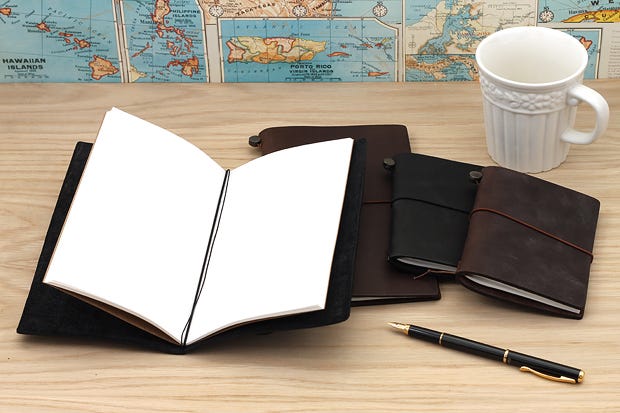

A travel journal Midori setup is one of the most flexible ways to document a trip, organize travel plans, and preserve memories. The system commonly known as the Midori Traveler’s Notebook is now associated with TRAVELER’S COMPANY, and its modular design allows you to combine multiple inserts inside one cover.
The beauty of this system is that your notebook can change with every journey. You might use one insert for daily writing, another for itineraries and reservations, and another for sketches, photographs, tickets, or collected memories. With the right accessories, your journal can become both a creative travel diary and a practical organizer.
1. Choose the Right Travel Journal Midori Insert
The most important part of building a travel journal is choosing inserts that match the way you actually document your trips. Lined, blank, grid, sketch, diary, and specialty formats are available, giving travelers plenty of ways to personalize their notebooks.
For traditional journaling, a lined insert is an excellent choice because it keeps writing neat and organized. A blank insert works better for travelers who mix writing with drawings, ticket stubs, photographs, and other creative elements. Grid paper provides a useful middle ground for writing, lists, maps, and simple sketches.
2. Use a Monthly or Weekly Planner Insert
A planner insert can turn your notebook into a compact travel command center. Before leaving home, you can record transportation details, accommodation information, sightseeing plans, restaurant ideas, and important appointments in one easy-to-access location.
Planner inserts are particularly helpful during longer trips because they allow you to see your itinerary without carrying a separate planner. The modular Traveler’s Notebook concept makes it possible to combine planning pages with separate journal pages, so practical information and personal memories can remain together but organized.
3. Add a Blank Insert for Travel Memories
A blank refill is one of the most versatile choices for a travel journal Midori. Instead of following lines or boxes, you can design each page according to the experience you want to record.
Use the pages for sketches of landmarks, handwritten observations, restaurant notes, pressed paper items, postcards, photographs, or short reflections. A blank insert can become a visual scrapbook where every page looks different, which makes it especially appealing for creative travelers.
4. Try a Grid Insert for Flexible Journaling
Grid paper is ideal when you want more structure than a blank page but more freedom than traditional lined paper. The subtle grid can help with handwriting, diagrams, travel schedules, packing notes, maps, and simple drawings.
It is also useful for travelers who enjoy combining several types of information on one page. You can write a daily journal entry at the top, record expenses underneath, and leave a small area for a sketch or memorable quote without the page becoming difficult to organize.
5. Add a Kraft Folder for Tickets and Paper Keepsakes
Travel creates plenty of small paper items, including boarding passes, museum tickets, receipts, postcards, maps, and business cards. A kraft folder insert gives these items somewhere to go instead of allowing them to become loose inside your bag.
Folder-style inserts have long been valued within the Traveler’s Notebook ecosystem because they provide a simple way to carry folded papers and small keepsakes. For travelers who enjoy documenting trips with physical memorabilia, this can be one of the most useful additions.
6. Keep Small Items in a Zipper Insert
A zipper insert adds another practical storage layer to your journal. It can hold stickers, receipts, small stationery items, photographs, tickets, or other lightweight objects that you want to keep with your notebook.
The advantage is convenience. Instead of searching through your luggage for small travel items, you can keep frequently used pieces together with your journal. Zipper cases are also popular among Traveler’s Notebook users who want their notebook to function partly as an organizer or wallet.
7. Add a Card and Pocket Insert
A pocket or card insert is particularly useful when traveling with cards, business cards, transit passes, or other small flat items. It gives the journal another practical function while keeping important pieces easy to find.
If the standard storage capacity is not enough, third-party pocket accessories can provide additional compartments. Some handmade options are designed specifically to add multiple pockets and even pen loops to a Traveler’s Notebook-style setup.
8. Choose a Reliable Pen Holder
A travel journal is only useful when your pen is easy to reach. A pen holder keeps your favorite writing instrument attached to the notebook instead of disappearing into a backpack or suitcase.
MIDORI currently offers compact pen-holder accessories, including a clip-style holder designed to accommodate different pen diameters. Its accessories collection also includes a pen-holder band that can fit several planner sizes.
For travelers, a compact holder is generally better than carrying a separate pencil case when you only need one or two writing instruments.
9. Use Clips and Bookmarks
Small accessories can make a big difference when you are constantly flipping between sections. A bookmark lets you return quickly to today’s journal entry, while a clip can mark an important itinerary or reservation page.
MIDORI’s current accessory lineup includes stainless-steel and copper index clips designed to attach securely to individual sheets while creating minimal page bulk. These simple additions are particularly useful when your notebook contains several inserts.
10. Decorate Your Travel Journal With Stickers
A travel journal does not have to be purely functional. Stickers can add personality while helping identify locations, activities, moods, or important pages.
MIDORI offers journal stickers and other stationery accessories specifically intended for customizing notebooks and planners. You can use them sparingly for a clean aesthetic or create colorful scrapbook-style pages filled with visual details.
11. Build a Minimalist Travel Journal Midori Setup
You do not need every available accessory to create an excellent travel journal. A minimalist setup might consist of one lined or blank insert, one planner insert, and one pocket or zipper insert.
This approach keeps the notebook lightweight and easier to carry. It also prevents the journal from becoming so bulky that you stop taking it with you. The modular system works best when every insert has a clear purpose.
12. Create a Memory-Focused Travel Journal
If your primary goal is preserving memories rather than planning, choose inserts that give you room for longer entries and creative pages. A blank or lined journal can become the central memory book, while a folder or pocket handles physical souvenirs.
At the end of a trip, your journal can contain much more than written descriptions. Tickets, photographs, receipts, sketches, maps, and handwritten thoughts can create a detailed record of where you went and how the experience felt.
13. Organize Your Midori for Different Trips
One of the strongest advantages of the Traveler’s Notebook system is its modular design. You can change the contents depending on the type of trip. A short weekend getaway may only require a journal and planner, while a month-long international trip might benefit from additional storage and planning inserts.
Because individual inserts can be replaced independently, you can archive a completed journal and insert a fresh refill for your next adventure. This makes the system practical for people who travel regularly and want their memories separated by trip or year.
14. Consider Third-Party Accessories
Official inserts are not the only option. The Traveler’s Notebook ecosystem has developed a large community of independent makers producing specialized inserts, pockets, zipper cases, charms, and custom paper formats.
Third-party options can be useful when you want something highly specific, such as additional card storage, specialty paper, unusual layouts, or decorative designs. However, check the dimensions carefully before purchasing because Traveler’s Notebook-style products are available in different sizes and formats.
15. Keep Your Travel Journal Lightweight
It can be tempting to fill your notebook with accessories before a trip, but excessive inserts can make it unnecessarily heavy. A good travel setup should remain comfortable to carry throughout the day.
Think about what you will actually use. If you rarely carry cards in your notebook, you may not need a dedicated card insert. If you mostly write, prioritize quality paper and a comfortable pen rather than decorative accessories.
How to Build the Best Travel Journal Midori Setup
The best configuration depends on how you travel and what you want to remember. A practical everyday arrangement could include a planner for schedules, a lined or blank insert for journaling, and a folder or zipper insert for tickets and small keepsakes.
For a creative trip, replace the planner with a blank or sketch-style refill and add stickers, photographs, and a pocket insert. For business travel, prioritize planning pages, a card holder, pen holder, and compact storage. The modular design makes it easy to adapt the notebook without buying an entirely new journal system.
Best Accessories to Pack With Your Travel Journal
A good travel journal kit should remain compact. Your essential supplies might include one reliable pen, a few adhesive items, a small pair of scissors if appropriate for your travel situation, and a limited selection of stickers or decorative materials.
The goal is to have enough supplies to record your experiences without turning the journal into another heavy piece of luggage. A carefully chosen setup is usually more useful than a large collection of accessories that rarely gets used.
Conclusion
The best travel journal Midori setup is the one that fits your personal travel style. A combination of a quality writing insert, planner, pocket or folder, and reliable pen holder can provide everything you need to plan trips and preserve memories. The modular format makes it easy to add or remove components as your needs change.
Whether you prefer minimalist writing, creative scrapbooking, detailed trip planning, or collecting physical souvenirs, the Traveler’s Notebook ecosystem offers plenty of ways to personalize your journal. Start with a few useful inserts, keep the setup lightweight, and add accessories only when they genuinely improve your travel experience.
FAQs
What is a Midori travel journal?
The term commonly refers to the modular Traveler’s Notebook system originally associated with Midori and now sold under the TRAVELER’S COMPANY name. It uses a cover with elastic bands to hold multiple interchangeable inserts.
Which insert is best for travel journaling?
A lined insert is ideal for traditional writing, while a blank insert is better for creative journaling. Grid paper is a flexible option for people who combine writing, lists, diagrams, and sketches.
How many inserts should I use?
There is no universal number, but a simple setup of two or three inserts is often enough for travel. Keeping the notebook relatively slim makes it easier to carry throughout the day.
Are Midori Traveler’s Notebook accessories worth it?
Useful accessories such as folders, zipper inserts, pen holders, and clips can make the journal considerably more practical. Decorative accessories are more subjective and depend on your personal style.
What can I store in a zipper insert?
You can use a zipper insert for receipts, stickers, tickets, photographs, small stationery items, and other lightweight travel keepsakes.
Can I use third-party inserts?
Yes. There is a broad third-party ecosystem offering alternative paper, layouts, pockets, and decorative options. Always check the size and compatibility before purchasing.
What is the best Midori accessory for travelers?
For many travelers, a pocket or zipper insert is among the most useful because it adds storage without requiring a separate organizer. A pen holder is another practical choice.
How do I keep my travel journal from becoming too bulky?
Limit yourself to inserts that serve a specific purpose. Remove completed inserts when appropriate, avoid carrying unnecessary accessories, and choose lightweight supplies.