















































The Best Golf Club Travel Hard Case to Protect Your Sticks From Airport Baggage Handlers

The Best Golf Club Travel Hard Case to Protect Your Sticks From Airport Baggage Handlers is an important topic for any golfer who regularly travels by air. Golf clubs are expensive, delicate, and awkward to transport, especially when they are placed in checked baggage. A strong travel case can help shield your driver, irons, wedges, putter, and shafts from impacts, crushing pressure, moisture, and rough handling during a journey.
A quality hard case also makes airport travel easier because many modern designs include wheels, secure closures, comfortable handles, and interior padding. Current golf travel guides consistently emphasize protection, durability, maneuverability, and proper fit when choosing a case for airline travel.
Why a Golf Club Travel Hard Case Matters
Flying with golf clubs creates risks that do not exist during normal car travel. Your bag can be lifted, dropped, stacked beneath other luggage, pushed through baggage systems, or exposed to rain while being transferred between vehicles and terminals. A soft travel cover can provide useful protection, but a rigid shell offers considerably more structural resistance against crushing and direct impacts.
A hard case is particularly valuable when your golf equipment represents a major investment. Modern drivers, graphite shafts, custom irons, and specialized putters can cost thousands of dollars as a complete set. Spending more on protective luggage can therefore be a sensible form of equipment insurance, especially for golfers who fly several times each year.
What Makes the Best Golf Club Travel Hard Case
The strongest cases combine a rigid outer shell with interior padding that prevents the clubs from moving excessively inside. A durable shell helps resist impact, while padding around the clubhead area reduces direct contact with the case. Internal straps or a secure-fitting interior can also help keep the golf bag stable during transportation.
Size is equally important. Your case needs to accommodate your golf bag and longest clubs without forcing them into an uncomfortable position. Many travel cases are designed around clubs up to approximately 48 inches, while some larger models accommodate longer setups. Always compare your actual bag and driver dimensions with the manufacturer’s interior measurements before buying.
Hard Shell Protection Against Baggage Handling
A hard shell provides a major advantage when your clubs are exposed to pressure from other luggage. Rigid cases are designed to maintain their shape rather than collapsing around the equipment. This additional structure is especially useful around clubheads and shafts, which can be vulnerable when heavy bags are placed on top of them.
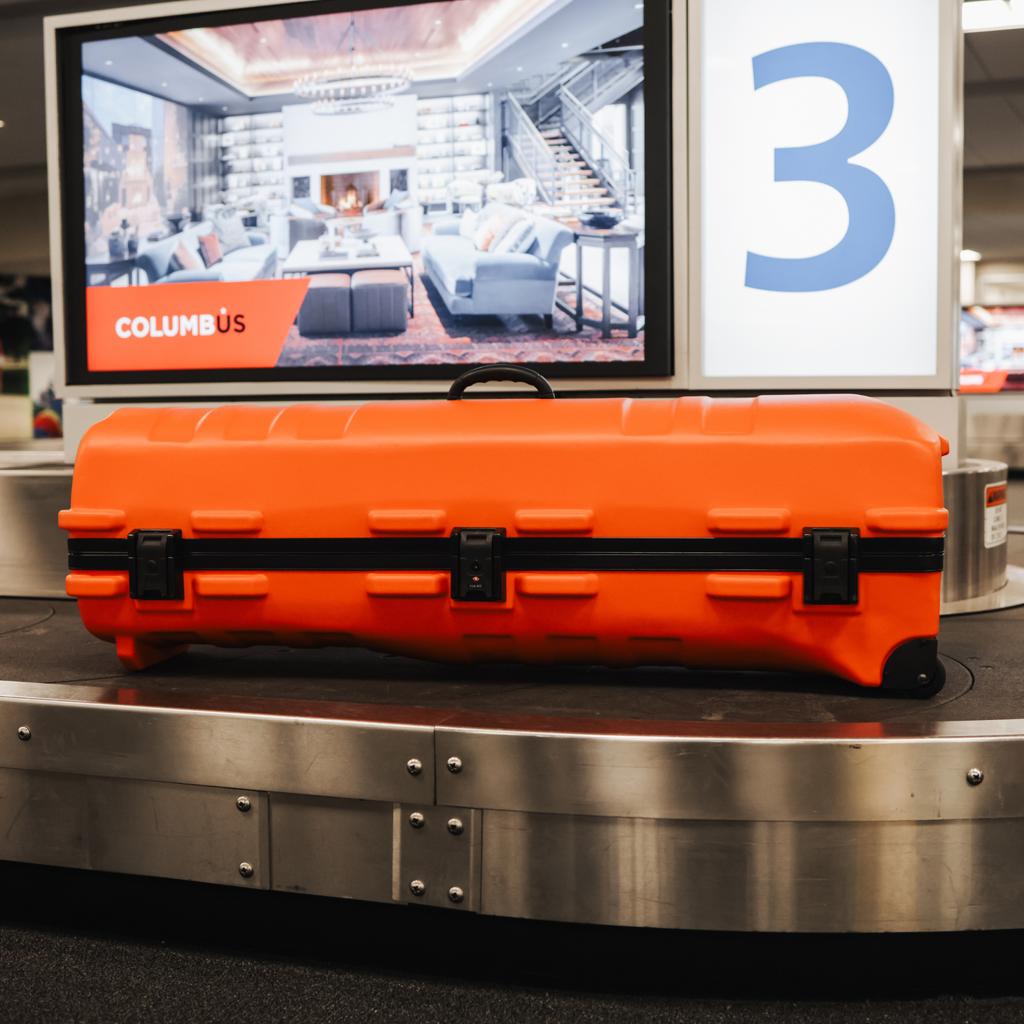
For maximum protection, look for impact-resistant materials, reinforced edges, strong hinges or closures, and a secure locking system. The SKB ATA range, for example, uses a rugged shell, TSA-accessible locking latches, wheels, and a design intended specifically for golf equipment. SKB’s current product information also lists protection for drivers up to 48 inches on its Deluxe Standard ATA model.
Wheels and Airport Maneuverability
Protection is only part of the equation because a case that is difficult to move can quickly become frustrating at the airport. Smooth wheels make a significant difference when you are walking between check-in counters, security areas, baggage claim, parking garages, and rental-car facilities. Inline skate-style wheels are common on rugged cases, while some newer designs use multidirectional wheels for easier turning.
The Sun Mountain Kube is one current hard-case option highlighted by Golf Monthly, while the VESSEL Golf Travel Hard Case uses an integrated wheel system and molded grab handles. VESSEL’s case also combines a hard shell with thick interior foam padding and a TSA locking system.
TSA Locks and Secure Closures
A secure closure system is another important feature when transporting expensive golf equipment. A TSA-compatible locking system allows authorized airport security personnel to inspect checked luggage without damaging the lock. This provides an additional layer of security while keeping the case securely closed during normal handling.
Look for strong latches, reinforced zippers where applicable, and locking mechanisms that feel durable rather than flimsy. A case should close firmly without requiring excessive force. Before every flight, check the closures carefully and make sure the case is completely secured before handing it over at the airport.
Interior Padding and Club Organization
A rigid exterior does not automatically guarantee excellent protection. The inside of the case is equally important because your clubs need cushioning and stability. Thick foam around the upper section can protect clubheads, while straps or compression systems can prevent the golf bag from shifting during transit.
It is also smart to remove loose items from your golf bag before packing. Accessories such as towels, balls, gloves, and shoes can be organized around the bag when the case has enough interior capacity. However, avoid overpacking because excessive pressure can place unnecessary stress on the case and its contents.
Top Hard Case Options for Golf Travelers
The SKB Staff ATA and Deluxe Standard ATA cases are strong choices for golfers who prioritize maximum protection. Current listings describe impact-resistant construction, TSA locking systems, wheels, and designs intended to accommodate full golf bags and long drivers. Independent 2026 golf travel guides also identify SKB’s ATA Staff Pro as a leading hard-case choice.
Golfers looking for a premium alternative can consider the VESSEL Golf Travel Hard Case. Its current specifications include a hard-shell construction, interior foam padding, integrated wheels, TSA locking, and molded handles. It is heavier than many soft travel covers, but that extra structure is aimed at golfers who prioritize protection over minimum luggage weight.
Hard Case vs Soft Golf Travel Bag
The main advantage of a soft travel bag is its lighter weight and easier storage. Many soft covers can be folded when they are not being used, making them convenient for golfers with limited storage space. Premium soft bags can also provide substantial padding and excellent maneuverability.
A hard case, however, provides more rigid protection against crushing and heavy impacts. Current travel guides generally describe the choice as a trade-off between maximum protection, weight, storage, and airport convenience. Golfers who fly frequently or carry expensive equipment may prefer the added security of a hard shell, while occasional travelers may prefer a lighter hybrid or soft design.
How to Pack Your Clubs for Air Travel
Start by placing your golf bag securely inside the travel case and making sure it fits without excessive movement. Clubheads should have enough cushioning around them, and any internal straps should be tightened without crushing the bag. If your case permits additional protective material, padding around vulnerable areas can provide another layer of separation.
Consider using a stiff support device designed for golf travel if it is compatible with your case and bag. Some golfers also remove adjustable driver heads and store them separately when practical, although this should only be done if you are comfortable reinstalling them correctly. Before closing the case, inspect the entire setup to make sure no club is pressing dangerously against the shell.
Weight, Airline Rules, and Travel Planning
A hard case itself can weigh considerably more than a lightweight soft cover. That matters because airlines may impose checked-baggage weight limits or additional fees. Before your trip, check your airline’s current rules for golf equipment, acceptable dimensions, weight restrictions, and applicable charges because policies can vary.
It is also wise to photograph your clubs and case before checking them. Record the condition of your equipment and keep purchase documentation for particularly expensive clubs. These simple precautions can make it easier to document the condition of your gear if a problem occurs during transportation.
Choosing the Right Case for Your Travel Style
Frequent flyers should prioritize durability, secure closures, reliable wheels, and strong interior protection. If you regularly take international golf trips or transport premium clubs, a full hard shell can provide valuable peace of mind. A heavier case may be worthwhile when protecting expensive equipment is more important than minimizing luggage weight.
Occasional travelers may prefer a compact or hybrid design that balances protection and convenience. The Sun Mountain Kube, for example, is recognized in current 2026 travel-bag coverage as a compact hard-case option, while hybrid hard-top designs provide another middle ground between rigid protection and soft-bag portability.
Conclusion
Choosing The Best Golf Club Travel Hard Case to Protect Your Sticks From Airport Baggage Handlers ultimately comes down to protection, fit, durability, and convenience. A rigid shell can provide an important barrier against crushing forces and impacts, while interior padding and secure straps help keep your clubs stable. Features such as TSA-compatible locks and dependable wheels make the case more practical for real-world airport travel.
For golfers who frequently fly with expensive equipment, investing in a high-quality hard case can be a smart decision. Models from established case manufacturers such as SKB and VESSEL demonstrate how modern golf travel protection combines strong shells, padded interiors, secure closures, and rolling systems. Choose a case that fits your clubs properly, follow careful packing practices, and check your airline’s latest baggage rules before every trip.
FAQs
What is the best type of case for flying with golf clubs?
A full hard-shell case generally provides the strongest protection against crushing and impact. It is particularly suitable for golfers who frequently fly with expensive equipment.
Is a hard golf travel case better than a soft bag?
A hard case offers greater structural protection, while a soft bag is usually lighter and easier to store. The best choice depends on how frequently you travel and how much protection your clubs require.
Do golf travel cases need TSA locks?
A TSA-compatible lock is useful because it allows authorized security personnel to inspect the case without damaging the locking system.
Will a hard case fit a standard golf bag?
Most full-size cases are designed to accommodate common stand and cart bags, but dimensions vary. Always check the manufacturer’s measurements before purchasing.
How can I protect my golf clubs inside the case?
Use the case’s internal straps and padding correctly, minimize movement, and provide additional cushioning around vulnerable clubhead areas when appropriate.
Are golf club travel hard cases heavy?
Yes. Rigid cases generally weigh more than lightweight soft covers because of their protective shell and hardware. Check the case weight against your airline’s baggage rules.
Can I put golf accessories inside the travel case?
Many cases have enough room for selected accessories, but avoid overpacking. Excessive contents can create pressure and may increase the overall checked-baggage weight.
How often should I replace a golf travel case?
There is no fixed replacement schedule. Replace the case when the shell, wheels, hinges, locks, or interior protection become damaged enough to compromise safe transportation.