













































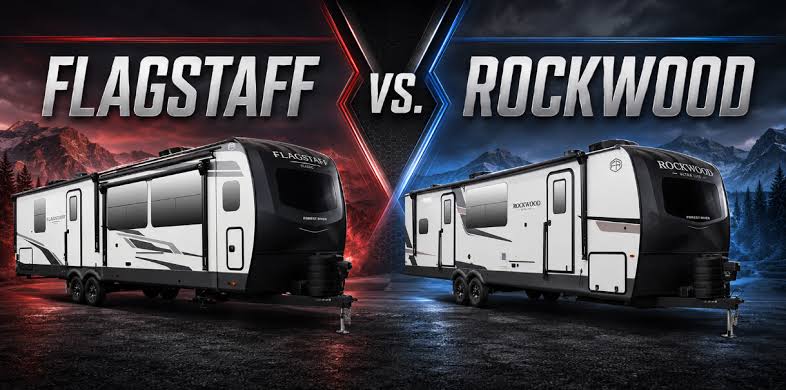

Built to Last? Flagstaff Travel Trailers vs. The Competition is an important question for anyone shopping for a recreational vehicle that can handle years of camping adventures. A travel trailer is a significant investment, so buyers naturally want more than attractive interiors and modern technology. Construction quality, materials, weather protection, towing components, maintenance, and everyday usability all play a role in determining how well an RV holds up over time.
Flagstaff is a travel-trailer family from Forest River, with several lines designed for different types of campers. Current Flagstaff models include construction features such as laminated fiberglass roofs, composite wall construction, aluminum framing, and aluminum floor components, although exact specifications vary by series and floor plan.
Flagstaff Travel Trailers and Construction Quality
One of the biggest reasons Flagstaff attracts attention is its approach to structural construction. Current Micro Lite and Super Lite models, for example, list complete composite wall construction, fully laminated roofs, six-sided full-aluminum frames, and aluminum floor joists. These materials are designed to create a strong and relatively lightweight structure while providing a solid foundation for the interior.
The Classic line takes the construction package further in several areas, listing a six-sided full-aluminum frame, aluminum floor joists, a 5/8-inch tongue-and-groove plywood floor, complete composite wall construction, and a fully laminated roof. These details do not guarantee that every trailer will be trouble-free, but they demonstrate that Flagstaff places substantial emphasis on structural materials.
How Flagstaff Compares With the Competition
Comparing Flagstaff with competing travel-trailer brands is more complicated than simply asking which manufacturer is strongest. RV companies use different construction methods, floor plans, materials, insulation packages, and price strategies. A lightweight trailer may prioritize towability, while a larger premium model may prioritize residential comfort and heavier-duty construction.
Flagstaff’s strongest argument is the combination of aluminum framing, laminated construction, fiberglass exteriors, and a wide selection of layouts. Buyers can choose from compact E-Pro and Micro Lite models to larger Super Lite and Classic options. This range allows shoppers to select a trailer based on towing capacity, family size, camping style, and desired amenities rather than choosing one construction philosophy for every situation.
Exterior Materials and Weather Protection
The exterior of a travel trailer faces constant exposure to sunlight, rain, wind, road debris, temperature changes, and moisture. A well-designed exterior therefore matters enormously for long-term ownership. Flagstaff models use fiberglass exterior components and laminated construction in many of their current lines, providing a smooth exterior appearance while supporting the trailer’s overall structure.
Climate protection is another area where Flagstaff attempts to distinguish its trailers. Current Micro Lite and Super Lite specifications include radiant foil in areas such as the front cap and underbelly, along with thermostatically controlled heated holding tanks. These features can be useful for campers who travel during colder conditions, although insulation performance depends on the specific model and the conditions in which the trailer is used.
Roof and Wall Construction
The roof is one of the most important components to inspect when evaluating long-term RV durability. Water intrusion can create expensive problems if seals, seams, or roof components are neglected. Flagstaff’s current Micro Lite, Super Lite, and Classic specifications identify fully laminated fiberglass roofs, while the Classic line also lists aluminum framing and aluminum floor components.
Composite wall construction is another noteworthy feature. Instead of relying exclusively on conventional wall-building approaches, Flagstaff’s current specifications emphasize composite structural walls on several packages and models. This construction can provide strength and resistance to certain moisture-related problems, but regular inspection and maintenance remain essential regardless of the trailer brand.
Chassis, Tires, and Towing Components
A durable living space is only part of a travel trailer. The chassis, axles, tires, brakes, hitch components, and suspension system must also perform reliably during thousands of miles on the road. Flagstaff models commonly use components from established suppliers, including Dexter axles on several current lines, while certain models also feature Goodyear tires and tire-pressure monitoring systems.
These components can contribute to a more confident towing experience, but buyers should never assume that equipment alone guarantees trouble-free travel. Proper tire inflation, wheel inspection, brake maintenance, correct loading, and adherence to the trailer’s weight limits are essential. Forest River also notes that the actual unloaded weight and cargo carrying capacity are identified on the individual RV, so shoppers should check the specific unit rather than relying only on general model information.
Interior Quality and Everyday Durability
A travel trailer can have an impressive exterior but still disappoint if its interior cannot withstand regular family use. Cabinets, drawer hardware, flooring, seating, appliances, plumbing fixtures, and slide mechanisms all experience repeated wear. Flagstaff packages include features such as soft-close roller-bearing drawers, hidden cabinet hinges, solid-surface countertops, and residential-style appliances on certain models and packages.
However, more features also mean more components that require care. Slides, refrigerators, water heaters, air conditioners, awnings, electrical systems, and entertainment equipment can eventually require service. When comparing Flagstaff with competitors, buyers should evaluate not only how attractive the interior looks when new but also how easy individual components are to inspect, repair, and replace.
Is Flagstaff a Good Choice for Families?
Families often need a trailer that combines sleeping capacity with practical storage and comfortable living space. Flagstaff offers multiple floor plans across its product families, including layouts with dedicated sleeping areas and family-oriented features. Certain current models include bunk configurations, exterior storage, multiple sleeping areas, and amenities intended for longer camping trips.
The right model ultimately depends on the family’s tow vehicle and camping habits. A large trailer may offer more room but require a more capable tow vehicle, while a smaller model can be easier to maneuver and potentially less expensive to operate. Choosing the appropriate size is therefore just as important as choosing the brand.
Maintenance Matters More Than the Badge
Even a well-built travel trailer can develop problems when it is neglected. Roof seals, exterior joints, windows, slide-outs, tires, plumbing connections, batteries, brakes, and appliances should be inspected regularly. Moisture is particularly important because a small leak that goes unnoticed can eventually cause extensive structural damage.
This means Flagstaff’s construction should be viewed as a starting advantage rather than a guarantee of longevity. Owners who keep their trailer clean, inspect seals, maintain the running gear, follow manufacturer recommendations, and address small problems quickly can significantly improve the likelihood of enjoying their RV for many years.
Where Flagstaff Stands Against the Competition
Flagstaff is particularly compelling for buyers who want a combination of structural construction, modern amenities, and multiple floor-plan choices. Its current offerings show an emphasis on composite walls, laminated roofs, aluminum framing, climate-protection features, and upgraded towing components.
That does not mean Flagstaff automatically beats every competing brand. Different manufacturers may offer advantages in specific areas such as lightweight construction, luxury interiors, dealer support, warranty experience, pricing, or specialized floor plans. The smartest comparison is therefore model against model rather than brand against brand. A buyer should compare the actual construction, weight, cargo capacity, equipment, warranty, dealer reputation, and total ownership cost of the trailers being considered.
What to Check Before Buying a Flagstaff
Before purchasing any travel trailer, inspect the unit carefully rather than relying solely on a brochure. Look around windows, roof penetrations, slide-outs, exterior storage compartments, and other areas where moisture could enter. Open cabinets, test appliances, inspect flooring, operate the slides, and examine the underbody whenever possible.
A professional RV inspection can also be worthwhile, particularly when purchasing a used trailer. An experienced inspector may identify moisture, electrical, plumbing, structural, or mechanical issues that are difficult for a first-time buyer to spot. For a major RV purchase, spending money on an inspection can be far less expensive than discovering a serious problem after the sale.
Conclusion
The question Built to Last? Flagstaff Travel Trailers vs. The Competition does not have a simple yes-or-no answer, but Flagstaff has several characteristics that make its trailers worthy of serious consideration. Current models emphasize composite wall construction, laminated fiberglass roofs, aluminum framing, aluminum floor components, and various climate and towing features. These construction choices give Flagstaff a strong foundation for buyers seeking a durable recreational vehicle.
Still, long-term RV ownership depends on much more than the manufacturer’s name. Proper maintenance, careful towing, moisture prevention, appropriate loading, regular inspections, and choosing the correct floor plan all influence how long a trailer remains enjoyable. If you compare a specific Flagstaff model with competing trailers on construction, weight, features, price, warranty, and ownership requirements, you will be in a much better position to decide whether it is the right investment for your adventures.
FAQs
Are Flagstaff travel trailers built to last?
Flagstaff uses substantial construction features in many current models, including aluminum framing, composite walls, and laminated roofs. Longevity still depends heavily on maintenance and usage.
What makes Flagstaff travel trailers durable?
Current Flagstaff models can include full-aluminum framing, composite wall construction, laminated fiberglass roofs, aluminum floor joists, and plywood flooring, depending on the series.
Are Flagstaff trailers good for families?
Yes. Flagstaff offers a variety of floor plans, including layouts designed around additional sleeping space, storage, and family camping.
Are Flagstaff trailers suitable for cold weather?
Some current Flagstaff models include heated holding tanks and radiant-foil climate-protection features. However, buyers should examine the exact model’s insulation and climate package before planning four-season use.
How does Flagstaff compare with other RV brands?
Flagstaff competes strongly through its combination of construction materials, floor-plan variety, features, and available towing equipment. The best comparison should be made between specific models rather than entire brands.
Do Flagstaff travel trailers require regular maintenance?
Yes. Like all travel trailers, Flagstaff RVs require regular inspection and maintenance of roof seals, tires, brakes, plumbing, electrical systems, appliances, and slide mechanisms.
Are Flagstaff travel trailers worth buying?
They can be a strong choice for buyers who value structural construction and modern camping features. The best value depends on the specific model, price, condition, tow vehicle, and intended use.
What should I inspect before buying a Flagstaff trailer?
Pay particular attention to the roof, seals, walls, floors, windows, slide-outs, tires, brakes, plumbing, appliances, and signs of water intrusion. A professional RV inspection can provide additional peace of mind.


[…] among these five layouts ultimately depends on your family’s size, sleeping preferences, towing setup, and camping style. The […]
[…] known for travel trailers that often feature retro-inspired exterior designs and practical camping interiors. Its product range has included compact trailers as well as larger family-oriented models, […]