


















































Finding the Best Hard Case Golf Travel Bag for Flying & Heavy Travel can make a major difference when you are traveling with expensive golf clubs. Airline baggage handling can be rough, and your clubs may be exposed to drops, impacts, pressure, and repeated movement during a journey. A strong travel case gives your equipment an extra layer of protection while making airport transportation easier.
Golf clubs are a significant investment, so protecting them during flights should be a priority. A good hard case should combine impact resistance, secure closures, smooth wheels, useful interior space, and a design that can handle repeated travel. Current golf travel guides continue to highlight hard cases and hybrid designs as strong choices for golfers who prioritize club protection, while also noting that fully rigid cases tend to be heavier and bulkier than soft travel bags.
Why Choose a Hard Case Golf Travel Bag?
A hard case golf travel bag uses a rigid outer shell to provide greater resistance against crushing and impact than a traditional soft-sided cover. This can be particularly useful when flying because checked sports equipment may experience handling that is difficult to predict. A sturdy shell helps create a protective barrier around your clubs and reduces the chance of external pressure reaching delicate clubheads and shafts.
The trade-off is weight and storage space. A fully rigid case can be harder to store at home and more awkward to fit into smaller vehicles. Golf travel testing also shows that some hard cases are considerably heavier than soft or hybrid alternatives, so travelers should consider the airline’s baggage rules and their packed weight before choosing a model.
Protection and Durable Construction
Protection should be the first consideration when choosing a travel case for golf clubs. Look for a strong outer shell, reinforced areas around the clubheads, secure internal straps, and enough interior space to prevent clubs from being squeezed tightly together. A well-designed interior can keep your equipment stable instead of allowing it to move freely while the case is being transported.
Material quality also matters for frequent travelers. Durable plastic or polyethylene shells can provide excellent impact resistance, while hybrid designs may combine a hard upper section with a flexible lower body. This approach can offer protection where it matters most while reducing some of the weight and storage problems associated with completely rigid cases.
Wheels and Airport Maneuverability
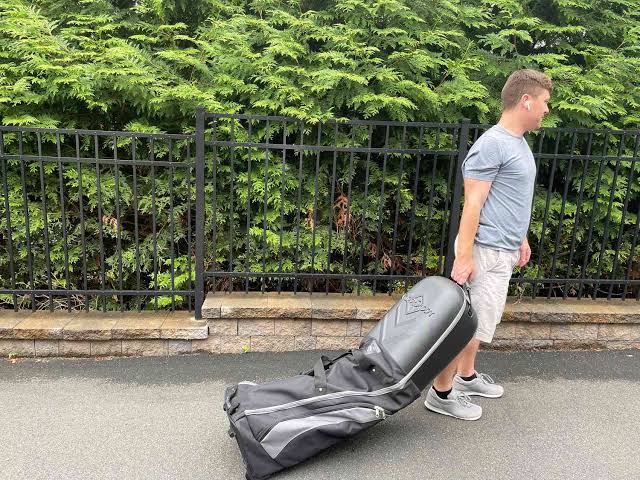
Smooth wheels can turn a difficult airport journey into a much easier experience. A fully loaded golf travel case can become heavy, so being able to roll it rather than carry it is extremely valuable. Look for large, durable wheels that move smoothly across airport floors, sidewalks, parking areas, and hotel entrances.
Wheel placement is also important. Some premium golf travel bags use larger or specialized wheel systems designed to improve maneuverability. For example, current testing of golf travel bags has praised wheel systems that make heavy bags easier to move through airports, although some of these designs add weight and mechanical complexity.
Size, Storage, and Club Compatibility
A good golf travel case should have enough room for a standard golf bag and a complete set of clubs without creating excessive pressure. Before purchasing, check the manufacturer’s internal dimensions and confirm that they are compatible with your cart bag, stand bag, or staff bag. Extra space can also be useful for towels, rain covers, or other golf accessories, depending on the case design.
However, more capacity is not always better. An oversized case can become difficult to transport and may require a larger rental vehicle. Frequent travelers should find a balance between protection and portability. Travel and golf equipment testing commonly considers capacity, durability, maneuverability, and overall design when comparing travel bags.
Security Features for Flying
Security is another important factor when traveling with golf equipment. Strong latches, reinforced closures, and reliable locking systems help keep the case closed during transportation. Some models are designed to accommodate travel-approved locks, which can provide an additional layer of security when checking your clubs.
Interior security matters as well. Straps or protective supports can prevent your golf bag from shifting inside the case. Before checking your equipment, make sure the clubs are positioned securely and that nothing is pressing directly against vulnerable shafts or clubheads. Removing adjustable clubheads and protecting them separately can also be a useful precaution for some golfers.
Hard Case vs. Hybrid Golf Travel Bag
A completely hard-sided case provides the strongest rigid protection, making it appealing to golfers who fly frequently or carry particularly valuable equipment. Its main disadvantages are weight, bulk, and storage. If your priority is maximum physical protection and you do not mind handling a larger case, a rigid design can be a sensible choice.
A hybrid travel bag provides a compromise between protection and convenience. Hard sections can shield important areas while fabric sections make the bag lighter and easier to store. Current golf travel guides include hybrid hard-top models among their recommendations because they can provide additional protection without the full bulk of a completely rigid shell.
Best Features for Heavy Travel
Frequent flyers should pay close attention to construction quality. Reinforced corners, durable wheels, strong handles, reliable closures, and impact-resistant materials can all contribute to a longer service life. If you travel several times a year, paying more for dependable construction may be more economical than repeatedly replacing a cheaper case.
Weight should also be considered carefully. A heavy empty case leaves less room within the airline’s baggage allowance for your clubs and other equipment. Golf travel discussions and testing frequently highlight this compromise: rigid protection can increase confidence, but the extra weight and bulk may become inconvenient during frequent trips.
How to Protect Golf Clubs Inside the Case
Even the best hard case should be packed carefully. Place your golf bag securely inside the travel case and prevent unnecessary movement. Clubheads should not be allowed to strike hard surfaces repeatedly during transportation. Padding or towels can be used to create additional separation between equipment and the case interior.
Some golfers also remove adjustable driver and fairway wood heads before flying. The heads can then be wrapped and stored safely inside the golf bag. A protective support system can also help prevent excessive pressure on club shafts. These additional precautions can complement the protection provided by the case itself.
Choosing the Right Golf Travel Bag for Your Needs
The right travel bag depends on how often you fly, how valuable your clubs are, and how much inconvenience you are willing to accept for additional protection. Occasional travelers may prefer a lighter hybrid case that is easier to store, while frequent international travelers may prioritize a more robust rigid construction.
Your transportation plans matter too. If you regularly use rental cars, taxis, or smaller vehicles, a huge hard case may become difficult to manage. If maximum protection is your primary concern and you usually have access to larger vehicles, the additional size may be worth it. Think about the entire journey rather than focusing only on the airport.
Conclusion
The Best Hard Case Golf Travel Bag for Flying & Heavy Travel should provide a strong balance of protection, durability, maneuverability, and practical storage. A rigid shell can offer excellent resistance against impacts and crushing, while quality wheels and handles make transportation easier. For golfers who fly regularly with valuable equipment, investing in reliable construction can provide greater peace of mind.
At the same time, the biggest and heaviest case is not automatically the best choice. Consider your airline’s baggage rules, travel frequency, vehicle size, storage space, and the value of your clubs before buying. A well-designed hard or hybrid case, packed carefully and secured properly, can make golf travel safer, easier, and far less stressful.
FAQs
Is a hard case golf travel bag better for flying?
A hard case generally provides stronger protection against crushing and impacts than a soft cover. It can be particularly useful for golfers who frequently check expensive clubs on flights.
Are hard golf travel cases heavy?
Yes, fully rigid cases are usually heavier than soft or hybrid travel bags. The additional weight should be considered alongside airline baggage limits and your own transportation needs.
What should I look for in a golf travel case?
Look for durable construction, secure closures, strong wheels, reinforced areas, sufficient interior space, and a design that keeps your clubs stable during transportation.
Can a golf travel bag protect expensive clubs?
A quality case can significantly improve protection against external impacts, but no travel bag can guarantee that clubs will never be damaged. Proper packing and additional internal protection are also important.
Should I remove my driver head before flying?
If your driver or fairway woods have removable heads, taking them off can reduce the risk of damage to the clubheads and shafts during transportation. Store the heads securely inside the bag.
Is a hybrid golf travel bag better than a full hard case?
A hybrid can be a good choice if you want additional protection while keeping weight and storage requirements lower. A full hard case is generally preferable when maximum rigid protection is the priority.
Do golf travel bags have wheels?
Many travel bags include wheels because a loaded golf bag can be difficult to carry through airports. Wheel quality and placement can make a significant difference in maneuverability.
How should I pack my golf clubs for a flight?
Secure the golf bag inside the travel case, prevent the clubs from moving excessively, protect vulnerable clubheads, and add padding where necessary. Always check the case before handing it over as checked baggage.



[…] service area itself supports travelers around the clock, with fuel, restrooms, vending, and Starbucks listed as 24/7 services. Some […]
[…] to have similar costs while offering very different terms. One might include airport transfers and checked baggage, while another could charge separately for those services. Comparing the total cost makes it easier […]
[…] also called bilevel positive airway pressure or BPAP, uses different pressure levels when you breathe in and breathe out. The higher inspiratory […]