



















































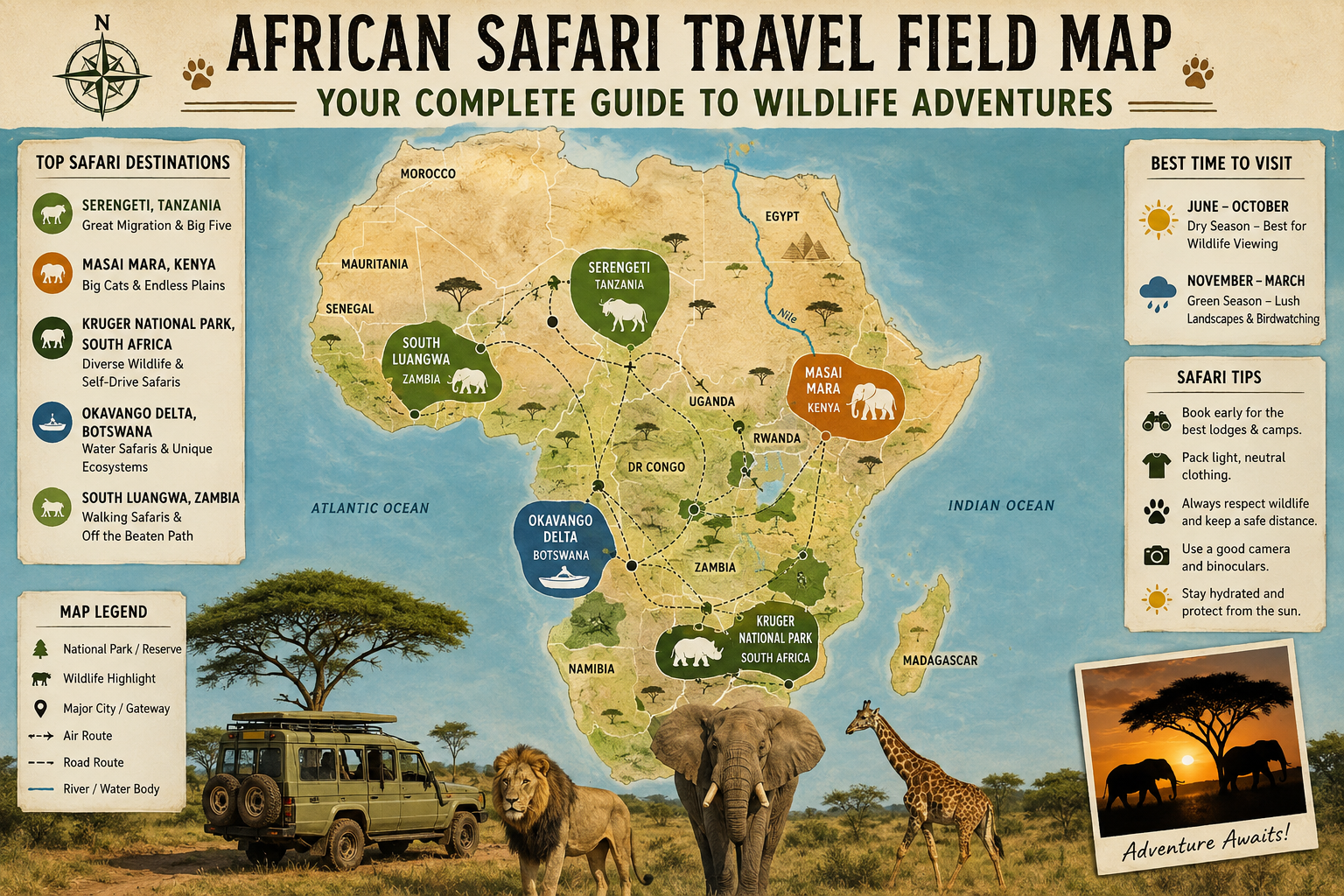

An African Safari Travel Field Map: Your Complete Guide to Wildlife Adventures is the perfect resource for anyone dreaming of exploring Africa’s breathtaking landscapes and extraordinary wildlife. From vast savannas and lush wetlands to dense forests and dramatic deserts, Africa offers some of the world’s most remarkable safari experiences. Whether you are traveling for the first time or planning another wildlife expedition, understanding the best destinations and preparation tips will help you make the most of your journey.
A safari is much more than simply observing wild animals. It is an opportunity to experience nature in its purest form while learning about conservation, local cultures, and diverse ecosystems. With careful planning and the right field map, travelers can enjoy unforgettable encounters with lions, elephants, giraffes, rhinos, leopards, and countless other fascinating species across the African continent.
Understanding an African Safari Travel Field Map

An African safari travel field map helps travelers understand the locations of major national parks, wildlife reserves, migration routes, airports, and transportation networks. Instead of simply showing roads, a safari field map highlights ecosystems, seasonal wildlife movements, and the best regions for viewing specific animals.
Using a field map before your trip allows you to compare different safari destinations based on your interests. Some travelers want to witness the Great Migration, while others hope to photograph mountain gorillas or observe elephants in their natural habitat. A detailed safari map helps match your travel goals with the most suitable destinations.
Top Safari Destinations in Africa
Africa is home to numerous world-famous safari parks, each offering unique landscapes and wildlife experiences. Serengeti National Park is renowned for its endless plains and the annual Great Migration, while Maasai Mara National Reserve offers outstanding opportunities to observe large predators and grazing animals throughout the year.
Southern Africa also features exceptional safari destinations such as Kruger National Park, known for excellent infrastructure and abundant wildlife, and Chobe National Park, famous for its enormous elephant population and scenic river safaris.
Wildlife You Can Expect to See
One of the biggest attractions of an African safari is the opportunity to encounter the famous Big Five, consisting of lions, leopards, elephants, rhinoceroses, and African buffalo. These iconic animals attract photographers and wildlife enthusiasts from around the world, making every game drive an exciting adventure.
Beyond the Big Five, visitors often observe giraffes, zebras, cheetahs, hippos, crocodiles, hyenas, wildebeest, antelope, monkeys, and hundreds of bird species. Every ecosystem offers its own unique biodiversity, ensuring that no two safari experiences are ever exactly the same.
Choosing the Best Time to Visit
The timing of your safari significantly influences wildlife viewing opportunities. During the dry season, animals gather around rivers, lakes, and waterholes, making them easier to locate. Sparse vegetation also improves visibility, creating ideal conditions for photography and game drives.
The green season brings lush landscapes, newborn animals, and excellent birdwatching opportunities. Although wildlife may be more widely dispersed, fewer tourists and beautiful scenery make this period especially appealing for travelers seeking a quieter safari experience.
Planning Your Safari Adventure
Successful safari planning begins by selecting destinations that match your interests, travel budget, and available time. Some itineraries focus on luxury lodges with guided game drives, while others include camping adventures that provide a closer connection to nature. Understanding transportation options and travel distances helps create a comfortable itinerary.
Booking accommodations and guided safaris well in advance is recommended, especially during peak travel seasons. Experienced guides greatly enhance the safari experience by sharing knowledge about wildlife behavior, ecosystems, and local conservation efforts throughout each excursion.
Essential Packing Tips
Packing wisely ensures greater comfort during your safari adventure. Lightweight, neutral-colored clothing helps you stay comfortable while blending into the natural environment. Comfortable walking shoes, a wide-brimmed hat, sunglasses, sunscreen, and insect repellent provide protection against changing weather conditions.
A quality camera with a zoom lens allows you to capture wildlife from safe distances without disturbing the animals. Binoculars are equally valuable for observing birds and distant wildlife, while a reusable water bottle helps maintain hydration throughout long game drives.
Responsible Wildlife Tourism
Responsible tourism plays an essential role in protecting Africa’s extraordinary ecosystems. Visitors should always follow the guidance of professional safari guides, remain inside designated vehicles unless instructed otherwise, and maintain respectful distances from wildlife. These practices help ensure both visitor safety and animal welfare.
Supporting eco-friendly lodges and community-based tourism initiatives contributes directly to local conservation efforts. Responsible travel helps preserve wildlife habitats while creating sustainable economic opportunities for nearby communities that depend on tourism for their livelihoods.
Tips for an Unforgettable Safari Experience
Patience is one of the most valuable qualities during a safari. Wildlife sightings often occur unexpectedly, and spending time quietly observing animals frequently leads to remarkable experiences. Keeping cameras ready while remaining attentive allows travelers to capture memorable moments without disrupting the natural environment.
Every safari is unique because wildlife moves freely according to natural behavior rather than fixed schedules. Appreciating every landscape, sunrise, sunset, and animal encounter creates a richer travel experience that extends far beyond simply checking species off a list.
Conclusion
An African Safari Travel Field Map: Your Complete Guide to Wildlife Adventures provides the knowledge needed to plan one of the world’s most rewarding travel experiences. Understanding safari destinations, seasonal wildlife movements, packing essentials, and responsible tourism practices allows travelers to enjoy safer and more meaningful adventures across Africa’s diverse landscapes.
Whether you dream of witnessing the Great Migration, photographing the Big Five, or simply experiencing Africa’s remarkable natural beauty, careful planning will help turn your safari into an unforgettable journey. With respect for wildlife and a spirit of exploration, every safari offers lasting memories and a deeper appreciation for one of the planet’s greatest natural treasures.
FAQs
What is an African safari travel field map?
An African safari travel field map highlights national parks, wildlife reserves, migration routes, and important travel information to help visitors plan their safari adventures.
Which country offers the best safari experience?
Countries such as Tanzania, Kenya, Botswana, South Africa, Namibia, and Zambia all provide outstanding safari experiences, each with unique wildlife and landscapes.
What animals can I see on an African safari?
Most safaris offer opportunities to see lions, elephants, giraffes, zebras, buffalo, rhinos, leopards, cheetahs, hippos, crocodiles, antelope, and hundreds of bird species.
When is the best time to go on safari?
The dry season is generally considered the best time because wildlife gathers around water sources, making animal sightings easier.
Is an African safari safe?
Yes. Guided safaris are generally very safe when visitors follow the instructions provided by experienced guides and park regulations.
What should I wear on safari?
Wear lightweight, neutral-colored clothing, comfortable walking shoes, a hat, sunglasses, and sunscreen to stay comfortable in varying weather conditions.
Do I need a guide for a safari?
Professional guides greatly improve the safari experience by locating wildlife, explaining animal behavior, and ensuring visitor safety throughout the journey.
How long should an African safari last?
A safari lasting five to ten days provides enough time to explore multiple parks, enjoy several game drives, and experience different wildlife habitats.


[…] staffing agency can often help explain the credentialing process, but the technologist remains responsible for ensuring that required documentation is accurate and current. Planning licensing requirements […]